












First observation in the gas phase of the ultrafast electronic relaxation pathways of the S2 states of heme and hemin
Literature Information
Publication Date
2010-10-15
DOI
10.1039/C0CP00687D
Impact Factor
3.676
Authors
Minh-Huong Ha-Thi, Niloufar Shafizadeh, Lionel Poisson, Benoit Soep
View Original
Abstract
The time evolution of electronically excited heme (iron II protoporphyrin IX, [FeII PP]) and its associated salt hemin (iron III protoporphyrin IX chloride, [FeIII PP–Cl]), has been investigated for the first time in the gas phase by femtosecond pump–probe spectroscopy. The porphyrins were excited at 400 nm in the S2 state (Soret band) and their relaxation dynamics was probed by multiphoton ionization at 800 nm. This time evolution was compared with that of the excited state of zinc protoporphyrin IX [Zn PP] whose S2 excited state likely decays to the long lived S1 state through a conical intersection, in less than 100 fs. Instead, for [FeII PP] and [FeIII PP–Cl], the key relaxation step from S2 is interpreted as an ultrafast charge transfer from the porphyrin excited orbital π* to a vacant d orbital on the iron atom (ligand to metal charge transfer, LMCT). This intermediate LMCT state then relaxes to the ground state within 250 fs. Through this work a new, serendipitous, preparation step was found for FeII porphyrins, in the gas phase.
Related Literature
Thermoelectric Bi2Te3−xSex alloys for efficient thermal to electrical energy conversion
Omer Meroz, Yaniv Gelbstein
2018-01-02
Paper
DOI: 10.1039/C7CP06176E
Process-morphology scaling relations quantify self-organization in capillary densified nanofiber arrays
Ashley L. Kaiser, Itai Y. Stein, Kehang Cui, Brian L. Wardle
2018-01-02
Communication
DOI: 10.1039/C7CP06869G
Full-dimensional analytical potential energy surface describing the gas-phase Cl + C2H6 reaction and kinetics study of rate constants and kinetic isotope effects
Cipriano Rangel, Joaquin Espinosa-Garcia
2018-01-03
Paper
DOI: 10.1039/C7CP07592H
‘Nano on micro’ hierarchical porous all carbon structures: an insight into interfacial interactions with bacteria
Shriram Janghela, Nagendra Singh Neeraj, Kavita Agarwal, Debmalya Roy, Kingsuk Mukhopadhyay, Namburi Eswara Prasad
2018-11-06
Paper
DOI: 10.1039/C8CP05570J
Conflicting effect of chemical doping on the thermoelectric response of ordered PEDOT aggregates
Alessandra Catellani, Arrigo Calzolari
2018-01-25
Paper
DOI: 10.1039/C7CP07898F
Tl2S: a metal-shrouded two-dimensional semiconductor
Shiying Shen, Yan Liang, Yandong Ma, Baibiao Huang, Wei Wei, Ying Dai
2018-05-09
Paper
DOI: 10.1039/C8CP02303D
Experimental strategies for 13C–15N dipolar NMR spectroscopy in liquid crystals at the natural isotopic abundance
Lukas Jackalin, Boris B. Kharkov, Andrei V. Komolkin
2018-08-08
Paper
DOI: 10.1039/C8CP04161J
Theoretical study on photo-induced processes of 1-methyl-3-(N-(1,8-naphthalimidyl)ethyl)imidazolium halide species: an application of constrained density functional theory
Takao Otsuka, Hironori Izawa, Kenji Morihashi
2017-12-08
Paper
DOI: 10.1039/C7CP07877C
Polydopamine and eumelanin models in various oxidation states
Chun-Teh Chen, Markus J. Buehler
2018-10-09
Paper
DOI: 10.1039/C8CP05037F
Insights into the dissociative ionization of glycine by PEPICO experiments
Paola Bolognesi, Alicja Domaracka, Patrick Rousseau, Mattea Carmen Castrovilli, Robert Richter, Subhojyoti Chatterjee, Feng Wang, Lorenzo Avaldi
2018-08-15
Paper
DOI: 10.1039/C8CP03473G
You might also like
Compound Q&A
Is 6-(3-Fluorophenyl)picolinic acid (CAS: 887982-40-3) safe?
6-(3-Fluorophenyl)picolinic acid is generally considered safe for laboratory use...
887982-40-36-(3-Fluorophenyl)pi...
Compound Q&A
What industries use (3R)-3-Pyrrolidinol (CAS: 2799-21-5)?
(3R)-3-Pyrrolidinol is used in the pharmaceutical industry as a precursor for dr...
2799-21-5(3R)-3-Pyrrolidinol
Compound Q&A
What precautions should be taken when handling (4R,5R)-4,5-Diethoxycarbonyl-2,2-dimethyldioxolane (CAS: 59779-75-8)?
When handling (4R,5R)-4,5-Diethoxycarbonyl-2,2-dimethyldioxolane (CAS: 59779-75-...
59779-75-8(4R,5R)-4,5-Diethoxy...
Compound Q&A
How is 1-(6-Chloroimidazo[1,2-b]pyridazin-3-yl)ethanone (CAS: 90734-71-7) typically synthesized?
1-(6-Chloroimidazo[1,2-b]pyridazin-3-yl)ethanone is often synthesized via a mult...
90734-71-71-(6-Chloroimidazo[1...
Compound Q&A
What is the market or research trend for N-Ethyl-3,4-dimethylbenzylamine (CAS: 39180-83-1)?
The market for N-Ethyl-3,4-dimethylbenzylamine (CAS: 39180-83-1) remains steady,...
39180-83-1N-Ethyl-3,4-dimethyl...
Compound Q&A
What is Tert-butyl 3-(pyrrolidin-1-yl)azetidine-1-carboxylate (CAS: 1019008-21-9)?
Tert-butyl 3-(pyrrolidin-1-yl)azetidine-1-carboxylate is a chemical compound wit...
1019008-21-9Tert-butyl 3-(pyrrol...
Compound Q&A
What regulatory guidelines apply to 1-Bromo-3-chloro-2,4-dimethoxybenzene (CAS: 1228956-93-1)?
1-Bromo-3-chloro-2,4-dimethoxybenzene (CAS: 1228956-93-1) falls under the classi...
1228956-93-11-Bromo-3-chloro-2,4...
Compound Q&A
Is 8-Bromo-2-methyl-3,4-dihydroisoquinolin-1(2H)-one (CAS: 1368622-07-4) safe?
The safety of 8-Bromo-2-methyl-3,4-dihydroisoquinolin-1(2H)-one (CAS: 1368622-07...
1368622-07-48-Bromo-2-methyl-3,4...
Compound Q&A
Is Benzyl [(3S)-2,6-dioxo-3-piperidinyl]carbamate (CAS: 22785-43-9) safe?
Benzyl [(3S)-2,6-dioxo-3-piperidinyl]carbamate is generally safe when handled wi...
22785-43-9Benzyl [(3S)-2,6-dio...
Compound Q&A
How should 1-{[4-(4,4,5,5-Tetramethyl-1,3,2-dioxaborolan-2-yl)phenyl]sulfonyl}pyrrolidine (CAS: 928657-21-0) be stored?
1-{[4-(4,4,5,5-Tetramethyl-1,3,2-dioxaborolan-2-yl)phenyl]sulfonyl}pyrrolidine s...
928657-21-01-{[4-(4,4,5,5-Tetra...
Source Journal
Physical Chemistry Chemical Physics

CiteScore:
5.5
Self-citation Rate:
10.3%
Articles per Year:
3036
Physical Chemistry Chemical Physics (PCCP) is an international journal co-owned by 19 physical chemistry and physics societies from around the world. This journal publishes original, cutting-edge research in physical chemistry, chemical physics and biophysical chemistry. To be suitable for publication in PCCP, articles must include significant innovation and/or insight into physical chemistry; this is the most important criterion that reviewers and Editors will judge against when evaluating submissions. The journal has a broad scope and welcomes contributions spanning experiment, theory, computation and data science. Topical coverage includes spectroscopy, dynamics, kinetics, statistical mechanics, thermodynamics, electrochemistry, catalysis, surface science, quantum mechanics, quantum computing and machine learning. Interdisciplinary research areas such as polymers and soft matter, materials, nanoscience, energy, surfaces/interfaces, and biophysical chemistry are welcomed if they demonstrate significant innovation and/or insight into physical chemistry. Joined experimental/theoretical studies are particularly appreciated when complementary and based on up-to-date approaches.
Recommended Compounds
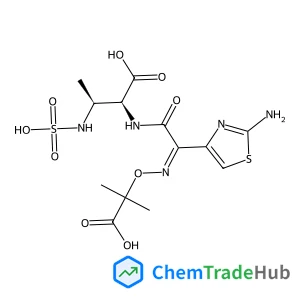
Aztreonam USP Related Compound A (Open-ring Aztreonam)
CAS Number:
87500-74-1
Molecular Formula:
C13H19N5O9S2
Recommended Suppliers






Disclaimer
This page provides academic journal information for reference and research purposes only. We are not affiliated with any journal publishers and do not handle publication submissions. For publication-related inquiries, please contact the respective journal publishers directly.
If you notice any inaccuracies in the information displayed, please contact us at support@chemtradehub.com. We will promptly review and address your concerns.