













Vibrational frequencies in Car–Parrinello molecular dynamics
Literature Information
Publication Date
2010-10-15
DOI
10.1039/C0CP00411A
Impact Factor
3.676
Authors
Sheau Wei Ong, Eng Soon Tok, Hway Chuan Kang
View Original
Abstract
Car–Parrinello molecular dynamics (CPMD) are widely used to investigate the dynamical properties of molecular systems. An important issue in such applications is the dependence of dynamical quantities such as molecular vibrational frequencies upon the fictitious orbital mass μ. Although it is known that the correct Born–Oppenheimer dynamics are recovered at zero μ, it is not clear how these dynamical quantities are to be rigorously extracted from CPMD calculations. Our work addresses this issue for vibrational frequencies. We show that when the system is sufficiently close to the ground state the calculated ionic vibrational frequencies are ωM = ω0M[1 − C(μ/M)] for small μ/M, where ω0M is the Born–Oppenheimer ionic frequency, M the ionic mass, and C a constant that depends upon the ion–orbital coupling force constants. Our analysis also provides a quantitative understanding of the orbital oscillation amplitudes, leading to a relationship between the adiabaticity of a system and the ion–orbital coupling constants. In particular, we show that there is a significant systematic dependence of calculated vibrational frequencies upon how close the CPMD trajectory is to the Born–Oppenheimer surface. We verify our analytical results with numerical simulations for N2, Sn2, and H/Si(100)-(2×1).
Related Literature
Photophysics and peripheral ring size dependent aggregate emission of cross-conjugated enediynes: applications to white light emission and vapor sensing
Anuja Singh, Avik Kumar Pati, Ashok Kumar Mishra
2018-01-05
Paper
DOI: 10.1039/C7CP08091C
Insights into the dissociative ionization of glycine by PEPICO experiments
Paola Bolognesi, Alicja Domaracka, Patrick Rousseau, Mattea Carmen Castrovilli, Robert Richter, Subhojyoti Chatterjee, Feng Wang, Lorenzo Avaldi
2018-08-15
Paper
DOI: 10.1039/C8CP03473G
Effects of adatom and gas molecule adsorption on the physical properties of tellurene: a first principles investigation
Xiao Hua Wang, Da Wei Wang, Ai Jun Yang, Nikhil Koratkar, Ji Feng Chu, Pin Lei Lv, Ming Zhe Rong
2018-01-04
Paper
DOI: 10.1039/C7CP07906K
Correction: Necessary and sufficient conditions for the successful three-phase photocatalytic reduction of CO2 by H2O over heterogeneous photocatalysts
2018-07-26
Correction
DOI: 10.1039/C8CP91824D
X3 synthon geometries in two-dimensional halogen-bonded 1,3,5-tris(3,5-dibromophenyl)benzene self-assembled nanoarchitectures on Au(111)-( )
David Peyrot, Mathieu G. Silly, Fabien Silly
2017-12-19
Paper
DOI: 10.1039/C7CP06488H
Triplet electron transfer and spin polarization in a palladium porphyrin–fullerene conjugate
Prashanth K. Poddutoori, Yuri E. Kandrashkin, Christopher O. Obondi, Francis D'Souza, Art van der Est
2018-10-29
Paper
DOI: 10.1039/C8CP04937H
Probing the interaction between solid benzene and water using vacuum ultraviolet and infrared spectroscopy
Anita Dawes, Natalia Pascual, Nigel J. Mason, Sabrina Gärtner, Søren V. Hoffmann, Nykola C. Jones
2018-05-11
Paper
DOI: 10.1039/C8CP01228H
The oxidation of sulfur(iv) by reaction with iron(iii): a critical review and data analysis
2018-01-15
Paper
DOI: 10.1039/C7CP07584G
Ultrafast fluorescence dynamics of DNA-based silver clusters
Zakhar Reveguk, Roman Lysenko, Ruslan Ramazanov, Alexei Kononov
2018-10-11
Paper
DOI: 10.1039/C8CP05727C
You might also like
Compound Q&A
Is 6-(3-Fluorophenyl)picolinic acid (CAS: 887982-40-3) safe?
6-(3-Fluorophenyl)picolinic acid is generally considered safe for laboratory use...
887982-40-36-(3-Fluorophenyl)pi...
Compound Q&A
What industries use (3R)-3-Pyrrolidinol (CAS: 2799-21-5)?
(3R)-3-Pyrrolidinol is used in the pharmaceutical industry as a precursor for dr...
2799-21-5(3R)-3-Pyrrolidinol
Compound Q&A
What precautions should be taken when handling (4R,5R)-4,5-Diethoxycarbonyl-2,2-dimethyldioxolane (CAS: 59779-75-8)?
When handling (4R,5R)-4,5-Diethoxycarbonyl-2,2-dimethyldioxolane (CAS: 59779-75-...
59779-75-8(4R,5R)-4,5-Diethoxy...
Compound Q&A
How is 1-(6-Chloroimidazo[1,2-b]pyridazin-3-yl)ethanone (CAS: 90734-71-7) typically synthesized?
1-(6-Chloroimidazo[1,2-b]pyridazin-3-yl)ethanone is often synthesized via a mult...
90734-71-71-(6-Chloroimidazo[1...
Compound Q&A
What is the market or research trend for N-Ethyl-3,4-dimethylbenzylamine (CAS: 39180-83-1)?
The market for N-Ethyl-3,4-dimethylbenzylamine (CAS: 39180-83-1) remains steady,...
39180-83-1N-Ethyl-3,4-dimethyl...
Compound Q&A
What is Tert-butyl 3-(pyrrolidin-1-yl)azetidine-1-carboxylate (CAS: 1019008-21-9)?
Tert-butyl 3-(pyrrolidin-1-yl)azetidine-1-carboxylate is a chemical compound wit...
1019008-21-9Tert-butyl 3-(pyrrol...
Compound Q&A
What regulatory guidelines apply to 1-Bromo-3-chloro-2,4-dimethoxybenzene (CAS: 1228956-93-1)?
1-Bromo-3-chloro-2,4-dimethoxybenzene (CAS: 1228956-93-1) falls under the classi...
1228956-93-11-Bromo-3-chloro-2,4...
Compound Q&A
Is 8-Bromo-2-methyl-3,4-dihydroisoquinolin-1(2H)-one (CAS: 1368622-07-4) safe?
The safety of 8-Bromo-2-methyl-3,4-dihydroisoquinolin-1(2H)-one (CAS: 1368622-07...
1368622-07-48-Bromo-2-methyl-3,4...
Compound Q&A
Is Benzyl [(3S)-2,6-dioxo-3-piperidinyl]carbamate (CAS: 22785-43-9) safe?
Benzyl [(3S)-2,6-dioxo-3-piperidinyl]carbamate is generally safe when handled wi...
22785-43-9Benzyl [(3S)-2,6-dio...
Compound Q&A
How should 1-{[4-(4,4,5,5-Tetramethyl-1,3,2-dioxaborolan-2-yl)phenyl]sulfonyl}pyrrolidine (CAS: 928657-21-0) be stored?
1-{[4-(4,4,5,5-Tetramethyl-1,3,2-dioxaborolan-2-yl)phenyl]sulfonyl}pyrrolidine s...
928657-21-01-{[4-(4,4,5,5-Tetra...
Source Journal
Physical Chemistry Chemical Physics

CiteScore:
5.5
Self-citation Rate:
10.3%
Articles per Year:
3036
Physical Chemistry Chemical Physics (PCCP) is an international journal co-owned by 19 physical chemistry and physics societies from around the world. This journal publishes original, cutting-edge research in physical chemistry, chemical physics and biophysical chemistry. To be suitable for publication in PCCP, articles must include significant innovation and/or insight into physical chemistry; this is the most important criterion that reviewers and Editors will judge against when evaluating submissions. The journal has a broad scope and welcomes contributions spanning experiment, theory, computation and data science. Topical coverage includes spectroscopy, dynamics, kinetics, statistical mechanics, thermodynamics, electrochemistry, catalysis, surface science, quantum mechanics, quantum computing and machine learning. Interdisciplinary research areas such as polymers and soft matter, materials, nanoscience, energy, surfaces/interfaces, and biophysical chemistry are welcomed if they demonstrate significant innovation and/or insight into physical chemistry. Joined experimental/theoretical studies are particularly appreciated when complementary and based on up-to-date approaches.
Recommended Compounds
![Benzyl spiro[indole-3,4'-piperidine]-1(2H)-carboxylate hydrochloride (1:1) structure](https://static.chemtradehub.com/structs/159/159635-46-8-8de0.webp "Benzyl spiro[indole-3,4'-piperidine]-1(2H)-carboxylate hydrochloride (1:1) structure")
Benzyl spiro[indole-3,4'-piperidine]-1(2H)-carboxylate hydrochloride (1:1)
CAS Number:
159635-46-8
Molecular Formula:
C20H23ClN2O2
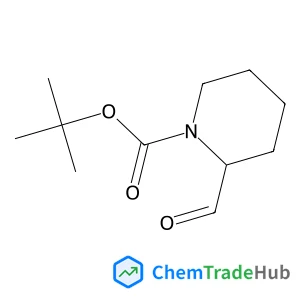
2-Methyl-2-propanyl (2R)-2-formyl-1-piperidinecarboxylate
CAS Number:
134526-69-5
Molecular Formula:
C11H19NO3

Recommended Suppliers






Disclaimer
This page provides academic journal information for reference and research purposes only. We are not affiliated with any journal publishers and do not handle publication submissions. For publication-related inquiries, please contact the respective journal publishers directly.
If you notice any inaccuracies in the information displayed, please contact us at support@chemtradehub.com. We will promptly review and address your concerns.