


Adsorption of dioxygen to copper in CuHY zeolite
Literature Information
Publication Date
2009-07-27
DOI
10.1039/B904152D
Impact Factor
3.676
Authors
Shampa Santra, Tanja Archipov, Augusta B. Ene, Helena Komnik, Hermann Stoll, Emil Roduner, Guntram Rauhut
View Original
Abstract
The adsorption of dioxygen to copper in CuHY zeolites has been studied by means of FTIR spectroscopy and model calculations at the quantum mechanical/molecular mechanics (QM/MM) level. Different Si/Al ratios, substitution patterns and adsorption sites within the cavities of the zeolite lead to a large number of different isomers to be studied. In addition, these parameters control the end-on vs. side-on adsorption of dioxygen. High-level multireference benchmark calculations for the singlet and triplet states of such adsorption complexes corroborate the use of density functional theory for the investigation of these systems. Comparison of the experimental and computed data allows for the identification of a preferred adsorption site and a small number of isomers which appear to be most relevant for the adsorption process. Redshifts of >250 cm−1 are obtained for the vibrational frequencies of adsorbed O2.
Recommended Journals

Mini-Reviews in Medicinal Chemistry

Contact Lens & Anterior Eye

Nature Reviews Drug Discovery

Environmental Toxicology and Pharmacology

Journal of Medical Biochemistry

Physical Chemistry Chemical Physics

Journal of Enzyme inhibition and Medicinal Chemistry

Molecules

Current Pharmaceutical Biotechnology

CrystEngComm
Related Literature
Ionic liquids in surface electrochemistry
Hongtao Liu, Yang Liu, Jinghong Li
2010-01-26
Perspective
DOI: 10.1039/B921469K
Calculation of absorption and emission spectra of [n]cycloparaphenylenes: the reason for the large Stokes shift
Dage Sundholm, Stefan Taubert, Fabio Pichierri
2010-01-28
Paper
DOI: 10.1039/B922175A
Viscosity sensing in heated alkaline zeolite synthesis media
Lana R. A. Follens, Erwin K. Reichel, Christian Riesch, Jan Vermant, Johan A. Martens, Christine E. A. Kirschhock, Bernhard Jakoby
2008-12-24
Communication
DOI: 10.1039/B816040F
Undoped diamondnanoparticles: origins of surface redox chemistry
Katherine B. Holt
2010-01-06
Perspective
DOI: 10.1039/B920075D
Ionic liquids through the looking glass: theory mirrors experiment and provides further insight into aromatic substitution processes
Shon Glyn Jones, Hon Man Yau, Erika Davies, James M. Hook, Tristan G. A. Youngs, Jason B. Harper, Anna K. Croft
2009-12-18
Paper
DOI: 10.1039/B919831H
Analyses of interfacial resistances in a membrane-electrodeassembly for a proton exchange membranefuelcell using symmetrical impedance spectroscopy
Seok-Jun Seo, Jung-Je Woo, Sung-Hyun Yun, Hong-Joo Lee, Jin-Soo Park, Tongwen Xu, Tae-Hyun Yang, Jaeyoung Lee, Seung-Hyeon Moon
2010-10-16
Paper
DOI: 10.1039/C0CP00662A
An improved chemical model for the quantitative description of the front propagation in the tetrathionate–chlorite reaction
Gábor Peintler, György Csekő, Andrea Petz, Attila K. Horváth
2010-01-15
Paper
DOI: 10.1039/B920618C
A small molecule in metal cluster cages: H2@Mgn (n = 8 to 10)
Phillip McNelles, Fedor Y. Naumkin
2009-03-04
Communication
DOI: 10.1039/B819479C
Evolution of self-diffusion and local structure in some amines over a wide temperature range at high pressures: a molecular dynamics simulation study
Huajie Feng, Xin Liu, Wei Gao, Xiaojuan Chen, Jing Wang, Liuping Chen, Hans-Dietrich Lüdemann
2010-10-18
Paper
DOI: 10.1039/C0CP00337A
One-pot electrodeposition, characterization and photoactivity of stoichiometric copper indium gallium diselenide (CIGS) thin films for solar cells‡§
Jia Jia, Kévin Giffard, Kyle Pellarin, Carly Hewson
2010-09-13
Paper
DOI: 10.1039/C0CP00586J
You might also like
Compound Q&A
Is 6-(3-Fluorophenyl)picolinic acid (CAS: 887982-40-3) safe?
6-(3-Fluorophenyl)picolinic acid is generally considered safe for laboratory use...
887982-40-36-(3-Fluorophenyl)pi...
Compound Q&A
What industries use (3R)-3-Pyrrolidinol (CAS: 2799-21-5)?
(3R)-3-Pyrrolidinol is used in the pharmaceutical industry as a precursor for dr...
2799-21-5(3R)-3-Pyrrolidinol
Compound Q&A
What precautions should be taken when handling (4R,5R)-4,5-Diethoxycarbonyl-2,2-dimethyldioxolane (CAS: 59779-75-8)?
When handling (4R,5R)-4,5-Diethoxycarbonyl-2,2-dimethyldioxolane (CAS: 59779-75-...
59779-75-8(4R,5R)-4,5-Diethoxy...
Compound Q&A
How is 1-(6-Chloroimidazo[1,2-b]pyridazin-3-yl)ethanone (CAS: 90734-71-7) typically synthesized?
1-(6-Chloroimidazo[1,2-b]pyridazin-3-yl)ethanone is often synthesized via a mult...
90734-71-71-(6-Chloroimidazo[1...
Compound Q&A
What is the market or research trend for N-Ethyl-3,4-dimethylbenzylamine (CAS: 39180-83-1)?
The market for N-Ethyl-3,4-dimethylbenzylamine (CAS: 39180-83-1) remains steady,...
39180-83-1N-Ethyl-3,4-dimethyl...
Compound Q&A
What is Tert-butyl 3-(pyrrolidin-1-yl)azetidine-1-carboxylate (CAS: 1019008-21-9)?
Tert-butyl 3-(pyrrolidin-1-yl)azetidine-1-carboxylate is a chemical compound wit...
1019008-21-9Tert-butyl 3-(pyrrol...
Compound Q&A
What regulatory guidelines apply to 1-Bromo-3-chloro-2,4-dimethoxybenzene (CAS: 1228956-93-1)?
1-Bromo-3-chloro-2,4-dimethoxybenzene (CAS: 1228956-93-1) falls under the classi...
1228956-93-11-Bromo-3-chloro-2,4...
Compound Q&A
Is 8-Bromo-2-methyl-3,4-dihydroisoquinolin-1(2H)-one (CAS: 1368622-07-4) safe?
The safety of 8-Bromo-2-methyl-3,4-dihydroisoquinolin-1(2H)-one (CAS: 1368622-07...
1368622-07-48-Bromo-2-methyl-3,4...
Compound Q&A
Is Benzyl [(3S)-2,6-dioxo-3-piperidinyl]carbamate (CAS: 22785-43-9) safe?
Benzyl [(3S)-2,6-dioxo-3-piperidinyl]carbamate is generally safe when handled wi...
22785-43-9Benzyl [(3S)-2,6-dio...
Compound Q&A
How should 1-{[4-(4,4,5,5-Tetramethyl-1,3,2-dioxaborolan-2-yl)phenyl]sulfonyl}pyrrolidine (CAS: 928657-21-0) be stored?
1-{[4-(4,4,5,5-Tetramethyl-1,3,2-dioxaborolan-2-yl)phenyl]sulfonyl}pyrrolidine s...
928657-21-01-{[4-(4,4,5,5-Tetra...
Source Journal
Physical Chemistry Chemical Physics
CiteScore:
5.5
Self-citation Rate:
10.3%
Articles per Year:
3036
Physical Chemistry Chemical Physics (PCCP) is an international journal co-owned by 19 physical chemistry and physics societies from around the world. This journal publishes original, cutting-edge research in physical chemistry, chemical physics and biophysical chemistry. To be suitable for publication in PCCP, articles must include significant innovation and/or insight into physical chemistry; this is the most important criterion that reviewers and Editors will judge against when evaluating submissions. The journal has a broad scope and welcomes contributions spanning experiment, theory, computation and data science. Topical coverage includes spectroscopy, dynamics, kinetics, statistical mechanics, thermodynamics, electrochemistry, catalysis, surface science, quantum mechanics, quantum computing and machine learning. Interdisciplinary research areas such as polymers and soft matter, materials, nanoscience, energy, surfaces/interfaces, and biophysical chemistry are welcomed if they demonstrate significant innovation and/or insight into physical chemistry. Joined experimental/theoretical studies are particularly appreciated when complementary and based on up-to-date approaches.
Recommended Compounds
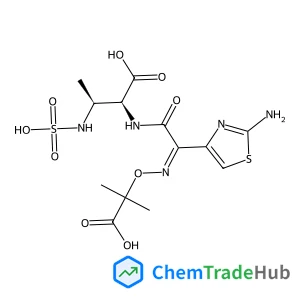
Aztreonam USP Related Compound A (Open-ring Aztreonam)
CAS Number:
87500-74-1
Molecular Formula:
C13H19N5O9S2
![4-[(2,4-Dihydroxyphenyl)diazenyl]-5-hydroxy-2,7-naphthalenedisulfonic acid structure](https://static.chemtradehub.com/structs/362/3627-01-8-79ac.webp "4-[(2,4-Dihydroxyphenyl)diazenyl]-5-hydroxy-2,7-naphthalenedisulfonic acid structure")
4-[(2,4-Dihydroxyphenyl)diazenyl]-5-hydroxy-2,7-naphthalenedisulfonic acid
CAS Number:
3627-01-8
Molecular Formula:
C16H12N2O9S2
![[4-Chloro-3-(diethylcarbamoyl)phenyl]boronic acid structure](https://static.chemtradehub.com/structs/871/871332-68-2-0e3b.webp "[4-Chloro-3-(diethylcarbamoyl)phenyl]boronic acid structure")
[4-Chloro-3-(diethylcarbamoyl)phenyl]boronic acid
CAS Number:
871332-68-2
Molecular Formula:
C11H15BClNO3
Recommended Suppliers




Disclaimer
This page provides academic journal information for reference and research purposes only. We are not affiliated with any journal publishers and do not handle publication submissions. For publication-related inquiries, please contact the respective journal publishers directly.
If you notice any inaccuracies in the information displayed, please contact us at support@chemtradehub.com. We will promptly review and address your concerns.