












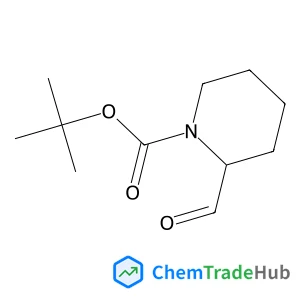
2-Methyl-2-propanyl (2R)-2-formyl-1-piperidinecarboxylate
CAS Number:
134526-69-5
Molecular Formula:
C11H19NO3
Seok-Jun Seo, Jung-Je Woo, Sung-Hyun Yun, Hong-Joo Lee, Jin-Soo Park, Tongwen Xu, Tae-Hyun Yang, Jaeyoung Lee, Seung-Hyeon Moon
Interfacial resistances between the polymer electrolyte membrane (PEM) and catalyst layer (CL) in membrane-electrode assemblies (MEAs) have yet to be systematically examined in spite of its great importance on the fuel cell performance. In order to investigate ionic transport through the PEM/CL interface, the symmetrical impedance mode (SIM) was employed in which the same type of gas was injected (H2/H2). In this study, the ionic transport resistance at the interface was controlled by the additionally sprayed outer ionomer on the surface of each CL. Effectiveness of the outer ionomer on ionic transport at the interface was quantitatively explained by the reduced contact, proton hydration, and charge transport resistances in the SIM. To characterize the ionic transport resistance, the concept of total resistance (Rtot) in the SIM was introduced, representing the overall ohmic loss due to proton transport in an MEA. This concept was successfully supported via an agreement of the interpretation and the linear correlation that was obtained between the admittance (1/Rtot) and the performance of a fuel cell in the ohmic loss region. This correlation will enable researchers to predict the performance of a fuel cell under the influence of proton transport by examining the Rtot in the SIM.
DOI: 10.1039/C7CP07584G
D. Laniel, V. Svitlyk, G. Weck, P. Loubeyre
DOI: 10.1039/C7CP07989C
D. Kaiser, E. Reusch, P. Hemberger, A. Bodi, E. Welz, B. Engels, I. Fischer
DOI: 10.1039/C7CP08055G
G. L. Gutsev, K. G. Belay, L. G. Gutsev, B. R. Ramachandran, P. Jena
DOI: 10.1039/C7CP08224J
Weilin Chen, Zhiqiang Zhu, Chang Yin, Yibao Li, Yi Liu, Yuting Zhang, Yulan Fan, Xiaolin Fan
DOI: 10.1039/C7CP05845D
Irene Isturiz, Carlo Marini, Marta Avila, Masashi Okubo, Huiqiao Li, Haoshen Zhou, Takashi Mizokawa, Naurang Lal Saini, Laura Simonelli
DOI: 10.1039/C8CP00716K
Fen Li
DOI: 10.1039/C7CP07113B
Xiao Hua Wang, Da Wei Wang, Ai Jun Yang, Nikhil Koratkar, Ji Feng Chu, Pin Lei Lv, Ming Zhe Rong
DOI: 10.1039/C7CP07906K
E. M. Neeman, I. León, E. R. Alonso, L. Kolesniková, S. Mata, J. L. Alonso
DOI: 10.1039/C8CP06043F
Paola Bolognesi, Alicja Domaracka, Patrick Rousseau, Mattea Carmen Castrovilli, Robert Richter, Subhojyoti Chatterjee, Feng Wang, Lorenzo Avaldi
DOI: 10.1039/C8CP03473G
6-(3-Fluorophenyl)picolinic acid is generally considered safe for laboratory use...
(3R)-3-Pyrrolidinol is used in the pharmaceutical industry as a precursor for dr...
When handling (4R,5R)-4,5-Diethoxycarbonyl-2,2-dimethyldioxolane (CAS: 59779-75-...
1-(6-Chloroimidazo[1,2-b]pyridazin-3-yl)ethanone is often synthesized via a mult...
The market for N-Ethyl-3,4-dimethylbenzylamine (CAS: 39180-83-1) remains steady,...
Tert-butyl 3-(pyrrolidin-1-yl)azetidine-1-carboxylate is a chemical compound wit...
1-Bromo-3-chloro-2,4-dimethoxybenzene (CAS: 1228956-93-1) falls under the classi...
The safety of 8-Bromo-2-methyl-3,4-dihydroisoquinolin-1(2H)-one (CAS: 1368622-07...
Benzyl [(3S)-2,6-dioxo-3-piperidinyl]carbamate is generally safe when handled wi...
1-{[4-(4,4,5,5-Tetramethyl-1,3,2-dioxaborolan-2-yl)phenyl]sulfonyl}pyrrolidine s...

Physical Chemistry Chemical Physics (PCCP) is an international journal co-owned by 19 physical chemistry and physics societies from around the world. This journal publishes original, cutting-edge research in physical chemistry, chemical physics and biophysical chemistry. To be suitable for publication in PCCP, articles must include significant innovation and/or insight into physical chemistry; this is the most important criterion that reviewers and Editors will judge against when evaluating submissions. The journal has a broad scope and welcomes contributions spanning experiment, theory, computation and data science. Topical coverage includes spectroscopy, dynamics, kinetics, statistical mechanics, thermodynamics, electrochemistry, catalysis, surface science, quantum mechanics, quantum computing and machine learning. Interdisciplinary research areas such as polymers and soft matter, materials, nanoscience, energy, surfaces/interfaces, and biophysical chemistry are welcomed if they demonstrate significant innovation and/or insight into physical chemistry. Joined experimental/theoretical studies are particularly appreciated when complementary and based on up-to-date approaches.
![Benzyl spiro[indole-3,4'-piperidine]-1(2H)-carboxylate hydrochloride (1:1) structure](https://static.chemtradehub.com/structs/159/159635-46-8-8de0.webp "Benzyl spiro[indole-3,4'-piperidine]-1(2H)-carboxylate hydrochloride (1:1) structure")



