












Calculation of absorption and emission spectra of [n]cycloparaphenylenes: the reason for the large Stokes shift
Literature Information
Publication Date
2010-01-28
DOI
10.1039/B922175A
Impact Factor
3.676
Authors
Dage Sundholm, Stefan Taubert, Fabio Pichierri
View Original
Abstract
The electronic absorption and emission spectra of the [n]cycloparaphenylenes with n = 6,7,…,11 ([n]CP) have been studied at the time-dependent density functional theory level. The calculations show that the optical gap increases with increasing size of the ring due to reduced ring strain in the larger carbon nanohoops, whereas the energy of the first bright state follows the opposite trend for the studied [n]CPs. For the excited-state structures, the C–C bonds between the phenylene groups have a significant double-bond character giving rise to a continuous electron delocalisation pathway around the ring. The torsion angles between the phenylene moieties are much smaller for the excited state than for the ground state suggesting that the excited state has a stronger electron delocalisation around the carbon nanohoop than for the ground state. The double bond character of the phenylene C–C bonds declines and the phenylene torsion angle increases with increasing ring size. The aromatic stabilisation of the excited state due to the continuous electron delocalisation pathway is probably the main reason for the large Stokes shift. The excited state of the larger [n]CPs are less aromatic than the smaller ones explaining why the Stokes shift decreases with increasing size of the ring. For large [n]CPs, the excitation-energy spectrum forms bands making localisation of the excitons feasible. Localisation of the excitons probably leads to the observed ring-size independence of the electronic excitation spectra for large [n]CPs.
Related Literature
Predicted detonation properties at the Chapman–Jouguet state for proposed energetic materials (MTO and MTO3N) from combined ReaxFF and quantum mechanics reactive dynamics
Sergey V. Zybin, William A. Goddard, III, Tao Cheng, Saber Naserifar, Andres Jaramillo-Botero, Fenglei Huang
2018-01-03
Paper
DOI: 10.1039/C7CP07321F
Molecular investigation of the wettability of rough surfaces using molecular dynamics simulation
Hamzeh Yaghoubi, Masumeh Foroutan
2018-08-06
Paper
DOI: 10.1039/C8CP03762K
Unraveling doping induced anatase–rutile phase transition in TiO2 using electron, X-ray and gamma-ray as spectroscopic probes
D. Banerjee, Santosh K. Gupta, N. Patra, Sk Wasim Raja, N. Pathak, D. Bhattacharyya, P. K. Pujari, S. V. Thakare, S. N. Jha
2018-10-25
Paper
DOI: 10.1039/C8CP04310H
Electrolyte solvents for high voltage lithium ion batteries: ion correlation and specific anion effects in adiponitrile
Anand Narayanan Kirshnamoorthy, Kristina Oldiges, Andreas Heuer, Isidora Cekic-Laskovic, Christian Holm
2018-09-24
Paper
DOI: 10.1039/C8CP04102D
Secondary relaxation in ultrastable etoricoxib: evidence of correlation with structural relaxation
K. L. Ngai, Javier Rodríguez-Viejo
2018-01-23
Paper
DOI: 10.1039/C7CP06445D
Empirical study of physicochemical and spectral properties of CuII-containing chelate-based ionic liquids
Huidan Wei, Yongtao Wang, Jia Yao, Haoran Li
2018-01-06
Paper
DOI: 10.1039/C7CP07933H
Reactivity of amino acid anions with nitrogen and oxygen atoms
Zhe-Chen Wang, Sheng-Gui He, Veronica M. Bierbaum
2018-02-01
Paper
DOI: 10.1039/C7CP07886B
Thermoelectric Bi2Te3−xSex alloys for efficient thermal to electrical energy conversion
Omer Meroz, Yaniv Gelbstein
2018-01-02
Paper
DOI: 10.1039/C7CP06176E
Optical frequency comb photoacoustic spectroscopy
Ibrahim Sadiek, Tommi Mikkonen, Juha Toivonen, Aleksandra Foltynowicz
2018-10-27
Paper
DOI: 10.1039/C8CP05666H
You might also like
Compound Q&A
Is 6-(3-Fluorophenyl)picolinic acid (CAS: 887982-40-3) safe?
6-(3-Fluorophenyl)picolinic acid is generally considered safe for laboratory use...
887982-40-36-(3-Fluorophenyl)pi...
Compound Q&A
What industries use (3R)-3-Pyrrolidinol (CAS: 2799-21-5)?
(3R)-3-Pyrrolidinol is used in the pharmaceutical industry as a precursor for dr...
2799-21-5(3R)-3-Pyrrolidinol
Compound Q&A
What precautions should be taken when handling (4R,5R)-4,5-Diethoxycarbonyl-2,2-dimethyldioxolane (CAS: 59779-75-8)?
When handling (4R,5R)-4,5-Diethoxycarbonyl-2,2-dimethyldioxolane (CAS: 59779-75-...
59779-75-8(4R,5R)-4,5-Diethoxy...
Compound Q&A
How is 1-(6-Chloroimidazo[1,2-b]pyridazin-3-yl)ethanone (CAS: 90734-71-7) typically synthesized?
1-(6-Chloroimidazo[1,2-b]pyridazin-3-yl)ethanone is often synthesized via a mult...
90734-71-71-(6-Chloroimidazo[1...
Compound Q&A
What is the market or research trend for N-Ethyl-3,4-dimethylbenzylamine (CAS: 39180-83-1)?
The market for N-Ethyl-3,4-dimethylbenzylamine (CAS: 39180-83-1) remains steady,...
39180-83-1N-Ethyl-3,4-dimethyl...
Compound Q&A
What is Tert-butyl 3-(pyrrolidin-1-yl)azetidine-1-carboxylate (CAS: 1019008-21-9)?
Tert-butyl 3-(pyrrolidin-1-yl)azetidine-1-carboxylate is a chemical compound wit...
1019008-21-9Tert-butyl 3-(pyrrol...
Compound Q&A
What regulatory guidelines apply to 1-Bromo-3-chloro-2,4-dimethoxybenzene (CAS: 1228956-93-1)?
1-Bromo-3-chloro-2,4-dimethoxybenzene (CAS: 1228956-93-1) falls under the classi...
1228956-93-11-Bromo-3-chloro-2,4...
Compound Q&A
Is 8-Bromo-2-methyl-3,4-dihydroisoquinolin-1(2H)-one (CAS: 1368622-07-4) safe?
The safety of 8-Bromo-2-methyl-3,4-dihydroisoquinolin-1(2H)-one (CAS: 1368622-07...
1368622-07-48-Bromo-2-methyl-3,4...
Compound Q&A
Is Benzyl [(3S)-2,6-dioxo-3-piperidinyl]carbamate (CAS: 22785-43-9) safe?
Benzyl [(3S)-2,6-dioxo-3-piperidinyl]carbamate is generally safe when handled wi...
22785-43-9Benzyl [(3S)-2,6-dio...
Compound Q&A
How should 1-{[4-(4,4,5,5-Tetramethyl-1,3,2-dioxaborolan-2-yl)phenyl]sulfonyl}pyrrolidine (CAS: 928657-21-0) be stored?
1-{[4-(4,4,5,5-Tetramethyl-1,3,2-dioxaborolan-2-yl)phenyl]sulfonyl}pyrrolidine s...
928657-21-01-{[4-(4,4,5,5-Tetra...
Source Journal
Physical Chemistry Chemical Physics

CiteScore:
5.5
Self-citation Rate:
10.3%
Articles per Year:
3036
Physical Chemistry Chemical Physics (PCCP) is an international journal co-owned by 19 physical chemistry and physics societies from around the world. This journal publishes original, cutting-edge research in physical chemistry, chemical physics and biophysical chemistry. To be suitable for publication in PCCP, articles must include significant innovation and/or insight into physical chemistry; this is the most important criterion that reviewers and Editors will judge against when evaluating submissions. The journal has a broad scope and welcomes contributions spanning experiment, theory, computation and data science. Topical coverage includes spectroscopy, dynamics, kinetics, statistical mechanics, thermodynamics, electrochemistry, catalysis, surface science, quantum mechanics, quantum computing and machine learning. Interdisciplinary research areas such as polymers and soft matter, materials, nanoscience, energy, surfaces/interfaces, and biophysical chemistry are welcomed if they demonstrate significant innovation and/or insight into physical chemistry. Joined experimental/theoretical studies are particularly appreciated when complementary and based on up-to-date approaches.
Recommended Compounds
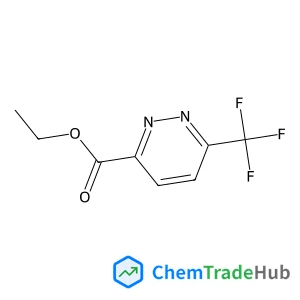
Ethyl 6-(trifluoromethyl)pyridazine-3-carboxylate
CAS Number:
1192155-06-8
Molecular Formula:
C8H7F3N2O2

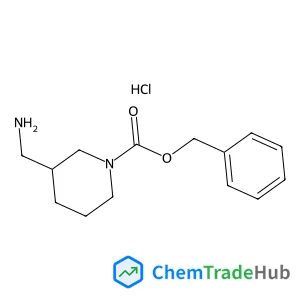
Benzyl 3-(aminomethyl)piperidine-1-carboxylate hydrochloride
CAS Number:
1186663-23-9
Molecular Formula:
C14H21ClN2O2
Recommended Suppliers





Disclaimer
This page provides academic journal information for reference and research purposes only. We are not affiliated with any journal publishers and do not handle publication submissions. For publication-related inquiries, please contact the respective journal publishers directly.
If you notice any inaccuracies in the information displayed, please contact us at support@chemtradehub.com. We will promptly review and address your concerns.