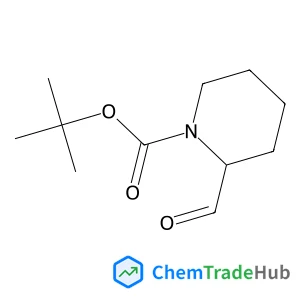
2-Methyl-2-propanyl (2R)-2-formyl-1-piperidinecarboxylate
CAS Number:
134526-69-5
Molecular Formula:
C11H19NO3
Huajie Feng, Xin Liu, Wei Gao, Xiaojuan Chen, Jing Wang, Liuping Chen, Hans-Dietrich Lüdemann
Self-diffusion and structural properties of ammonia, methylamine and trimethylamine have been studied by molecular dynamics simulation in the temperature range between the melting pressure curve and 700 K at pressures up to 400 MPa. The calculation results agree well with the experiment, which suggests that one can use the simulation method as a powerful tool to obtain self-diffusion coefficients over wide range of temperatures and pressures, under which it is rather difficult for experiments. The local structures of such fluids are investigated by calculating radial distribution functions (RDFs), the numbers of hydrogen bonds and coordination numbers. The correlation between self-diffusion and structural properties, and the influence of temperature and pressure on them are discussed. The simulation results demonstrate that the temperature effects are more pronounced than the pressure effects on self-diffusion and structural properties, and the effect of hydrogen bonding on the translational dynamics in any of these systems is a minor factor, while it is mainly affected by the close packing of amine molecules.
Daniella A. Ferluccio, Ronald I. Smith, Jim Buckman, Jan-Willem G. Bos
DOI: 10.1039/C7CP07521A
Aravind Babu Kajjam, P. Shyam Vinod Kumar, V. Subramanian, Sivakumar Vaidyanathan
DOI: 10.1039/C7CP08670A
Cipriano Rangel, Joaquin Espinosa-Garcia
DOI: 10.1039/C7CP07592H
Tim M. Becker, Azahara Luna-Triguero, Jose Manuel Vicent-Luna, Li-Chiang Lin, David Dubbeldam, Sofia Calero, Thijs J. H. Vlugt
DOI: 10.1039/C8CP05750H
Lukas Jackalin, Boris B. Kharkov, Andrei V. Komolkin
DOI: 10.1039/C8CP04161J
Benjamin Hagman, Uta Hejral, Johan Gustafson
DOI: 10.1039/C8CP01505H
Arindam Mukhopadhyay, Krishna J. Mandal, Jarugu Narasimha Moorthy
DOI: 10.1039/C7CP06766F
Hamzeh Yaghoubi, Masumeh Foroutan
DOI: 10.1039/C8CP03762K
D. ChangMo Yang, Jenica Marie L. Madridejos, Amir Hajibabaei, Chunggi Baig, Kwang S. Kim
DOI: 10.1039/C8CP00457A
Swapnil Varhade, Zahid M. Bhat, Ravikumar Thimmappa, Mruthyunjayachari C. Devendrachari, Alagar R. Kottaichamy, Manu Gautam, Shahid P. Shafi, Musthafa Ottakam Thotiyl
DOI: 10.1039/C8CP03768J
6-(3-Fluorophenyl)picolinic acid is generally considered safe for laboratory use...
(3R)-3-Pyrrolidinol is used in the pharmaceutical industry as a precursor for dr...
When handling (4R,5R)-4,5-Diethoxycarbonyl-2,2-dimethyldioxolane (CAS: 59779-75-...
1-(6-Chloroimidazo[1,2-b]pyridazin-3-yl)ethanone is often synthesized via a mult...
The market for N-Ethyl-3,4-dimethylbenzylamine (CAS: 39180-83-1) remains steady,...
Tert-butyl 3-(pyrrolidin-1-yl)azetidine-1-carboxylate is a chemical compound wit...
1-Bromo-3-chloro-2,4-dimethoxybenzene (CAS: 1228956-93-1) falls under the classi...
The safety of 8-Bromo-2-methyl-3,4-dihydroisoquinolin-1(2H)-one (CAS: 1368622-07...
Benzyl [(3S)-2,6-dioxo-3-piperidinyl]carbamate is generally safe when handled wi...
1-{[4-(4,4,5,5-Tetramethyl-1,3,2-dioxaborolan-2-yl)phenyl]sulfonyl}pyrrolidine s...

Physical Chemistry Chemical Physics (PCCP) is an international journal co-owned by 19 physical chemistry and physics societies from around the world. This journal publishes original, cutting-edge research in physical chemistry, chemical physics and biophysical chemistry. To be suitable for publication in PCCP, articles must include significant innovation and/or insight into physical chemistry; this is the most important criterion that reviewers and Editors will judge against when evaluating submissions. The journal has a broad scope and welcomes contributions spanning experiment, theory, computation and data science. Topical coverage includes spectroscopy, dynamics, kinetics, statistical mechanics, thermodynamics, electrochemistry, catalysis, surface science, quantum mechanics, quantum computing and machine learning. Interdisciplinary research areas such as polymers and soft matter, materials, nanoscience, energy, surfaces/interfaces, and biophysical chemistry are welcomed if they demonstrate significant innovation and/or insight into physical chemistry. Joined experimental/theoretical studies are particularly appreciated when complementary and based on up-to-date approaches.