












Crack propagation and defect formation at polymer interfaces investigated by ultra-small angle X-ray scattering
Literature Information
Publication Date
2003-02-06
DOI
10.1039/B210684A
Impact Factor
3.676
Authors
P. Müller-Buschbaum, T. Ittner, B. Mahltig, S. Cunis, G. V. Krosigk, R. Gehrke, C. Creton, M. Stamm
View Original
Abstract
The double cantilever beam test (DCB) was used to estimate the fracture toughness of poly(methyl-methacrylate) (PMMA). With the help of given neutron reflectometry (NR) results for PMMA a correlation between fracture toughness and interface width was established. It displays a three regime behaviour similar to polystyrene (PS). For the first time, deformation and defect structures in the vicinity of the crack tip were investigated by scanning ultra-small angle X-ray scattering (S-USAX) where a beam from a synchrotron source is scanned over the sample. It is concluded that crack propagation during the DCB measurement is connected with large deformations and defect formation, where the plastic deformation zone extends over a large size (>400 μm). Following a model for scattering from diffuse boundaries it was concluded that the diffusiveness increases from the outer edges to the centre of the plastic zone. S-USAX thus provides details of sample failure at a microscopic level as well as information about the structure of the defect boundaries and their distribution across the plastic zone.
Related Literature
What are the factors that control non-aqueous/AOT/n-heptane reverse micelle sizes? A dynamic light scattering study
R. Dario Falcone, Juana J. Silber, N. Mariano Correa
2009-10-20
Communication
DOI: 10.1039/B917197E
Cavitation activation by dual-frequency ultrasound and shock waves
Adam Brotchie, Robert Mettin, Franz Grieser, Muthupandian Ashokkumar
2009-09-02
Paper
DOI: 10.1039/B912725A
A theoretical spin relaxation and molecular dynamics simulation study of the Gd(H2O)93+ complex
Matteus Lindgren, Aatto Laaksonen, Per-Olof Westlund
2009-09-30
Paper
DOI: 10.1039/B907099K
Lanthanide ions as spectral converters for solar cells
Linda Aarts, Andries Meijerink
2009-09-10
Perspective
DOI: 10.1039/B913877C
Water adsorption on the stoichiometric and reduced CeO2(111) surface: a first-principles investigation
Simone Piccinin, Bernard Delley, Enrico Traversa, Catherine Stampfl
2009-08-15
Paper
DOI: 10.1039/B901831J
Effect of carotenoid structure on excited-state dynamics of carbonylcarotenoids
Pavel Chábera, Marcel Fuciman, Petr Hříbek
2009-07-31
Paper
DOI: 10.1039/B909924G
Double-quantum 19F–19F dipolar recoupling at ultra-fast magic angle spinningNMR: application to the assignment of 19F NMR spectra of inorganic fluorides
Bingwen Hu, Franck Fayon, Julien Trébosc, Christophe Legein, Olivier Lafon, Feng Deng, Jean-Paul Amoureux
2009-09-23
Paper
DOI: 10.1039/B914468D
Conformational properties of six-membered heterocycles: accurate relative energy differences with DFT, the importance of dispersion interactions and silicon substitution effects
Ingvar Arnason
2009-07-31
Paper
DOI: 10.1039/B910016D
You might also like
Compound Q&A
Is 6-(3-Fluorophenyl)picolinic acid (CAS: 887982-40-3) safe?
6-(3-Fluorophenyl)picolinic acid is generally considered safe for laboratory use...
887982-40-36-(3-Fluorophenyl)pi...
Compound Q&A
What industries use (3R)-3-Pyrrolidinol (CAS: 2799-21-5)?
(3R)-3-Pyrrolidinol is used in the pharmaceutical industry as a precursor for dr...
2799-21-5(3R)-3-Pyrrolidinol
Compound Q&A
What precautions should be taken when handling (4R,5R)-4,5-Diethoxycarbonyl-2,2-dimethyldioxolane (CAS: 59779-75-8)?
When handling (4R,5R)-4,5-Diethoxycarbonyl-2,2-dimethyldioxolane (CAS: 59779-75-...
59779-75-8(4R,5R)-4,5-Diethoxy...
Compound Q&A
How is 1-(6-Chloroimidazo[1,2-b]pyridazin-3-yl)ethanone (CAS: 90734-71-7) typically synthesized?
1-(6-Chloroimidazo[1,2-b]pyridazin-3-yl)ethanone is often synthesized via a mult...
90734-71-71-(6-Chloroimidazo[1...
Compound Q&A
What is the market or research trend for N-Ethyl-3,4-dimethylbenzylamine (CAS: 39180-83-1)?
The market for N-Ethyl-3,4-dimethylbenzylamine (CAS: 39180-83-1) remains steady,...
39180-83-1N-Ethyl-3,4-dimethyl...
Compound Q&A
What is Tert-butyl 3-(pyrrolidin-1-yl)azetidine-1-carboxylate (CAS: 1019008-21-9)?
Tert-butyl 3-(pyrrolidin-1-yl)azetidine-1-carboxylate is a chemical compound wit...
1019008-21-9Tert-butyl 3-(pyrrol...
Compound Q&A
What regulatory guidelines apply to 1-Bromo-3-chloro-2,4-dimethoxybenzene (CAS: 1228956-93-1)?
1-Bromo-3-chloro-2,4-dimethoxybenzene (CAS: 1228956-93-1) falls under the classi...
1228956-93-11-Bromo-3-chloro-2,4...
Compound Q&A
Is 8-Bromo-2-methyl-3,4-dihydroisoquinolin-1(2H)-one (CAS: 1368622-07-4) safe?
The safety of 8-Bromo-2-methyl-3,4-dihydroisoquinolin-1(2H)-one (CAS: 1368622-07...
1368622-07-48-Bromo-2-methyl-3,4...
Compound Q&A
Is Benzyl [(3S)-2,6-dioxo-3-piperidinyl]carbamate (CAS: 22785-43-9) safe?
Benzyl [(3S)-2,6-dioxo-3-piperidinyl]carbamate is generally safe when handled wi...
22785-43-9Benzyl [(3S)-2,6-dio...
Compound Q&A
How should 1-{[4-(4,4,5,5-Tetramethyl-1,3,2-dioxaborolan-2-yl)phenyl]sulfonyl}pyrrolidine (CAS: 928657-21-0) be stored?
1-{[4-(4,4,5,5-Tetramethyl-1,3,2-dioxaborolan-2-yl)phenyl]sulfonyl}pyrrolidine s...
928657-21-01-{[4-(4,4,5,5-Tetra...
Source Journal
Physical Chemistry Chemical Physics

CiteScore:
5.5
Self-citation Rate:
10.3%
Articles per Year:
3036
Physical Chemistry Chemical Physics (PCCP) is an international journal co-owned by 19 physical chemistry and physics societies from around the world. This journal publishes original, cutting-edge research in physical chemistry, chemical physics and biophysical chemistry. To be suitable for publication in PCCP, articles must include significant innovation and/or insight into physical chemistry; this is the most important criterion that reviewers and Editors will judge against when evaluating submissions. The journal has a broad scope and welcomes contributions spanning experiment, theory, computation and data science. Topical coverage includes spectroscopy, dynamics, kinetics, statistical mechanics, thermodynamics, electrochemistry, catalysis, surface science, quantum mechanics, quantum computing and machine learning. Interdisciplinary research areas such as polymers and soft matter, materials, nanoscience, energy, surfaces/interfaces, and biophysical chemistry are welcomed if they demonstrate significant innovation and/or insight into physical chemistry. Joined experimental/theoretical studies are particularly appreciated when complementary and based on up-to-date approaches.
Recommended Compounds

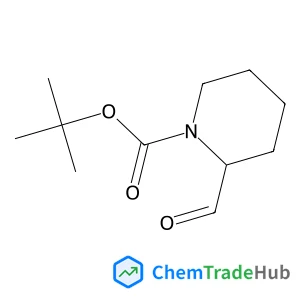
2-Methyl-2-propanyl (2R)-2-formyl-1-piperidinecarboxylate
CAS Number:
134526-69-5
Molecular Formula:
C11H19NO3
Recommended Suppliers






Disclaimer
This page provides academic journal information for reference and research purposes only. We are not affiliated with any journal publishers and do not handle publication submissions. For publication-related inquiries, please contact the respective journal publishers directly.
If you notice any inaccuracies in the information displayed, please contact us at support@chemtradehub.com. We will promptly review and address your concerns.