











Water adsorption on the stoichiometric and reduced CeO2(111) surface: a first-principles investigation
Literature Information
Publication Date
2009-08-15
DOI
10.1039/B901831J
Impact Factor
3.676
Authors
Simone Piccinin, Bernard Delley, Enrico Traversa, Catherine Stampfl
View Original
Abstract
We present a density functional theory investigation of the interaction between water and cerium oxide surfaces, considering both the stoichiometric and the reduced surfaces. We study the atomic structure and energetics of various configurations of water adsorption (for a water coverage of 0.25 ML) and account for the effect of temperature and pressure of the environment, containing both oxygen and water vapor, employing the ab initio atomistic thermodynamics approach. Through our investigation, we obtain the phase diagram of the water–ceria system, which enables us to discuss the stability of various surface structures as a function of the ambient conditions. For the stoichiometric surface, we find that the most stable configuration for water is when it is bonded at the cerium site, involving two O–H bonds of hydrogen and oxygen atoms at the surface. If oxygen vacancies are introduced at the surface, which is predicted under more reducing conditions, the binding energy of water is stronger, indicating an effective attractive interaction between water molecules and oxygen vacancies. Water dissociation, and the associated activation energies, are studied, and the role of oxygen vacancies is found to be crucial to stabilize the dissociated fragments. We present a detailed analysis of the stability of the water–ceria system as a function of the ambient conditions, and focus on two important surface processes: water adsorption/desorption on the stoichiometric surface and oxygen vacancy formation in the presence of water vapor. A study of the vibrational contribution to the free energy allows us to estimate the effect of this term on the stability range of adsorbed water.
Related Literature
Oxidation states of Co and Fe in Ba1−xSrxCo1−yFeyO3−δ (x, y = 0.2–0.8) and oxygen desorption in the temperature range 300–1273 K
Ashley S. Harvey, F. Jochen Litterst, Zhen Yang, Jennifer L. M. Rupp, Anna Infortuna, Ludwig J. Gauckler
2009-02-11
Paper
DOI: 10.1039/B819414A
Undoped diamondnanoparticles: origins of surface redox chemistry
Katherine B. Holt
2010-01-06
Perspective
DOI: 10.1039/B920075D
High anion conductivity in a ternary non-equilibrium phase of BaF2 and CaF2 with mixed cations
B. Ruprecht, M. Wilkening, A. Feldhoff, S. Steuernagel, P. Heitjans
2009-03-19
Paper
DOI: 10.1039/B901293A
Morphologically and electrochemically stable bipolar host for efficient green electrophosphorescence
Youtian Tao, Shaolong Gong, Cheng Zhong, Chuluo Yang, Jingui Qin, Dongge Ma
2010-01-22
Paper
DOI: 10.1039/B922110G
Ionic liquid as plasticizer for europium(iii)-doped luminescent poly(methyl methacrylate) films
Kyra Lunstroot, Kris Driesen, Peter Nockemann, Lydie Viau, P. Hubert Mutin, André Vioux, Koen Binnemans
2009-12-21
Paper
DOI: 10.1039/B920145A
Reply to the ‘Comment on “An explanation for the charge on water's surface”’ by R. Vácha, D. Horinek, R. Buchner, B. Winter and P. Jungwirth, Phys. Chem. Chem. Phys., 2010, 12, DOI: 10.1039/c001492c
Angus Gray-Weale, James K. Beattie
2010-09-23
Comment
DOI: 10.1039/C0CP00688B
Integrated experimental and computational spectroscopy study on π-stacking interaction: the anisole dimer
Nicola Schiccheri, Massimiliano Pasquini, Giovanni Piani, Giangaetano Pietraperzia, Maurizio Becucci, Vincenzo Barone
2010-09-27
Paper
DOI: 10.1039/C002992K
Kinetics of phase separation in polymer blends revealed by resonance light scattering spectroscopy
Jin Yang, Xudong Chen, Ruowen Fu, Wei-ang Luo, Yunbo Li, Mingqiu Zhang
2010-01-19
Paper
DOI: 10.1039/B918069A
Adsorption-induced structural changes of gold cations from two- to three-dimensions
Yi-Lei Wang, Ya-Fan Zhao, Ai-Qin Wang, Tao Zhang, Jun Li
2010-02-04
Paper
DOI: 10.1039/B921367H
You might also like
Compound Q&A
Is 6-(3-Fluorophenyl)picolinic acid (CAS: 887982-40-3) safe?
6-(3-Fluorophenyl)picolinic acid is generally considered safe for laboratory use...
887982-40-36-(3-Fluorophenyl)pi...
Compound Q&A
What industries use (3R)-3-Pyrrolidinol (CAS: 2799-21-5)?
(3R)-3-Pyrrolidinol is used in the pharmaceutical industry as a precursor for dr...
2799-21-5(3R)-3-Pyrrolidinol
Compound Q&A
What precautions should be taken when handling (4R,5R)-4,5-Diethoxycarbonyl-2,2-dimethyldioxolane (CAS: 59779-75-8)?
When handling (4R,5R)-4,5-Diethoxycarbonyl-2,2-dimethyldioxolane (CAS: 59779-75-...
59779-75-8(4R,5R)-4,5-Diethoxy...
Compound Q&A
How is 1-(6-Chloroimidazo[1,2-b]pyridazin-3-yl)ethanone (CAS: 90734-71-7) typically synthesized?
1-(6-Chloroimidazo[1,2-b]pyridazin-3-yl)ethanone is often synthesized via a mult...
90734-71-71-(6-Chloroimidazo[1...
Compound Q&A
What is the market or research trend for N-Ethyl-3,4-dimethylbenzylamine (CAS: 39180-83-1)?
The market for N-Ethyl-3,4-dimethylbenzylamine (CAS: 39180-83-1) remains steady,...
39180-83-1N-Ethyl-3,4-dimethyl...
Compound Q&A
What is Tert-butyl 3-(pyrrolidin-1-yl)azetidine-1-carboxylate (CAS: 1019008-21-9)?
Tert-butyl 3-(pyrrolidin-1-yl)azetidine-1-carboxylate is a chemical compound wit...
1019008-21-9Tert-butyl 3-(pyrrol...
Compound Q&A
What regulatory guidelines apply to 1-Bromo-3-chloro-2,4-dimethoxybenzene (CAS: 1228956-93-1)?
1-Bromo-3-chloro-2,4-dimethoxybenzene (CAS: 1228956-93-1) falls under the classi...
1228956-93-11-Bromo-3-chloro-2,4...
Compound Q&A
Is 8-Bromo-2-methyl-3,4-dihydroisoquinolin-1(2H)-one (CAS: 1368622-07-4) safe?
The safety of 8-Bromo-2-methyl-3,4-dihydroisoquinolin-1(2H)-one (CAS: 1368622-07...
1368622-07-48-Bromo-2-methyl-3,4...
Compound Q&A
Is Benzyl [(3S)-2,6-dioxo-3-piperidinyl]carbamate (CAS: 22785-43-9) safe?
Benzyl [(3S)-2,6-dioxo-3-piperidinyl]carbamate is generally safe when handled wi...
22785-43-9Benzyl [(3S)-2,6-dio...
Compound Q&A
How should 1-{[4-(4,4,5,5-Tetramethyl-1,3,2-dioxaborolan-2-yl)phenyl]sulfonyl}pyrrolidine (CAS: 928657-21-0) be stored?
1-{[4-(4,4,5,5-Tetramethyl-1,3,2-dioxaborolan-2-yl)phenyl]sulfonyl}pyrrolidine s...
928657-21-01-{[4-(4,4,5,5-Tetra...
Source Journal
Physical Chemistry Chemical Physics

CiteScore:
5.5
Self-citation Rate:
10.3%
Articles per Year:
3036
Physical Chemistry Chemical Physics (PCCP) is an international journal co-owned by 19 physical chemistry and physics societies from around the world. This journal publishes original, cutting-edge research in physical chemistry, chemical physics and biophysical chemistry. To be suitable for publication in PCCP, articles must include significant innovation and/or insight into physical chemistry; this is the most important criterion that reviewers and Editors will judge against when evaluating submissions. The journal has a broad scope and welcomes contributions spanning experiment, theory, computation and data science. Topical coverage includes spectroscopy, dynamics, kinetics, statistical mechanics, thermodynamics, electrochemistry, catalysis, surface science, quantum mechanics, quantum computing and machine learning. Interdisciplinary research areas such as polymers and soft matter, materials, nanoscience, energy, surfaces/interfaces, and biophysical chemistry are welcomed if they demonstrate significant innovation and/or insight into physical chemistry. Joined experimental/theoretical studies are particularly appreciated when complementary and based on up-to-date approaches.
Recommended Compounds
![2-[({[(2-Methyl-2-propanyl)oxy]carbonyl}amino)methyl]isonicotinic acid structure](https://static.chemtradehub.com/structs/473/473924-63-9-973b.webp "2-[({[(2-Methyl-2-propanyl)oxy]carbonyl}amino)methyl]isonicotinic acid structure")
2-[({[(2-Methyl-2-propanyl)oxy]carbonyl}amino)methyl]isonicotinic acid
CAS Number:
473924-63-9
Molecular Formula:
C12H16N2O4
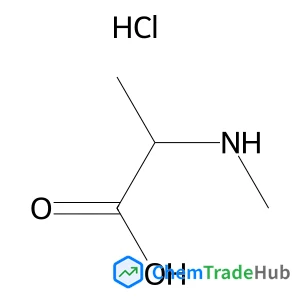
(R)-2-(Methylamino)propanoic acid hydrochloride
CAS Number:
1155878-14-0
Molecular Formula:
C4H10ClNO2
![2-Methyl-2-propanyl [(2S)-1-hydroxy-3-(4-hydroxyphenyl)-2-propanyl]carbamate structure](https://static.chemtradehub.com/structs/833/83345-46-4-eec2.webp "2-Methyl-2-propanyl [(2S)-1-hydroxy-3-(4-hydroxyphenyl)-2-propanyl]carbamate structure")
2-Methyl-2-propanyl [(2S)-1-hydroxy-3-(4-hydroxyphenyl)-2-propanyl]carbamate
CAS Number:
83345-46-4
Molecular Formula:
C14H21NO4
Recommended Suppliers




Disclaimer
This page provides academic journal information for reference and research purposes only. We are not affiliated with any journal publishers and do not handle publication submissions. For publication-related inquiries, please contact the respective journal publishers directly.
If you notice any inaccuracies in the information displayed, please contact us at support@chemtradehub.com. We will promptly review and address your concerns.