



Conformational properties of six-membered heterocycles: accurate relative energy differences with DFT, the importance of dispersion interactions and silicon substitution effects
Literature Information
Publication Date
2009-07-31
DOI
10.1039/B910016D
Impact Factor
3.676
Authors
Ingvar Arnason
View Original
Abstract
Density functional methods were evaluated in their ability to predict relative conformational energies of a test set of monosubstituted cyclohexanes and six-membered heterocycles. It is shown that while popular density functionals like B3LYP are unreliable for predicting accurate conformational energies for the axial/equatorial equilibrium of monosubstituted cyclohexanes, 1-silacyclohexanes and tetrahydropyrans, density functionals that take into account dispersion interactions like M06-2X and B2PLYP-D result in energy differences close to CCSD(T)/CBS results. Using the M06-2X density functional, we have then investigated the conformational properties of a large number of monosubstituted silacyclohexanes, with the number of silicon atoms ranging from 1 to 6. Our calculations suggest remarkably different conformational properties when compared to cyclohexane. The carbon/silicon exchange in a cyclohexane ring often has systematic, yet counterintuitive effects on the conformational properties. Dispersion interactions are shown to be especially important for accurate relative energy calculations of polysilacyclohexanes.
Recommended Journals

Contact Lens & Anterior Eye

Advanced Engineering Materials

Angewandte Chemie International Edition

Physical Chemistry Chemical Physics

Green Chemistry

Journal of Enzyme inhibition and Medicinal Chemistry

Nature Reviews Drug Discovery

Lab on a Chip

Environmental Toxicology and Pharmacology

Current Pharmaceutical Biotechnology
Related Literature
Metal–organic frameworks as high-potential adsorbents for liquid-phase separations of olefins, alkylnaphthalenes and dichlorobenzenes
Luc Alaerts, Michael Maes, Monique A. van der Veen, Pierre A. Jacobs, Dirk E. De Vos
2009-03-05
Paper
DOI: 10.1039/B823233D
Electronic state of oxygen nonstoichiometric La2−xSrxNiO4+δ at high temperatures
Takashi Nakamura, Keiji Yashiro, Kazuhisa Sato, Junichiro Mizusaki
2009-03-18
Paper
DOI: 10.1039/B823364K
Integrated experimental and computational spectroscopy study on π-stacking interaction: the anisole dimer
Nicola Schiccheri, Massimiliano Pasquini, Giovanni Piani, Giangaetano Pietraperzia, Maurizio Becucci, Vincenzo Barone
2010-09-27
Paper
DOI: 10.1039/C002992K
Development of thermodynamic properties of electrolyte solutions with the help of RISM-calculations at the Born–Oppenheimer level‡
Georg Schmeer, Alexander Maurer
2010-01-20
Paper
DOI: 10.1039/B917653E
A liposome-based energy conversion system for accelerating the multi-enzyme reactions‡
Ryuhei Matsumoto, Masaya Kakuta, Taiki Sugiyama, Yoshio Goto, Hideki Sakai, Yuichi Tokita, Tsuyonobu Hatazawa, Seiya Tsujimura, Osamu Shirai, Kenji Kano
2010-09-17
Communication
DOI: 10.1039/C0CP00556H
Rotation dynamics of 2-methyl butane and n-pentane in MCM-22 zeolite: a molecular dynamics simulation study‡
Shiping Huang, Vincent Finsy, Jeroen Persoons, Mark T.F. Telling, Gino V. Baron, Joeri F.M. Denayer
2009-03-10
Paper
DOI: 10.1039/B819334G
Spectroscopic study of the reaction between Br2 and dimethyl sulfide (DMS), and comparison with a parallel study made on Cl2 + DMS: possible atmospheric implications
Sonya Beccaceci, J. Steven Ogden, John M. Dyke
2010-01-14
Paper
DOI: 10.1039/B917173H
Erythrocyte-like hollow carboncapsules and their application in proton exchange membranefuelcells‡
Jung Ho Kim, Jong-Sung Yu
2010-10-11
Paper
DOI: 10.1039/C0CP00698J
Confinement effects on excitation energies and regioselectivity as probed by the Fukui function and the molecular electrostatic potential
Alex Borgoo, David J. Tozer, Paul Geerlings, Frank De Proft
2009-03-12
Paper
DOI: 10.1039/B820114E
Vibrational frequencies in Car–Parrinello molecular dynamics
Sheau Wei Ong, Eng Soon Tok, Hway Chuan Kang
2010-10-15
Paper
DOI: 10.1039/C0CP00411A
You might also like
Compound Q&A
Is 6-(3-Fluorophenyl)picolinic acid (CAS: 887982-40-3) safe?
6-(3-Fluorophenyl)picolinic acid is generally considered safe for laboratory use...
887982-40-36-(3-Fluorophenyl)pi...
Compound Q&A
What industries use (3R)-3-Pyrrolidinol (CAS: 2799-21-5)?
(3R)-3-Pyrrolidinol is used in the pharmaceutical industry as a precursor for dr...
2799-21-5(3R)-3-Pyrrolidinol
Compound Q&A
What precautions should be taken when handling (4R,5R)-4,5-Diethoxycarbonyl-2,2-dimethyldioxolane (CAS: 59779-75-8)?
When handling (4R,5R)-4,5-Diethoxycarbonyl-2,2-dimethyldioxolane (CAS: 59779-75-...
59779-75-8(4R,5R)-4,5-Diethoxy...
Compound Q&A
How is 1-(6-Chloroimidazo[1,2-b]pyridazin-3-yl)ethanone (CAS: 90734-71-7) typically synthesized?
1-(6-Chloroimidazo[1,2-b]pyridazin-3-yl)ethanone is often synthesized via a mult...
90734-71-71-(6-Chloroimidazo[1...
Compound Q&A
What is the market or research trend for N-Ethyl-3,4-dimethylbenzylamine (CAS: 39180-83-1)?
The market for N-Ethyl-3,4-dimethylbenzylamine (CAS: 39180-83-1) remains steady,...
39180-83-1N-Ethyl-3,4-dimethyl...
Compound Q&A
What is Tert-butyl 3-(pyrrolidin-1-yl)azetidine-1-carboxylate (CAS: 1019008-21-9)?
Tert-butyl 3-(pyrrolidin-1-yl)azetidine-1-carboxylate is a chemical compound wit...
1019008-21-9Tert-butyl 3-(pyrrol...
Compound Q&A
What regulatory guidelines apply to 1-Bromo-3-chloro-2,4-dimethoxybenzene (CAS: 1228956-93-1)?
1-Bromo-3-chloro-2,4-dimethoxybenzene (CAS: 1228956-93-1) falls under the classi...
1228956-93-11-Bromo-3-chloro-2,4...
Compound Q&A
Is 8-Bromo-2-methyl-3,4-dihydroisoquinolin-1(2H)-one (CAS: 1368622-07-4) safe?
The safety of 8-Bromo-2-methyl-3,4-dihydroisoquinolin-1(2H)-one (CAS: 1368622-07...
1368622-07-48-Bromo-2-methyl-3,4...
Compound Q&A
Is Benzyl [(3S)-2,6-dioxo-3-piperidinyl]carbamate (CAS: 22785-43-9) safe?
Benzyl [(3S)-2,6-dioxo-3-piperidinyl]carbamate is generally safe when handled wi...
22785-43-9Benzyl [(3S)-2,6-dio...
Compound Q&A
How should 1-{[4-(4,4,5,5-Tetramethyl-1,3,2-dioxaborolan-2-yl)phenyl]sulfonyl}pyrrolidine (CAS: 928657-21-0) be stored?
1-{[4-(4,4,5,5-Tetramethyl-1,3,2-dioxaborolan-2-yl)phenyl]sulfonyl}pyrrolidine s...
928657-21-01-{[4-(4,4,5,5-Tetra...
Source Journal
Physical Chemistry Chemical Physics
CiteScore:
5.5
Self-citation Rate:
10.3%
Articles per Year:
3036
Physical Chemistry Chemical Physics (PCCP) is an international journal co-owned by 19 physical chemistry and physics societies from around the world. This journal publishes original, cutting-edge research in physical chemistry, chemical physics and biophysical chemistry. To be suitable for publication in PCCP, articles must include significant innovation and/or insight into physical chemistry; this is the most important criterion that reviewers and Editors will judge against when evaluating submissions. The journal has a broad scope and welcomes contributions spanning experiment, theory, computation and data science. Topical coverage includes spectroscopy, dynamics, kinetics, statistical mechanics, thermodynamics, electrochemistry, catalysis, surface science, quantum mechanics, quantum computing and machine learning. Interdisciplinary research areas such as polymers and soft matter, materials, nanoscience, energy, surfaces/interfaces, and biophysical chemistry are welcomed if they demonstrate significant innovation and/or insight into physical chemistry. Joined experimental/theoretical studies are particularly appreciated when complementary and based on up-to-date approaches.
Recommended Compounds

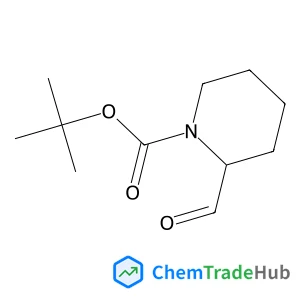
2-Methyl-2-propanyl (2R)-2-formyl-1-piperidinecarboxylate
CAS Number:
134526-69-5
Molecular Formula:
C11H19NO3

4-Cyclohexene-1,2-dicarboxylic acid, 1,2-dimethyl ester, (1R,2R)-rel-
CAS Number:
17673-68-6
Molecular Formula:
C10H14O4

Recommended Suppliers





Disclaimer
This page provides academic journal information for reference and research purposes only. We are not affiliated with any journal publishers and do not handle publication submissions. For publication-related inquiries, please contact the respective journal publishers directly.
If you notice any inaccuracies in the information displayed, please contact us at support@chemtradehub.com. We will promptly review and address your concerns.