


Cavitation activation by dual-frequency ultrasound and shock waves
Literature Information
Publication Date
2009-09-02
DOI
10.1039/B912725A
Impact Factor
3.676
Authors
Adam Brotchie, Robert Mettin, Franz Grieser, Muthupandian Ashokkumar
View Original
Abstract
High-speed photographic observations of cavitation occurring under a low-frequency (21 kHz) sonotrode tip in the presence of an additional, high-frequency (355 kHz) ultrasound source have been made in water and in dilute aqueous solute solutions. Acoustic emission spectra were measured to support the visual observations. It was seen that a nucleating effect of the high-frequency action on cavitation at the low-frequency sonotrode was highly power dependent, with cavitation being homogenous at low acoustic power and highly localised at high acoustic power. The presence of solutes was found to significantly affect the cavitation structures and the bubble fragmentation process. Both the fundamental high-frequency acoustic emission peak and the higher order low-frequency harmonics were significantly intensified in the dual-frequency mode in the presence of these solutes. Additionally, the application of a high-voltage induced acoustic shock-wave to two different ultrasound fields was investigated in water and surfactant solutions.
Recommended Journals

Journal of Medical Biochemistry

Photochemical & Photobiological Sciences

Molecular Diversity

Physical Chemistry Chemical Physics

European Journal of Organic Chemistry

CrystEngComm

Journal of Enzyme inhibition and Medicinal Chemistry

Current Pharmaceutical Biotechnology

Mini-Reviews in Medicinal Chemistry

Foundations of Chemistry
Related Literature
Internal mobilities and diffusion in an ionic liquid mixture
Céline Merlet, Paul A. Madden, Mathieu Salanne
2010-10-06
Paper
DOI: 10.1039/C0CP01412E
An in situXAS investigation of the kinetics of the ammonolysis of Ga2O3 and the oxidation of GaN
J. Brendt, D. Samuelis, T. E. Weirich, M. Martin
2009-03-19
Paper
DOI: 10.1039/B901819K
Correlation between polarity parameters and dielectric properties of [Na][TOTO]—a sodium ionic liquid
Oliver Zech, Johannes Hunger, Joshua R. Sangoro, Ciprian Iacob, Friedrich Kremer, Werner Kunz, Richard Buchner
2010-10-06
Paper
DOI: 10.1039/C0CP00840K
Selective removal of acetylenes from olefin mixtures through specific physicochemical interactions of ionic liquids with acetylenes
Jung Min Lee, Jelliarko Palgunadi, Jin Hyung Kim, Srun Jung, Young-seop Choi, Minserk Cheong, Hoon Sik Kim
2009-11-07
Paper
DOI: 10.1039/B915989D
Dispersion dominated halogen–π interactions: energies and locations of minima
Thomas Fox, Klaus R. Liedl, Christofer S. Tautermann
2010-10-15
Paper
DOI: 10.1039/C0CP00607F
Reply to the ‘Comment on “On using a too large integration time step in molecular dynamics simulations of coarse-grained molecular models”’ by S. J. Marrink, X. Periole, D. Peter Tieleman and Alex H. de Vries, Phys. Chem. Chem. Phys., 2010, 12, DOI: 10.1039/b915293h
Moritz Winger
2010-01-27
Comment
DOI: 10.1039/B922516C
XCC2—a new coupled cluster model for the second-order polarization propagator
Tatiana Korona
2010-10-15
Paper
DOI: 10.1039/C0CP00474J
Accurate quantum chemical energies for the interaction of hydrocarbons with oxide surfaces: CH4/MgO(001)
Sergio Tosoni, Joachim Sauer
2010-10-01
Paper
DOI: 10.1039/C0CP01261K
Boundary effects on the electrical conductivity of pure and doped cerium oxide thin films
Marcus C. Göbel, Giuliano Gregori, Joachim Maier
2010-10-04
Paper
DOI: 10.1039/C0CP00385A
Reply to the ‘Comment on “An explanation for the charge on water's surface”’ by R. Vácha, D. Horinek, R. Buchner, B. Winter and P. Jungwirth, Phys. Chem. Chem. Phys., 2010, 12, DOI: 10.1039/c001492c
Angus Gray-Weale, James K. Beattie
2010-09-23
Comment
DOI: 10.1039/C0CP00688B
You might also like
Compound Q&A
Is 6-(3-Fluorophenyl)picolinic acid (CAS: 887982-40-3) safe?
6-(3-Fluorophenyl)picolinic acid is generally considered safe for laboratory use...
887982-40-36-(3-Fluorophenyl)pi...
Compound Q&A
What industries use (3R)-3-Pyrrolidinol (CAS: 2799-21-5)?
(3R)-3-Pyrrolidinol is used in the pharmaceutical industry as a precursor for dr...
2799-21-5(3R)-3-Pyrrolidinol
Compound Q&A
What precautions should be taken when handling (4R,5R)-4,5-Diethoxycarbonyl-2,2-dimethyldioxolane (CAS: 59779-75-8)?
When handling (4R,5R)-4,5-Diethoxycarbonyl-2,2-dimethyldioxolane (CAS: 59779-75-...
59779-75-8(4R,5R)-4,5-Diethoxy...
Compound Q&A
How is 1-(6-Chloroimidazo[1,2-b]pyridazin-3-yl)ethanone (CAS: 90734-71-7) typically synthesized?
1-(6-Chloroimidazo[1,2-b]pyridazin-3-yl)ethanone is often synthesized via a mult...
90734-71-71-(6-Chloroimidazo[1...
Compound Q&A
What is the market or research trend for N-Ethyl-3,4-dimethylbenzylamine (CAS: 39180-83-1)?
The market for N-Ethyl-3,4-dimethylbenzylamine (CAS: 39180-83-1) remains steady,...
39180-83-1N-Ethyl-3,4-dimethyl...
Compound Q&A
What is Tert-butyl 3-(pyrrolidin-1-yl)azetidine-1-carboxylate (CAS: 1019008-21-9)?
Tert-butyl 3-(pyrrolidin-1-yl)azetidine-1-carboxylate is a chemical compound wit...
1019008-21-9Tert-butyl 3-(pyrrol...
Compound Q&A
What regulatory guidelines apply to 1-Bromo-3-chloro-2,4-dimethoxybenzene (CAS: 1228956-93-1)?
1-Bromo-3-chloro-2,4-dimethoxybenzene (CAS: 1228956-93-1) falls under the classi...
1228956-93-11-Bromo-3-chloro-2,4...
Compound Q&A
Is 8-Bromo-2-methyl-3,4-dihydroisoquinolin-1(2H)-one (CAS: 1368622-07-4) safe?
The safety of 8-Bromo-2-methyl-3,4-dihydroisoquinolin-1(2H)-one (CAS: 1368622-07...
1368622-07-48-Bromo-2-methyl-3,4...
Compound Q&A
Is Benzyl [(3S)-2,6-dioxo-3-piperidinyl]carbamate (CAS: 22785-43-9) safe?
Benzyl [(3S)-2,6-dioxo-3-piperidinyl]carbamate is generally safe when handled wi...
22785-43-9Benzyl [(3S)-2,6-dio...
Compound Q&A
How should 1-{[4-(4,4,5,5-Tetramethyl-1,3,2-dioxaborolan-2-yl)phenyl]sulfonyl}pyrrolidine (CAS: 928657-21-0) be stored?
1-{[4-(4,4,5,5-Tetramethyl-1,3,2-dioxaborolan-2-yl)phenyl]sulfonyl}pyrrolidine s...
928657-21-01-{[4-(4,4,5,5-Tetra...
Source Journal
Physical Chemistry Chemical Physics
CiteScore:
5.5
Self-citation Rate:
10.3%
Articles per Year:
3036
Physical Chemistry Chemical Physics (PCCP) is an international journal co-owned by 19 physical chemistry and physics societies from around the world. This journal publishes original, cutting-edge research in physical chemistry, chemical physics and biophysical chemistry. To be suitable for publication in PCCP, articles must include significant innovation and/or insight into physical chemistry; this is the most important criterion that reviewers and Editors will judge against when evaluating submissions. The journal has a broad scope and welcomes contributions spanning experiment, theory, computation and data science. Topical coverage includes spectroscopy, dynamics, kinetics, statistical mechanics, thermodynamics, electrochemistry, catalysis, surface science, quantum mechanics, quantum computing and machine learning. Interdisciplinary research areas such as polymers and soft matter, materials, nanoscience, energy, surfaces/interfaces, and biophysical chemistry are welcomed if they demonstrate significant innovation and/or insight into physical chemistry. Joined experimental/theoretical studies are particularly appreciated when complementary and based on up-to-date approaches.
Recommended Compounds
![[4-Chloro-3-(diethylcarbamoyl)phenyl]boronic acid structure](https://static.chemtradehub.com/structs/871/871332-68-2-0e3b.webp "[4-Chloro-3-(diethylcarbamoyl)phenyl]boronic acid structure")
[4-Chloro-3-(diethylcarbamoyl)phenyl]boronic acid
CAS Number:
871332-68-2
Molecular Formula:
C11H15BClNO3
![2-Methyl-2-propanyl [(2S)-1-hydroxy-3-(4-hydroxyphenyl)-2-propanyl]carbamate structure](https://static.chemtradehub.com/structs/833/83345-46-4-eec2.webp "2-Methyl-2-propanyl [(2S)-1-hydroxy-3-(4-hydroxyphenyl)-2-propanyl]carbamate structure")
2-Methyl-2-propanyl [(2S)-1-hydroxy-3-(4-hydroxyphenyl)-2-propanyl]carbamate
CAS Number:
83345-46-4
Molecular Formula:
C14H21NO4
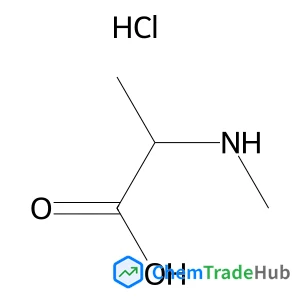
(R)-2-(Methylamino)propanoic acid hydrochloride
CAS Number:
1155878-14-0
Molecular Formula:
C4H10ClNO2
Recommended Suppliers





Disclaimer
This page provides academic journal information for reference and research purposes only. We are not affiliated with any journal publishers and do not handle publication submissions. For publication-related inquiries, please contact the respective journal publishers directly.
If you notice any inaccuracies in the information displayed, please contact us at support@chemtradehub.com. We will promptly review and address your concerns.