












A theoretical study of molecular titanium oxide clusters: structure, bonding, vibrations and stability
Literature Information
Publication Date
DOI
10.1039/A904269E
Impact Factor
3.676
Authors
View Original
Abstract
First principles quantum chemical calculations at the HF, MP2 and B3LYP levels of theory, using the LANL2DZ basis set, were used to explore the potential energy hypersurfaces (PESs) of ionic titanium(IV) oxide clusters of molecular dimensions, formulated as TiO32-, Ti2O32+, Ti2O52- and Ti2O64-. The neutral protonated species of the anions were also investigated at the same level of theory. The energetics of all topomers corresponding to global or local minima and saddle points in the potential energy hypersurfaces were computed at the more sophisticated QCISD(T) level. The protonation of the anionic metal oxide clusters produces neutral species and the computed proton affinities were in the range 1720–2000 kJ mol-1. The computed structural, energetic and spectroscopic properties of the clusters are in line with available experimental and theoretical results. The formation processess of the Ti2O52- dianion from TiO32- and TiO2 species and the Ti2O64- tetraanion by dimerization of the TiO32- species are predicted to be exothermic and endothermic, respectively.
Related Literature
Co-assembly behaviour of Janus nanoparticles and amphiphilic block copolymers in dilute solution
Qing Li, Liquan Wang, Jiaping Lin
2017-08-11
Paper
DOI: 10.1039/C7CP04501H
Stepwise deprotonation of sumanene: electronic structures, energetics and aromaticity alterations
Qi Xu, Marina A. Petrukhina, Andrey Yu. Rogachev
2017-07-19
Paper
DOI: 10.1039/C7CP03549G
Photoluminescence from vibrational excited-states for organic molecules adsorbed on Si nanoparticles
M. Maeda, T. Matsumoto, H. Kobayashi
2017-07-24
Paper
DOI: 10.1039/C7CP01836C
Two-photon absorption in a series of 2,6-disubstituted BODIPY dyes
Leonardo W. T. Barros, Thiago A. S. Cardoso, Angela Bihlmeier, Dominik K. Kölmel, Carlos H. Brito Cruz, Lazaro A. Padilha
2017-07-20
Paper
DOI: 10.1039/C6CP07849D
Regulation of transport properties by polytypism: a computational study on bilayer MoS2
Swastika Banerjee, Cheol Seong Hwang, Jung-Hae Choi, Seung-Cheol Lee
2017-07-20
Communication
DOI: 10.1039/C7CP02973J
Controllable decomposition of Ca(BH4)2 for reversible hydrogen storage
D. Rentsch, A. Remhof
2017-02-20
Paper
DOI: 10.1039/C7CP00448F
Multiscale simulations for understanding the evolution and mechanism of hierarchical peptide self-assembly
Qianli Zou
2017-05-09
Perspective
DOI: 10.1039/C7CP01923H
Theoretical tuning of the singlet–triplet energy gap to achieve efficient long-wavelength thermally activated delayed fluorescence emitters: the impact of substituents
Lijuan Wang, Tao Li, Peicheng Feng, Yan Song
2017-07-17
Paper
DOI: 10.1039/C7CP02615C
Complexation induced aggregation and deaggregation of acridine orange with sulfobutylether-β-cyclodextrin
Mhejabeen Sayed, Shruti Jha, Haridas Pal
2017-08-17
Paper
DOI: 10.1039/C7CP03135A
The effect of Sr(OH)2 on the hydrogen storage properties of the Mg(NH2)2–2LiH system
Hujun Cao, Han Wang, Claudio Pistidda, Chiara Milanese, Weijin Zhang, Anna-Lisa Chaudhary, Antonio Santoru, Sebastiano Garroni, Jozef Bednarcik, Hanns-Peter Liermann, Ping Chen, Thomas Klassen, Martin Dornheim
2017-03-01
Paper
DOI: 10.1039/C7CP00748E
You might also like
Compound Q&A
What are the main uses of 4-Nitrophenyl phosphate disodium salt hexahydrate (CAS: 333338-18-4)?
4-Nitrophenyl phosphate disodium salt hexahydrate is primarily used as a substra...
333338-18-44-Nitrophenyl phosph...
Compound Q&A
What are the main uses of 2-(Trifluoromethyl)-1,3-oxazole-4-carboxylic Acid (CAS: 1060816-01-4)?
2-(Trifluoromethyl)-1,3-oxazole-4-carboxylic Acid (CAS: 1060816-01-4) is widely ...
1060816-01-42-(Trifluoromethyl)-...
Compound Q&A
How should 2-Fluoro-4-biphenylcarboxylic acid (CAS: 137045-30-8) be stored?
2-Fluoro-4-biphenylcarboxylic acid should be stored in a cool, dry place at room...
137045-30-82-Fluoro-4-biphenylc...
Compound Q&A
What industries use Prednisolone-21-Carboxylic Acid (CAS: 61549-70-0)?
Prednisolone-21-Carboxylic Acid is primarily used in the pharmaceutical industry...
61549-70-0Prednisolone-21-Carb...
Compound Q&A
How should 4-(Hydrazinomethyl)-1,2,3-benzenetriol (CAS: 3614-72-0) be stored?
4-(Hydrazinomethyl)-1,2,3-benzenetriol (CAS: 3614-72-0) should be stored in a co...
3614-72-04-(Hydrazinomethyl)-...
Compound Q&A
What industries use 4-Amino-1-methyl-1H-pyrazole-5-carboxylic acid hydrochloride (CAS: 92534-70-8)?
4-Amino-1-methyl-1H-pyrazole-5-carboxylic acid hydrochloride (CAS: 92534-70-8) i...
92534-70-84-Amino-1-methyl-1H-...
Compound Q&A
What regulatory guidelines apply to dehydropachymic acid (CAS: 77012-31-8)?
Dehydropachymic acid (CAS: 77012-31-8) is regulated by various agencies. It fall...
77012-31-8Dehydropachymic acid
Compound Q&A
What is the market or research trend for 6-[(2,2-Dimethylpropanoyl)amino]nicotinic acid (CAS: 898561-66-5)?
The market and research trends for 6-[(2,2-Dimethylpropanoyl)amino]nicotinic aci...
898561-66-56-[(2,2-Dimethylprop...
Compound Q&A
How should 1,10-Phenanthroline-2,9-dicarbaldehyde (CAS: 57709-62-3) be stored?
1,10-Phenanthroline-2,9-dicarbaldehyde should be stored in a cool, dry place awa...
57709-62-31,10-Phenanthroline-...
Compound Q&A
How is 5-Carbamoyl-11-oxo-10,11-dihydro-5H-dibenzo[b,f]azepin-10-yl acetate (CAS: 113952-21-9) typically synthesized?
5-Carbamoyl-11-oxo-10,11-dihydro-5H-dibenzo[b,f]azepin-10-yl acetate can be synt...
113952-21-95-Carbamoyl-11-oxo-1...
Source Journal
Physical Chemistry Chemical Physics

CiteScore:
5.5
Self-citation Rate:
10.3%
Articles per Year:
3036
Physical Chemistry Chemical Physics (PCCP) is an international journal co-owned by 19 physical chemistry and physics societies from around the world. This journal publishes original, cutting-edge research in physical chemistry, chemical physics and biophysical chemistry. To be suitable for publication in PCCP, articles must include significant innovation and/or insight into physical chemistry; this is the most important criterion that reviewers and Editors will judge against when evaluating submissions. The journal has a broad scope and welcomes contributions spanning experiment, theory, computation and data science. Topical coverage includes spectroscopy, dynamics, kinetics, statistical mechanics, thermodynamics, electrochemistry, catalysis, surface science, quantum mechanics, quantum computing and machine learning. Interdisciplinary research areas such as polymers and soft matter, materials, nanoscience, energy, surfaces/interfaces, and biophysical chemistry are welcomed if they demonstrate significant innovation and/or insight into physical chemistry. Joined experimental/theoretical studies are particularly appreciated when complementary and based on up-to-date approaches.
Recommended Compounds
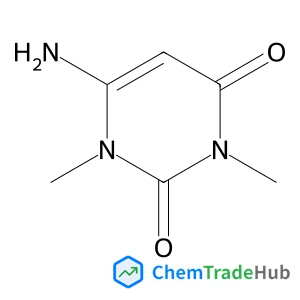
6-amino-1,3-dimethyl-1,2,3,4-tetrahydropyrimidine-2,4-dione
CAS Number:
6642-31-5
Molecular Formula:
C6H9N3O2



Recommended Suppliers






Disclaimer
This page provides academic journal information for reference and research purposes only. We are not affiliated with any journal publishers and do not handle publication submissions. For publication-related inquiries, please contact the respective journal publishers directly.
If you notice any inaccuracies in the information displayed, please contact us at support@chemtradehub.com. We will promptly review and address your concerns.