












Co-assembly behaviour of Janus nanoparticles and amphiphilic block copolymers in dilute solution
Literature Information
Publication Date
2017-08-11
DOI
10.1039/C7CP04501H
Impact Factor
3.676
Authors
Qing Li, Liquan Wang, Jiaping Lin
View Original
Abstract
Nanoparticles can co-assemble with amphiphilic block copolymers (ABPs) in solution to generate nanoaggregates with unique properties, yet the mechanism of such a co-assembly behaviour for Janus nanoparticles (JPs) and ABPs remains unclear. Here, the self-assembly behaviour of JP/ABP mixtures in dilute solution was studied via theoretical simulations. Two kinds of ABPs with different volume fractions fA of hydrophilic blocks were considered: one is symmetric copolymers with fA = 0.5, and the other is asymmetric ABPs with fA = 0.3. In the first case, mixtures of spheres and rods, connected networks and vesicles were formed sequentially as the volume fraction cJP of nanoparticles increases. In the second case, vesicles were constantly formed. For both cases, at lower cJP values, the nanoparticles were located at the core–corona interfaces. By contrast, at higher particle loadings, a large number of particles were involved in clusters embedded in the vesicle walls. Based on the simulation results, a morphological diagram in the space of cJP and fA was constructed to indicate the stability regions of different nanostructures. Specifically, it was found that the vesicles formed by JPs and ABPs with short hydrophilic blocks are stimuli-responsive. By changing the interaction parameters between hydrophobic blocks, controllable pores in the vesicle walls could be created. Our findings not only provide insights into the co-assembly behaviour of Janus nanoparticles and amphiphilic block copolymers in solution, but also offer a novel strategy to prepare nanoreactors with permeable membranes.
Related Literature
ADMET and TAD chemistry: a sustainable alliance
L. Vlaminck, K. De Bruycker, O. Türünç, F. E. Du Prez
2016-08-16
Paper
DOI: 10.1039/C6PY01144F
Green chain-shattering polymers based on a self-immolative azobenzene motif
2016-02-22
Paper
DOI: 10.1039/C5PY01937K
The hydrolytic behavior of N,N′-(dimethylamino)ethyl acrylate-functionalized polymeric stars
Marianne S. Rolph, Anaïs Pitto-Barry, Rachel K. O'Reilly
2017-03-17
Paper
DOI: 10.1039/C7PY00219J
Poly(acrylamide-homocysteine thiolactone) as a synthetic platform for the preparation of polymeric ionic liquids by post ring-opening-orthogonal modifications
Silvia Montolio, Oleksandr Zagorodko, Raúl Porcar, M. Isabel Burguete, Santiago V. Luis, Heikki Tenhu
2017-07-19
Paper
DOI: 10.1039/C7PY01067B
Sustainable polyvinyl acetals from bioaromatic aldehydes
Mayra Rostagno, Steven Shen, Ion Ghiviriga, Stephen A. Miller
2017-03-24
Paper
DOI: 10.1039/C7PY00205J
Formation of polyoxazoline-silica nanoparticles via the surface-initiated cationic polymerization of 2-methyl-2-oxazoline
G. Bissadi, R. Weberskirch
2016-07-22
Paper
DOI: 10.1039/C6PY01034B
Fabrication of multi-stimuli responsive supramolecular hydrogels based on host–guest inclusion complexation of a tadpole-shaped cyclodextrin derivative with the azobenzene dimer
Xing Wang, Juan Wang
2017-06-20
Paper
DOI: 10.1039/C7PY00698E
You might also like
Compound Q&A
What are the main uses of 4-Nitrophenyl phosphate disodium salt hexahydrate (CAS: 333338-18-4)?
4-Nitrophenyl phosphate disodium salt hexahydrate is primarily used as a substra...
333338-18-44-Nitrophenyl phosph...
Compound Q&A
What are the main uses of 2-(Trifluoromethyl)-1,3-oxazole-4-carboxylic Acid (CAS: 1060816-01-4)?
2-(Trifluoromethyl)-1,3-oxazole-4-carboxylic Acid (CAS: 1060816-01-4) is widely ...
1060816-01-42-(Trifluoromethyl)-...
Compound Q&A
How should 2-Fluoro-4-biphenylcarboxylic acid (CAS: 137045-30-8) be stored?
2-Fluoro-4-biphenylcarboxylic acid should be stored in a cool, dry place at room...
137045-30-82-Fluoro-4-biphenylc...
Compound Q&A
What industries use Prednisolone-21-Carboxylic Acid (CAS: 61549-70-0)?
Prednisolone-21-Carboxylic Acid is primarily used in the pharmaceutical industry...
61549-70-0Prednisolone-21-Carb...
Compound Q&A
How should 4-(Hydrazinomethyl)-1,2,3-benzenetriol (CAS: 3614-72-0) be stored?
4-(Hydrazinomethyl)-1,2,3-benzenetriol (CAS: 3614-72-0) should be stored in a co...
3614-72-04-(Hydrazinomethyl)-...
Compound Q&A
What industries use 4-Amino-1-methyl-1H-pyrazole-5-carboxylic acid hydrochloride (CAS: 92534-70-8)?
4-Amino-1-methyl-1H-pyrazole-5-carboxylic acid hydrochloride (CAS: 92534-70-8) i...
92534-70-84-Amino-1-methyl-1H-...
Compound Q&A
What regulatory guidelines apply to dehydropachymic acid (CAS: 77012-31-8)?
Dehydropachymic acid (CAS: 77012-31-8) is regulated by various agencies. It fall...
77012-31-8Dehydropachymic acid
Compound Q&A
What is the market or research trend for 6-[(2,2-Dimethylpropanoyl)amino]nicotinic acid (CAS: 898561-66-5)?
The market and research trends for 6-[(2,2-Dimethylpropanoyl)amino]nicotinic aci...
898561-66-56-[(2,2-Dimethylprop...
Compound Q&A
How should 1,10-Phenanthroline-2,9-dicarbaldehyde (CAS: 57709-62-3) be stored?
1,10-Phenanthroline-2,9-dicarbaldehyde should be stored in a cool, dry place awa...
57709-62-31,10-Phenanthroline-...
Compound Q&A
How is 5-Carbamoyl-11-oxo-10,11-dihydro-5H-dibenzo[b,f]azepin-10-yl acetate (CAS: 113952-21-9) typically synthesized?
5-Carbamoyl-11-oxo-10,11-dihydro-5H-dibenzo[b,f]azepin-10-yl acetate can be synt...
113952-21-95-Carbamoyl-11-oxo-1...
Source Journal
Physical Chemistry Chemical Physics

CiteScore:
5.5
Self-citation Rate:
10.3%
Articles per Year:
3036
Physical Chemistry Chemical Physics (PCCP) is an international journal co-owned by 19 physical chemistry and physics societies from around the world. This journal publishes original, cutting-edge research in physical chemistry, chemical physics and biophysical chemistry. To be suitable for publication in PCCP, articles must include significant innovation and/or insight into physical chemistry; this is the most important criterion that reviewers and Editors will judge against when evaluating submissions. The journal has a broad scope and welcomes contributions spanning experiment, theory, computation and data science. Topical coverage includes spectroscopy, dynamics, kinetics, statistical mechanics, thermodynamics, electrochemistry, catalysis, surface science, quantum mechanics, quantum computing and machine learning. Interdisciplinary research areas such as polymers and soft matter, materials, nanoscience, energy, surfaces/interfaces, and biophysical chemistry are welcomed if they demonstrate significant innovation and/or insight into physical chemistry. Joined experimental/theoretical studies are particularly appreciated when complementary and based on up-to-date approaches.
Recommended Compounds
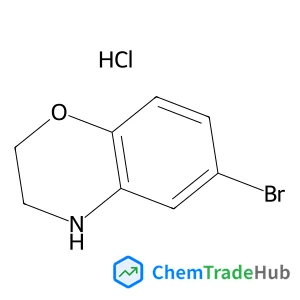
6-Bromo-3,4-dihydro-2H-1,4-benzoxazine hydrochloride (1:1)
CAS Number:
1260803-10-8
Molecular Formula:
C8H9BrClNO
Recommended Suppliers




Disclaimer
This page provides academic journal information for reference and research purposes only. We are not affiliated with any journal publishers and do not handle publication submissions. For publication-related inquiries, please contact the respective journal publishers directly.
If you notice any inaccuracies in the information displayed, please contact us at support@chemtradehub.com. We will promptly review and address your concerns.