












Super-tough self-healable multiphasic supramolecular plastic via sequence-biased statistical copolymerization
Literature Information
Publication Date
2023-11-07
DOI
10.1039/D3TA05808E
Impact Factor
12.732
Authors
Yeong Jun Yu, Haisu Kang, Sung Hyun Kwon, Jae Woo Chung
View Original
Abstract
Achieving both mechanical robustness and facile healing in self-healable supramolecular materials remains a challenge. This study presents a complementary design for a self-healable supramolecular plastic material, namely, ureidopyrimidinone (UPy)-end functionalized star poly(ε-caprolactone-co-ε-decalactone) (USPCD), based on the kinetics of sequence-biased statistical copolymerization, which depend on the bulkiness of monomers. The copolymerization results in phase separation, wherein the soft phases bear UPy hydrogen bonds and the hard phases contain crystalline bonds. The soft phases can induce a dynamic exchange of UPy moieties and consequent facile healing, whereas the hard phases can contribute to mechanical versatility. Eventually, the composition and sequence control of repeating units in the USPCD significantly affect the mechanical and healing characteristics. USPCD92, with ∼8 mol% poly(ε-decalactone) (PDL) adjacent to the UPy-end moieties, exhibits a super-tough plastic behavior (∼44 MJ m−3), rather than rubber-like behavior, with an excellent healing performance of ∼99% at 50 °C after 10 min treatment.
Recommended Journals
Related Literature
Nitrile oxide cycloadditions in supercritical carbon dioxide
Connie K. Y. Lee, Andrew B. Holmes, Bushra Al-Duri, Gary A. Leeke, Regina C. D. Santos, Jonathan P. K. Seville
2004-10-05
Communication
DOI: 10.1039/B411561A
Parallel nucleic acid recognition by the LNA (locked nucleic acid) stereoisomers β-L-LNA and α-D-LNA; studies in the mirror image world
Nanna K. Christensen, Torsten Bryld, Mads D. Sørensen, Khalil Arar, Jesper Wengel, Poul Nielsen
2003-12-19
Communication
DOI: 10.1039/B312321A
Stereoconservative Negishi arylation and alkynylation as an efficient approach to enantiopure 2,2′-diarylated 1,1′-binaphthyls
Katarína Krascsenicsová, Peter Walla, Peter Kasák, Georg Uray, C. Oliver Kappe, Martin Putala
2004-10-01
Communication
DOI: 10.1039/B410185E
A (H2O)4/crown ether network spanned between organometallic complex metal fragments
Cristina Wippert Rodrigues, Christian Limberg, Hans Pritzkow
2004-10-15
Communication
DOI: 10.1039/B407475K
First example of chiral N-heterocyclic carbenes as catalysts for kinetic resolution
Yumiko Suzuki, Kaori Yamauchi, Kazuyuki Muramatsu, Masayuki Sato
2004-10-11
Communication
DOI: 10.1039/B411855C
Site-specific ligation of anthracene-1,8-dicarboxylates to an Mn12 core: a route to the controlled functionalisation of single-molecule magnets
Andrea Cornia, Antonio C. Fabretti, Laura Zobbi, Daniele Bonacchi, Andrea Caneschi, Guillaume Chastanet, Dante Gatteschi, Roberta Sessoli
2004-10-01
Communication
DOI: 10.1039/B411320A
Contrasting coordination behaviour of 22-membered chalcogenaaza (Se, Te) macrocylces towards Pd(ii) and Pt(ii): Isolation and structural characterization of the first metallamacrocyle with a C–Pt–Se linkage
Snigdha Panda, Harkesh B. Singh, Ray J. Butcher
2004-01-08
Communication
DOI: 10.1039/B312358H
Ruthenium- and gold-catalysed sequential reactions: a straightforward synthesis of substituted oxazoles from propargylic alcohols and amides
Marilyn Daisy Milton, Youichi Inada, Yoshiaki Nishibayashi, Sakae Uemura
2004-10-13
Communication
DOI: 10.1039/B411180J
Ordered mesoporous titanosilicates with catalytically stable and active four-coordinated titanium sites
Xiaoyu Yang, Yu Han, Kaifeng Lin, Ge Tian, Yefei Feng, Xiangju Meng, Yan Di, Yuncheng Du, Yonglai Zhang, Feng-Shou Xiao
2004-10-04
Communication
DOI: 10.1039/B410305J
The substituent-dependent base-treatment chemistry of (η5-C5H5)Fe(CO)2SiR2SiR2Cl: formation of 1,2-disila-3-metallacyclobutanes, their ring-opened polymers, migrations and substitutions
Hemant K. Sharma, Keith H. Pannell
2004-10-06
Communication
DOI: 10.1039/B410822A
You might also like
Compound Q&A
What precautions should be taken when handling 2-Chloro-1,2-bis(4-methylphenyl)ethanone (CAS: 71193-32-3)?
When handling 2-Chloro-1,2-bis(4-methylphenyl)ethanone (CAS: 71193-32-3), it is ...
71193-32-32-Chloro-1,2-bis(4-m...
Compound Q&A
What industries use 4-Ethoxy-3-(5-methyl-4-oxo-7-propyl-1,4-dihydroimidazo[5,1-f][1,2,4]triazin-2-yl)benzenesulfonyl chloride (CAS: 224789-26-8)?
4-Ethoxy-3-(5-methyl-4-oxo-7-propyl-1,4-dihydroimidazo[5,1-f][1,2,4]triazin-2-yl...
224789-26-84-Ethoxy-3-(5-methyl...
Compound Q&A
How should Methyl 3-Oxo-4-Androsten-17-Carboxylate (CAS: 2681-55-2) be stored?
Methyl 3-Oxo-4-Androsten-17-Carboxylate (CAS: 2681-55-2) should be stored in a c...
2681-55-2Methyl 3-Oxo-4-Andro...
Compound Q&A
What are the main uses of (R)-3-Amino-4-(3-hexylphenylamino)-4-oxobutylphosphonic acid (CAS: 909725-61-7)?
(R)-3-Amino-4-(3-hexylphenylamino)-4-oxobutylphosphonic acid is primarily used i...
909725-61-7(R)-3-Amino-4-(3-hex...
Compound Q&A
What regulatory guidelines apply to 2-Methyl-2-propanyl 3-amino-3-carbamoyl-1-azetidinecarboxylate (CAS: 1254120-14-3)?
2-Methyl-2-propanyl 3-amino-3-carbamoyl-1-azetidinecarboxylate (CAS: 1254120-14-...
1254120-14-32-Methyl-2-propanyl ...
Compound Q&A
Are there alternatives to (E)-4-(tert-Butoxy)-4-oxobut-2-enoic acid (CAS: 135355-96-3) in synthesis?
There are alternative reagents that can be used in synthesis instead of (E)-4-(t...
135355-96-3(E)-4-(tert-Butoxy)-...
Compound Q&A
What are the physical and chemical properties of [2-(3-Chlorophenyl)-1,3-thiazol-4-yl]methanol (CAS: 121202-20-8)?
[2-(3-Chlorophenyl)-1,3-thiazol-4-yl]methanol (CAS: 121202-20-8) is a crystallin...
121202-20-8[2-(3-Chlorophenyl)-...
Compound Q&A
What is the market or research trend for Methyl (2S)-[(4S)-2,2-dimethyl-1,3-dioxolan-4-yl]{[(4-methylphenyl)sulfonyl]oxy}acetate (CAS: 166249-17-8)?
The market and research trends for Methyl (2S)-[(4S)-2,2-dimethyl-1,3-dioxolan-4...
166249-17-8Methyl (2S)-[(4S)-2,...
Compound Q&A
What is the market or research trend for 1-Bromo-2-isocyanatoethane (CAS: 42865-19-0)?
The market for 1-Bromo-2-isocyanatoethane (CAS: 42865-19-0) is driven by its use...
42865-19-01-Bromo-2-isocyanato...
Compound Q&A
What are the main uses of 4-Nitro-D-phenylalanine hydrochloride (CAS: 147065-06-3)?
4-Nitro-D-phenylalanine hydrochloride (CAS: 147065-06-3) is primarily used in re...
147065-06-34-Nitro-D-phenylalan...
Source Journal
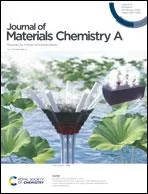
Journal of Materials Chemistry A
CiteScore:
19.5
Self-citation Rate:
4.7%
Articles per Year:
2211
Journal of Materials Chemistry A, B & C cover high quality studies across all fields of materials chemistry. The journals focus on those theoretical or experimental studies that report new understanding, applications, properties and synthesis of materials. The journals have a strong history of publishing quality reports of interest to interdisciplinary communities and providing an efficient and rigorous service through peer review and publication. The journals are led by an international team of Editors-in-Chief and Associate Editors who are all active researchers in their fields. Journal of Materials Chemistry A, B & C are separated by the intended application of the material studied. Broadly, applications in energy and sustainability are of interest to Journal of Materials Chemistry A, applications in biology and medicine are of interest to Journal of Materials Chemistry B, and applications in optical, magnetic and electronic devices are of interest to Journal of Materials Chemistry C. More than one Journal of Materials Chemistry journal may be suitable for certain fields and researchers are encouraged to submit their paper to the journal that they feel best fits for their particular article. Example topic areas within the scope of Journal of Materials Chemistry A are listed below. This list is neither exhaustive nor exclusive. Artificial photosynthesis Batteries Carbon dioxide conversion Catalysis Fuel cells Gas capture/separation/storage Green/sustainable materials Hydrogen generation Hydrogen storage Photocatalysis Photovoltaics Self-cleaning materials Self-healing materials Sensors Supercapacitors Thermoelectrics Water splitting Water treatment
Recommended Compounds
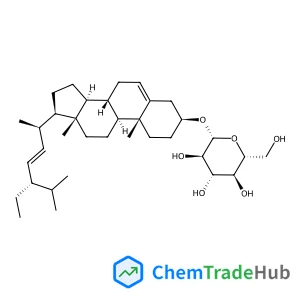
(3beta,22E)-Stigmasta-5,22-dien-3-yl beta-D-glucopyranoside
CAS Number:
19716-26-8
Molecular Formula:
C35H58O6
Recommended Suppliers





Disclaimer
This page provides academic journal information for reference and research purposes only. We are not affiliated with any journal publishers and do not handle publication submissions. For publication-related inquiries, please contact the respective journal publishers directly.
If you notice any inaccuracies in the information displayed, please contact us at support@chemtradehub.com. We will promptly review and address your concerns.