












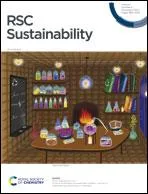
Selective reduction of oxalic acid to glycolic acid at low temperature in a continuous flow process
Literature Information
Publication Date
2023-10-13
DOI
10.1039/D3SU00185G
Impact Factor
0
Authors
Eric Schuler, Lars Grooten, Paula Oulego, N. Raveendran Shiju
View Original
Abstract
Next to biomass, CO2 is the only other carbon source to replace fossil feedstocks to produce chemicals and polymers. In a CO2 fed chemical industry, new platform chemicals will arise. Oxalic acid derived from CO2 based formate is one of them. It can be converted to a wide array of chemicals including ethylene glycol, or carboxylic acids such as glycolic acid. Glycolic acid is currently a fossil-based monomer used in the production of polyesters. Today the most common route from oxalic acid to glycolic acid proceeds via the oxalic acid di-esters as intermediates and thus requires multiple steps. Recently, we have proven that the direct reduction of oxalic acid to glycolic acid at high yields is possible. In this work, we translate this process into a stable and continuous process using industrially relevant conditions. We lowered the reaction temperature by 25 °C to 50 °C, reduced the reaction time from hours to minutes and proved the catalyst stability over 100 hours using oxalic acid derived from CO2. This research lays the foundation for an industrial continuous process for the direct reduction of oxalic acid to glycolic acid and opens an important route from CO2 to chemicals.
Related Literature
Gold-catalyzed heterocyclic syntheses through α-imino gold carbene complexes as intermediates
Enrique Aguilar, Javier Santamaría
2019-03-20
Review Article
DOI: 10.1039/C9QO00243J
A radical-chain reaction of isocyanides with selenosulfonates and water: facile synthesis of selenocarbamates under metal-free conditions
Yi Fang, Can Liu, Fei Wang, Rao Ding, Shun-Yi Wang, Shun-Jun Ji
2019-01-22
Research Article
DOI: 10.1039/C8QO01364K
Efficient synthesis of tetrasubstituted 2,3-allenoates and preliminary studies on bioactivities
Yuan Yao, Guirong Zhu, Qin Chen, Hui Qian
2018-12-11
Research Article
DOI: 10.1039/C8QO01202D
Creation of bispiro[pyrazolone-3,3′-oxindoles] via a phosphine-catalyzed enantioselective [3 + 2] annulation of the Morita–Baylis–Hillman carbonates with pyrazoloneyldiene oxindoles
Wai-Lun Chan, Ligong Chen, Nisar Ullah
2019-05-06
Research Article
DOI: 10.1039/C9QO00471H
Synthesis of a sumanenyl hafnocene complex‡
Toru Amaya, Shun Katoh, Toshiyuki Moriuchi, Toshikazu Hirao
2019-03-13
Research Article
DOI: 10.1039/C9QO00140A
Synergistic effect of the Pd–Ni bimetal/carbon nanofiber composite catalyst in Suzuki coupling reaction
Guangyang Bao, Jie Bai, Chunping Li
2018-12-10
Research Article
DOI: 10.1039/C8QO01100A
1,2-Amino alcohol-dependent Petasis allylboration for racemic and chiral homoallylamines
Zi-Wei Lin, Yang Zhou, Zhen-Ni Zhao, Yan Zhao, Jun Liu, Yi-Yong Huang
2019-01-30
Research Article
DOI: 10.1039/C8QO01428K
Carbene-catalyzed oxidative acylation promoted by an unprecedented oxidant CCl3CN
Zijun Wu, Di Jiang, Jian Wang
2019-01-25
Research Article
DOI: 10.1039/C8QO01420E
Insights into highly selective ring expansion of oxaziridines under Lewis base catalysis: a DFT study
Qiao-Chu Zhang, Xue Li, Xinghua Wang, Shi-Jun Li, Ling-Bo Qu, Donghui Wei
2019-01-25
Research Article
DOI: 10.1039/C8QO01370E
You might also like
Compound Q&A
How should waste containing (6-Bromo-2-naphthyl)oxy](dimethyl)(2-methyl-2-propanyl)silane be handled?
Waste containing (6-Bromo-2-naphthyl)oxy](dimethyl)(2-methyl-2-propanyl)silane (...
100751-65-3[(6-Bromo-2-naphthyl...
Compound Q&A
How is 7-Fluoro-4-isoquinolinecarboxylic acid (CAS: 1841081-40-0) typically synthesized?
7-Fluoro-4-isoquinolinecarboxylic acid can be synthesized via a multi-step proce...
1841081-40-07-Fluoro-4-isoquinol...
Compound Q&A
What are the physical and chemical properties of 2,3,5,6-Tetrabromothieno[3,2-b]thiophene (CAS: 124638-53-5)?
2,3,5,6-Tetrabromothieno[3,2-b]thiophene is a crystalline compound with a high m...
124638-53-52,3,5,6-Tetrabromoth...
Compound Q&A
Is 1-[4-(Benzylamino)-7,8-dihydro-5H-pyrano[4,3-d]pyrimidin-2-yl]-2-methyl-1H-indole-4-carboxamide (CAS: 1542705-92-9) safe?
1-[4-(Benzylamino)-7,8-dihydro-5H-pyrano[4,3-d]pyrimidin-2-yl]-2-methyl-1H-indol...
1542705-92-91-[4-(Benzylamino)-7...
Compound Q&A
What is the market or research trend for imidazo[5,1-d]-1,2,3,5-tetrazine-8-carboxylic acid, 3,4-dihydro-3-methyl-4-oxo- (CAS: 113942-30-6)?
The market for imidazo[5,1-d]-1,2,3,5-tetrazine-8-carboxylic acid, 3,4-dihydro-3...
113942-30-6Imidazo[5,1-d]-1,2,3...
Compound Q&A
What is 3-(Triisopropylsilyl)propiolaldehyde (CAS: 163271-80-5)?
3-(Triisopropylsilyl)propiolaldehyde is a synthetic organic compound with the CA...
163271-80-53-(Triisopropylsilyl...
Compound Q&A
What regulatory guidelines apply to 6-Nitro-2H-1,4-benzoxazin-3(4H)-one (CAS: 81721-87-1)?
6-Nitro-2H-1,4-benzoxazin-3(4H)-one (CAS: 81721-87-1) is subject to various regu...
81721-87-16-Nitro-2H-1,4-benzo...
Compound Q&A
How should waste containing (3-Fluorophenyl)(4-{[(2-methyl-2-propanyl)oxy]carbonyl}-1-piperazinyl)acetic acid (CAS: 885272-91-3) be handled?
Waste containing (3-Fluorophenyl)(4-{[(2-methyl-2-propanyl)oxy]carbonyl}-1-piper...
885272-91-3(3-Fluorophenyl)(4-{...
Compound Q&A
What are the physical and chemical properties of N,N'-4,4'-Biphenyldiyldiisonicotinamide (CAS: 55119-40-9)?
N,N'-4,4'-Biphenyldiyldiisonicotinamide is a white crystalline solid with a mole...
55119-40-9N,N'-4,4'-Biphenyldi...
Compound Q&A
What industries use 6-Bromo-8-fluoro-2-quinazolinol (CAS: 1036756-15-6)?
6-Bromo-8-fluoro-2-quinazolinol is primarily used in the pharmaceutical industry...
1036756-15-66-Bromo-8-fluoro-2-q...
Source Journal
Recommended Compounds
![2,9-Dichloro-5,12-dihydroquinolino[2,3-b]acridine-7,14-dione structure](https://static.chemtradehub.com/structs/308/3089-17-6-750b.webp "2,9-Dichloro-5,12-dihydroquinolino[2,3-b]acridine-7,14-dione structure")
2,9-Dichloro-5,12-dihydroquinolino[2,3-b]acridine-7,14-dione
CAS Number:
3089-17-6
Molecular Formula:
C20H10Cl2N2O2
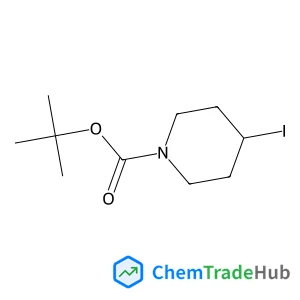
2-Methyl-2-propanyl 4-iodo-1-piperidinecarboxylate
CAS Number:
301673-14-3
Molecular Formula:
C10H18INO2
Recommended Suppliers






Disclaimer
This page provides academic journal information for reference and research purposes only. We are not affiliated with any journal publishers and do not handle publication submissions. For publication-related inquiries, please contact the respective journal publishers directly.
If you notice any inaccuracies in the information displayed, please contact us at support@chemtradehub.com. We will promptly review and address your concerns.