












Reversible Cl/Cl− redox in a spinel Mn3O4 electrode
Literature Information
Publication Date
2023-10-24
DOI
10.1039/D3SC04545E
Impact Factor
9.825
Authors
Sean K. Sandstrom, Qiuyao Li, Yiming Sui, Mason Lyons, Chun-Wai Chang, Rui Zhang, Heng Jiang, Mingliang Yu, David Hoang, William F. Stickle, Huolin L. Xin, Zhenxing Feng, Xiulei Ji
View Original
Abstract
A unique prospect of using halides as charge carriers is the possibility of the halides undergoing anodic redox behaviors when serving as charge carriers for the charge-neutrality compensation of electrodes. However, the anodic conversion of halides to neutral halogen species has often been irreversible at room temperature due to the emergence of diatomic halogen gaseous products. Here, we report that chloride ions can be reversibly converted to near-neutral atomic chlorine species in the Mn3O4 electrode at room temperature in a highly concentrated chloride-based aqueous electrolyte. Notably, the Zn2+ cations inserted in the first discharge and trapped in the Mn3O4 structure create an environment to stabilize the converted chlorine atoms within the structure. Characterization results suggest that the Cl/Cl− redox is responsible for the observed large capacity, as the oxidation state of Mn barely changes upon charging. Computation results corroborate that the converted chlorine species exist as polychloride monoanions, e.g., [Cl3]− and [Cl5]−, inside the Zn2+-trapped Mn3O4, and the presence of polychloride species is confirmed experimentally. Our results point to the halogen plating inside electrode lattices as a new charge-storage mechanism.
Related Literature
Pd-catalyzed aminocarbonylation of alkynes with amines using Co2(CO)8 as a carbonyl source
Yaxi Dong, Suyan Sun, Fan Yang, Yu Zhu, Weiguo Zhu, Huijie Qiao, Yangjie Wu
2016-03-28
Research Article
DOI: 10.1039/C6QO00075D
Palladium-catalyzed decarboxylative alkoxycarbonylation of potassium aryltrifluoroborates with potassium oxalate monoesters
Jinmin Miao, Ping Fang, Sahota Jagdeep, Haibo Ge
2015-12-11
Research Article
DOI: 10.1039/C5QO00349K
Regiospecific synthesis of distally chlorinated ketones via C–C bond cleavage of cycloalkanols
Xuefeng Fan, Huijun Zhao, Jiajia Yu, Xiaoguang Bao
2015-12-10
Research Article
DOI: 10.1039/C5QO00368G
2′-Cyanoethyl thioglycosides: effective nucleophiles for synthesis of (hetero)aryl thioglycosides under the catalysis of Cu
Xiaolong Yuan, Yazhen Kou, Lan Yu, Zhan-Xin Zhang, Weihua Xue
2015-10-14
Research Article
DOI: 10.1039/C5QO00276A
Manganese(ii)-catalyzed modular synthesis of isoquinolines from vinyl isocyanides and hydrazines
Hong Mao, Mingchun Gao, Bingxin Liu
2016-02-22
Research Article
DOI: 10.1039/C6QO00048G
Palladium-catalyzed arylation of β-methylene C(sp3)–H bonds at room temperature: desymmetrization of simple cycloalkyl carboxylic acids
W. A. Nack, B. Wang, X. Wu, R. Jiao, G. He
2016-03-01
Research Article
DOI: 10.1039/C5QO00421G
Au/TiO2 catalyzed reductive amination of aldehydes and ketones using formic acid as reductant
Shengzong Liang, Paige Monsen, Gerald B. Hammond, Bo Xu
2016-02-18
Research Article
DOI: 10.1039/C5QO00439J
Synthesis of the 1,2,4-thiadiazole alkaloids polycarpathiamines A and B
Emma K. Davison, Jonathan Sperry
2015-11-30
Research Article
DOI: 10.1039/C5QO00367A
You might also like
Compound Q&A
What is Ethyl 3-cyclohexylpropanoate (CAS: 10094-36-7)?
Ethyl 3-cyclohexylpropanoate is a clear, colorless to light yellow liquid with a...
10094-36-7Ethyl 3-cyclohexylpr...
Compound Q&A
How should waste containing 2-(Hydroxymethyl)-5-(methoxycarbonyl)-6-methyl-4-(2-nitrophenyl)nicotinic acid (CAS: 34783-31-8) be handled?
Waste containing 2-(Hydroxymethyl)-5-(methoxycarbonyl)-6-methyl-4-(2-nitrophenyl...
34783-31-82-(Hydroxymethyl)-5-...
Compound Q&A
How should waste containing 2,4,6-Tris(pentafluoroethyl)-1,3,5-triazine (CAS: 858-46-8) be handled?
Waste containing 2,4,6-Tris(pentafluoroethyl)-1,3,5-triazine (CAS: 858-46-8) sho...
858-46-82,4,6-Tris(pentafluo...
Compound Q&A
What precautions should be taken when handling Chloroac-nle-oh (CAS: 56787-36-1)?
When handling Chloroac-nle-oh (CAS: 56787-36-1), it is essential to wear appropr...
56787-36-1Chloroac-nle-oh
Compound Q&A
What industries use Ethyl 6-phenylimidazo[2,1-b][1,3]thiazole-3-carboxylate (CAS: 752244-05-6)?
Ethyl 6-phenylimidazo[2,1-b][1,3]thiazole-3-carboxylate is primarily used in the...
752244-05-6Ethyl 6-phenylimidaz...
Compound Q&A
Are there alternatives to alpha-(2-Bromophenyl)benzylamine (CAS: 55095-15-3) in synthesis?
Alternatives to alpha-(2-Bromophenyl)benzylamine (CAS: 55095-15-3) in synthesis ...
55095-15-3alpha-(2-Bromophenyl...
Compound Q&A
How should waste containing 2-Chloro-5-methoxypyridine (CAS: 139585-48-1) be handled?
Waste containing 2-Chloro-5-methoxypyridine (CAS: 139585-48-1) should be managed...
139585-48-12-Chloro-5-methoxypy...
Compound Q&A
What industries use 1-(4-Methoxyphenyl)-2,5-dimethyl-1H-pyrrole (CAS: 5044-27-9)?
1-(4-Methoxyphenyl)-2,5-dimethyl-1H-pyrrole (CAS: 5044-27-9) is used in various ...
5044-27-91-(4-Methoxyphenyl)-...
Compound Q&A
Are there alternatives to 3-Bromo-5-(N-Boc)aminomethylisoxazole (CAS: 903131-45-3) in synthesis?
There are alternative reagents and compounds that can be used in the synthesis o...
903131-45-33-Bromo-5-(N-Boc)ami...
Compound Q&A
What is Tungsten(IV) oxide (CAS: 12036-22-5)?
Tungsten(IV) oxide, also known as tungsten dioxide, is a chemical compound with ...
12036-22-5Tungsten(IV) oxide
Source Journal
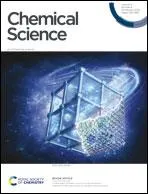
Chemical Science
CiteScore:
14.4
Self-citation Rate:
3.9%
Articles per Year:
1413
Our journal has a wide-ranging scope which covers the full breadth of the chemical sciences. The research we publish contains the sorts of novel ideas, challenging questions and progressive thinking that bring undiscovered breakthroughs within reach. Your paper could focus on a single area, or cross many. It could be beyond the accepted bounds of the chemical sciences. It might address an immediate challenge, contribute to a future breakthrough or be wholly conceptual. We’re a team from every field of the chemical sciences, and know from experience that breakthroughs that drive the solutions to global challenges can come from anywhere, at any time. You could even start an entirely new area of research. Too bold? Too progressive? No such thing
Recommended Compounds


Recommended Suppliers





Disclaimer
This page provides academic journal information for reference and research purposes only. We are not affiliated with any journal publishers and do not handle publication submissions. For publication-related inquiries, please contact the respective journal publishers directly.
If you notice any inaccuracies in the information displayed, please contact us at support@chemtradehub.com. We will promptly review and address your concerns.