












![6-Benzyl-4,5,6,7-tetrahydro-1H-pyrazolo[3,4-c]pyridin-3(2H)-one structure](https://static.chemtradehub.com/structs/909/909187-64-0-f54f.webp "6-Benzyl-4,5,6,7-tetrahydro-1H-pyrazolo[3,4-c]pyridin-3(2H)-one structure")
6-Benzyl-4,5,6,7-tetrahydro-1H-pyrazolo[3,4-c]pyridin-3(2H)-one
CAS Number:
909187-64-0
Molecular Formula:
C13H15N3O
We have developed a general process for the formation of enantioenriched benzylic stereocenters via stereospecific Pd-catalyzed cross-coupling reactions of enantioenriched benzylic tricyclohexyltin nucleophiles. This process proceeds with excellent stereospecificity for a remarkably broad scope of electrophilic coupling partners including aryl and heteroaryl halides and triflates, acid chlorides, thioesters, chloroformates, and carbamoyl chlorides. Thus, enantioenriched 1,1-diarylalkanes as well as formal products of asymmetric enolate arylation are readily accessed using this approach. We additionally provide the first demonstration of a Sn-selective cross-coupling reaction using a vicinal alkylborylstannane nucleophile. In these reactions, the presence of cyclohexyl spectator ligands on tin is essential to ensure selective transfer of the secondary benzylic unit from tin to palladium.
Iain Coldham, Sophie Raimbault, Praful T. Chovatia, Jignesh J. Patel, Daniele Leonori, Nadeem S. Sheikh, David T. E. Whittaker
DOI: 10.1039/B810988E
Jamie R. Moffat, Gordon J. Seeley, Jeff T. Carter, Andrew Burgess, David K. Smith
DOI: 10.1039/B809077G
Cheng-Lan Lin, Hui-Chun Yang, Nai-Ti Lin, I-Jui Hsu, Yu Wang, Tien-Yau Luh
DOI: 10.1039/B808958B
Guohua Wu, Caroline Norris, Hamish Stewart, Hazel Cox, Anthony J. Stace
DOI: 10.1039/B806469E
Youn-Sang Bae, Omar K. Farha, Alexander M. Spokoyny, Chad A. Mirkin, Joseph T. Hupp, Randall Q. Snurr
DOI: 10.1039/B805785K
Yi Cao, Hongbin Li
DOI: 10.1039/B806684A
Félix Freire, Emilio Quiñoá, Ricardo Riguera
DOI: 10.1039/B806529B
Kalyan K. Sadhu, Parimal K. Bharadwaj
DOI: 10.1039/B806426A
Yasunobu Fujii, Yuta Mihashi
DOI: 10.1039/B806361C
Dechao Niu, Yongsheng Li, Xiaoli Qiao, Liang Li, Wenru Zhao, Hangrong Chen, Qiaoling Zhao, Zhi Ma
DOI: 10.1039/B807781A
When handling 4-(2-Furylmethyl)thiomorpholine 1,1-dioxide (CAS: 79206-94-3), it ...
When handling 4-Chloro-N-[2-(4-morpholinyl)ethyl]benzamide (CAS: 71320-77-9), it...
Waste containing this compound (CAS: 62921-74-8) should be handled according to ...
Waste containing (S)-Methyl 2-amino-3-cyclohexylpropanoate should be collected i...
This compound can be synthesized using a multi-step process involving the conjug...
There are several alternatives to (2E)-3-(3,4-Dichlorophenyl)acrylic acid in syn...
Ethyl 6-(2-nitrophenyl)imidazo[2,1-b][1,3]thiazole-3-carboxylate (CAS: 925437-84...
Waste containing 2-(1,3-Thiazol-2-yl)ethanamine (CAS: 18453-07-1) should be coll...
Methyl 5-iodo-2-methylbenzoate can be synthesized through the iodination of meth...
5-Chloro[1,2,4]triazolo[1,5-a]pyridine is commonly synthesized via the condensat...
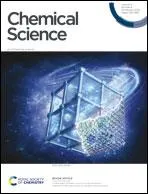
Our journal has a wide-ranging scope which covers the full breadth of the chemical sciences. The research we publish contains the sorts of novel ideas, challenging questions and progressive thinking that bring undiscovered breakthroughs within reach. Your paper could focus on a single area, or cross many. It could be beyond the accepted bounds of the chemical sciences. It might address an immediate challenge, contribute to a future breakthrough or be wholly conceptual. We’re a team from every field of the chemical sciences, and know from experience that breakthroughs that drive the solutions to global challenges can come from anywhere, at any time. You could even start an entirely new area of research. Too bold? Too progressive? No such thing
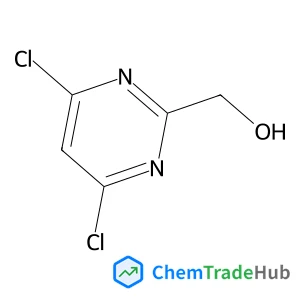
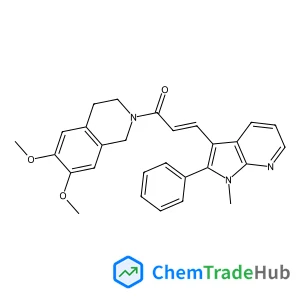
![1-[3-(4-Morpholinylsulfonyl)phenyl]methanamine structure](https://static.chemtradehub.com/structs/933/933989-32-3-51af.webp "1-[3-(4-Morpholinylsulfonyl)phenyl]methanamine structure")
![5-Methyl-4,5,6,7-tetrahydropyrazolo[1,5-a]pyrazin-2-amine structure](https://static.chemtradehub.com/structs/122/1227210-33-4-8d64.webp "5-Methyl-4,5,6,7-tetrahydropyrazolo[1,5-a]pyrazin-2-amine structure")



