












Efficient photocatalytic degradation of ultra-high concentration printing and dyeing wastewater using a SiO2/GCN nanocomposite
Literature Information
Publication Date
2023-08-22
DOI
10.1039/D3RE00325F
Impact Factor
4.239
Authors
Jinyuan Zhu, Yingying Zhu, Yifan Zhou, Chaoran Li, Geng Chen, Xinbao Li
View Original
Abstract
In this study, we aimed to develop an efficient photocatalyst utilizing a nanocomposite of silicon dioxide (SiO2) and graphitic carbon nitride (GCN) for the treatment of highly concentrated printing and dyeing wastewater. The nanocomposite of SiO2 and graphitic carbon nitride (GCN) was synthesized using a simple ultrasonic and solvothermal method. The SiO2/GCN nanocomposite demonstrated superior photocatalytic performance, efficiently degrading rhodamine B (RhB) at both low (20 mg L−1) and ultra-high concentrations (300 mg L−1). The catalyst exhibited effective charge separation, with SiO2 acting as an electron trap to suppress electron–hole recombination. Optimized synthesis conditions were achieved by adjusting the hydrothermal temperature and time. The SiO2/GCN nanocomposite showed good cycling stability, making it suitable for practical applications. To the best of our knowledge, this is the first time that photodegradation of RhB at a concentration of 300 mg L−1 has been achieved without relying on adsorbent materials. Therefore, this work contributes to the design and development of innovative environmentally-friendly photocatalysts for the effective degradation of highly concentrated pollutants.
Related Literature
Controllable nitrogen-doping of nanoporous carbons enabled by coordination frameworks
Wei Zhang, Saiyu Bu, Qinghong Yuan, Ming Hu
2018-12-13
Paper
DOI: 10.1039/C8TA09817D
Development of a PCR-free electrochemical point of care test for clinical detection of methicillin resistant Staphylococcus aureus (MRSA)
H. Schulze, G. Henihan, A. Hardie, I. Ciani, G. Giraud, J. G. Terry, A. J. Walton, R. Pethig, P. Ghazal, K. E. Templeton, A. R. Mount, T. T. Bachmann
2013-10-04
Paper
DOI: 10.1039/C3AN01319G
A miniaturized giant magnetic resistance system for quantitative detection of methamphetamine
Guopan Yang, Kunxue Cheng, Zhengkang Chu, Chunhui Ren, Yusheng Fu, Jinhong Guo
2021-02-17
Paper
DOI: 10.1039/D0AN02418J
A novel ratiometric electrochemical biosensing strategy based on T7 exonuclease-assisted homogenous target recycling coupling hairpin assembly-triggered double-signal output for the multiple amplified detection of miRNA
Qing-Yun Zhou, Rong-Na Ma, Chao-Long Hu, Fei Sun, Li-Ping Jia, Wei Zhang, Lei Shang, Qing-Wang Xue, Wen-Li Jia, Huai-Sheng Wang
2021-02-25
Paper
DOI: 10.1039/D1AN00204J
Development of a focused high-energy macromolecular ion beam
Ming-Lee Chu, Jung-Lee Lin
2021-03-03
Paper
DOI: 10.1039/D0AN02478C
Enhanced thermoelectric properties of p-type Ag2Te by Cu substitution
Hangtian Zhu, Jun Luo, Huaizhou Zhao, Jingkui Liang
2015-04-13
Paper
DOI: 10.1039/C5TA01266J
Viscosity sensitive endoplasmic reticulum fluorescent probes based on oxazolopyridinium
Ya-Nan Wang, Xiao-Qing Zhang, Ru Sun, Yu-Jie Xu, Jian-Feng Ge
2021-06-09
Paper
DOI: 10.1039/D1TB01106E
Wearable superhigh energy density supercapacitors using a hierarchical ternary metal selenide composite of CoNiSe2 microspheres decorated with CoFe2Se4 nanorods
Chandu V. V. Muralee Gopi, Araveeti Eswar Reddy, Hee-Je Kim
2018-03-19
Paper
DOI: 10.1039/C8TA01141A
Simultaneous analysis of dopamine and homovanillic acid by high-performance liquid chromatography with wall-jet/thin-layer electrochemical detection
Yaping Zhou, Hongling Yan, Qingji Xie, Siyu Huang, Jiali Liu, Zou Li, Ming Ma
2013-09-13
Paper
DOI: 10.1039/C3AN01437A
You might also like
Compound Q&A
What is the market or research trend for N-(4-Methoxybenzyl)-2-pyridinamine (CAS: 52818-63-0)?
N-(4-Methoxybenzyl)-2-pyridinamine (CAS: 52818-63-0) is increasingly being used ...
52818-63-0N-(4-Methoxybenzyl)-...
Compound Q&A
What precautions should be taken when handling Ethyl 4-(2-chlorophenyl)-1,3-thiazole-2-carboxylate (CAS: 1050507-06-6)?
When handling Ethyl 4-(2-chlorophenyl)-1,3-thiazole-2-carboxylate, appropriate p...
1050507-06-6Ethyl 4-(2-chlorophe...
Compound Q&A
What regulatory guidelines apply to diethyldiselane (CAS: 628-39-7)?
Diethyldiselane (CAS: 628-39-7) is classified under the Globally Harmonized Syst...
628-39-7Diethyldiselane
Compound Q&A
What is the market or research trend for oxocopper (CAS: 12053-18-8)?
The market for oxocopper (CAS: 12053-18-8) is primarily driven by its use in cat...
12053-18-8oxocopper; oxo-(oxoc...
Compound Q&A
What is the market or research trend for 5-{[(2-Methyl-2-propanyl)oxy]carbonyl}-5-azaspiro[2.4]heptane-7-carboxylic acid?
The market for 5-{[(2-Methyl-2-propanyl)oxy]carbonyl}-5-azaspiro[2.4]heptane-7-c...
1268519-54-55-{[(2-Methyl-2-prop...
Compound Q&A
What is 2-(1-Pyrrolidinyl)-4-pyridinamine (CAS: 35981-63-6)?
2-(1-Pyrrolidinyl)-4-pyridinamine is a chemical compound with the CAS number 359...
35981-63-62-(1-Pyrrolidinyl)-4...
Compound Q&A
What are the physical and chemical properties of 2-(3-Pyridinyl)-1-azabicyclo[2.2.2]octane (CAS: 91556-75-1)?
2-(3-Pyridinyl)-1-azabicyclo[2.2.2]octane (CAS: 91556-75-1) is a crystalline sol...
91556-75-12-(3-Pyridinyl)-1-az...
Compound Q&A
How is (S)-Alpha-allyl-proline hydrochloride (CAS: 129704-91-2) typically synthesized?
(S)-Alpha-allyl-proline hydrochloride is usually synthesized via a Wittig reacti...
129704-91-2(S)-Alpha-allyl-prol...
Compound Q&A
What is 3-Methyl-1,2-oxazole-5-carboxylic acid (CAS: 4857-42-5)?
3-Methyl-1,2-oxazole-5-carboxylic acid (CAS: 4857-42-5) is an organic compound w...
4857-42-53-Methyl-1,2-oxazole...
Compound Q&A
How is Lys-SMCC-DM1 (CAS: 1281816-04-3) typically synthesized?
Lys-SMCC-DM1 is synthesized via a multi-step process involving the coupling of S...
1281816-04-3Lys-SMCC-DM1
Source Journal
Reaction Chemistry & Engineering

CiteScore:
0
Self-citation Rate:
8.8%
Articles per Year:
284
Reaction Chemistry & Engineering is an interdisciplinary journal reporting cutting-edge research focused on enhancing the understanding and efficiency of reactions. Reaction engineering leverages the interface where fundamental molecular chemistry meets chemical engineering and technology. Challenges in chemistry can be overcome by the application of new technologies, while engineers may find improved solutions for process development from the latest developments in reaction chemistry. Reaction Chemistry & Engineering is a unique forum for researchers whose interests span the broad areas of chemical engineering and chemical sciences to come together in solving problems of importance to wider society. All papers should be written to be approachable by readers across the engineering and chemical sciences. Papers that consider multiple scales, from the laboratory up to and including plant scale, are particularly encouraged.
Recommended Compounds
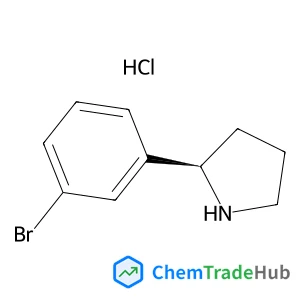
(2R)-2-(3-Bromophenyl)pyrrolidine hydrochloride (1:1)
CAS Number:
1391550-13-2
Molecular Formula:
C10H13BrClN
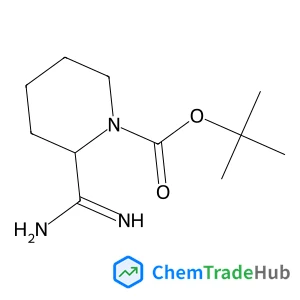
2-Methyl-2-propanyl 2-carbamimidoyl-1-piperidinecarboxylate
CAS Number:
1258640-98-0
Molecular Formula:
C11H21N3O2
Recommended Suppliers





Disclaimer
This page provides academic journal information for reference and research purposes only. We are not affiliated with any journal publishers and do not handle publication submissions. For publication-related inquiries, please contact the respective journal publishers directly.
If you notice any inaccuracies in the information displayed, please contact us at support@chemtradehub.com. We will promptly review and address your concerns.