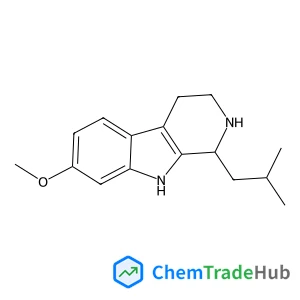
1-Isobutyl-7-methoxy-2,3,4,9-tetrahydro-1H-beta-carboline
CAS Number:
175975-76-5
Molecular Formula:
C16H22N2O
Ming-Lee Chu, Jung-Lee Lin
In this work, we report the development of a focused macromolecular ion beam with kinetic energy of up to 110 keV. The system consists of a quadrupole ion trap (QIT), einzel lens and linear accelerator (LINAC). Based on the combination of matrix-assisted laser desorption ionization (MALDI) and quadrupole ion trapping (QIT), ions were desorbed from the surface and trapped with an ion trap to form biomolecular ion packets. Positive- and negative-pulsed voltages were applied on each end-cap electrode of the QIT to extract the ion packets and form an ion beam that was subsequently focused via an einzel lens and accelerated by stepwise pulsed voltages. The tabletop instrument was designed and successfully demonstrated via measurements of molecular ions of insulin, cytochrome c and bovine serum albumin (BSA) with mass-to-charge ratios (m/z) ranging from ∼5.8 to 66.5 k. This is the first report of both a focused and high-kinetic-energy protein ion beam. In addition, both secondary ions and electrons were observed from the surface by hypervelocity ion beam bombardment. This focused macromolecular ion beam has demonstrated its potential in the study of interactions between large molecular ions with other molecules either in the gas phase or upon a surface.
Christophe Jeandon, Romain Ruppert, Henry J. Callot
DOI: 10.1039/B400812J
Gregor Mali, Francis Taulelle
DOI: 10.1039/B316807G
Olaf Köhler, Oliver Seitz
DOI: 10.1039/B308299G
Olivier J. Dautel, Jean-Pierre Lère-Porte, Joël J. E. Moreau, Michel Wong Chi Man
DOI: 10.1039/B308703D
Xinjun Wang, Yi Xie, Qixun Guo
DOI: 10.1039/B308264D
Sheila N. Baker, T. Mark McCleskey, Siddharth Pandey, Gary A. Baker
DOI: 10.1039/B401304M
Kristina Orrling, Peter Nilsson, Mats Gullberg, Mats Larhed
DOI: 10.1039/B317049G
C. Boissiere, D. Grosso, H. Amenitsch, A. Gibaud, A. Coupé, N. Baccile, C. Sanchez
DOI: 10.1039/B308694A
Carsten Bolm, Marinella Verrucci, Oliver Simic, Pier Giorgio Cozzi, Gerhard Raabe, Hiroaki Okamura
DOI: 10.1039/B309556H
Sònia Abelló, Francisco Medina, Xavier Rodríguez, Yolanda Cesteros, Pilar Salagre, Jesús E. Sueiras, Didier Tichit, Bernard Coq
DOI: 10.1039/B401448K
N-(4-Methoxybenzyl)-2-pyridinamine (CAS: 52818-63-0) is increasingly being used ...
When handling Ethyl 4-(2-chlorophenyl)-1,3-thiazole-2-carboxylate, appropriate p...
Diethyldiselane (CAS: 628-39-7) is classified under the Globally Harmonized Syst...
The market for oxocopper (CAS: 12053-18-8) is primarily driven by its use in cat...
The market for 5-{[(2-Methyl-2-propanyl)oxy]carbonyl}-5-azaspiro[2.4]heptane-7-c...
2-(1-Pyrrolidinyl)-4-pyridinamine is a chemical compound with the CAS number 359...
2-(3-Pyridinyl)-1-azabicyclo[2.2.2]octane (CAS: 91556-75-1) is a crystalline sol...
(S)-Alpha-allyl-proline hydrochloride is usually synthesized via a Wittig reacti...
3-Methyl-1,2-oxazole-5-carboxylic acid (CAS: 4857-42-5) is an organic compound w...
Lys-SMCC-DM1 is synthesized via a multi-step process involving the coupling of S...

Analyst publishes analytical and bioanalytical research that reports premier fundamental discoveries and inventions, and the applications of those discoveries, unconfined by traditional discipline barriers.

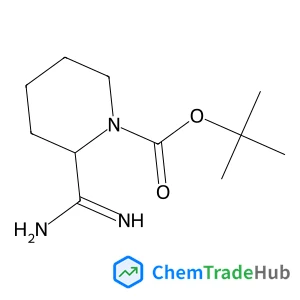
![N-{15-[(2,5-Dioxo-1-pyrrolidinyl)oxy]-15-oxo-3,6,9,12-tetraoxapentadec-1-yl}-2-(2-propyn-1-yloxy)acetamide structure](https://static.chemtradehub.com/structs/210/2101206-92-0-2eb5.webp "N-{15-[(2,5-Dioxo-1-pyrrolidinyl)oxy]-15-oxo-3,6,9,12-tetraoxapentadec-1-yl}-2-(2-propyn-1-yloxy)acetamide structure")