












Site-selective C–H difunctionalization of N-alkyl activated azaarenes via the synergistic catalysis of graphene oxide and visible light
Literature Information
Publication Date
2023-09-26
DOI
10.1039/D3QO01375H
Impact Factor
5.281
Authors
De-Hao Duan, Hai-Ping He, Wei-Yi Ding, Dong-Cheng Yi, Ying-Zhen Lai, Ai-Qiong Huang, Jie Liu, Wen-Le Wu, Xiang-Jun Peng
View Original
Abstract
Strategies for site-selective C–H difunctionalization on N-alkyl activated azaarenes have attracted considerable attention as a powerful tool in heterocyclic chemistry. By employing graphene oxide (GO) as a heterogeneous cocatalyst, the visible light-induced site-selective difunctionalizations of pyridiniums/quinoliniums provided a distinct and straightforward synthetic route toward C4- and C2-selective phosphonation of the pyridinone/quinolinone/quinolone cores. Furthermore, the site-selectivity on quinoliniums could be successfully switched from C4 to C2 by changing the base and solvent. This coordination of catalysis systems drove the regioselective phosphonyl radical and phosphoryl anion addition to N-alkyl activated azaarenes, respectively, and subsequent oxidation with air as the terminal oxidant. In vitro antitumor studies showed that complex 3c participated in mitochondria-mediated pathways on the apoptosis of HeLa cells to 42.2% (21 μM). Phosphorus-based organocatalyst 4e, as one of the optical materials, offered efficient tuning of the emission and quantum yields.
Related Literature
Differential effects of bromination on substrates and inhibitors of kynureninase from Pseudomonas fluorescens
Christian Heiss, Jay Anderson
2002-12-09
Paper
DOI: 10.1039/B208910F
One-pot synthesis of polyfunctionalized quinolines via a copper-catalyzed tandem cyclization
Dianpeng Chen, Xuejun Sun, Yingying Shan, Jinmao You
2018-09-28
Paper
DOI: 10.1039/C8OB02078G
Preparation of polysubstituted dihydrofurans through a PhI(OAc)2-promoted haloenolcyclization of olefinic dicarbonyl compounds
Ji Liu, Qing-Yun Liu, Xing-Xiao Fang, Gong-Qing Liu, Yong Ling
2018-09-24
Paper
DOI: 10.1039/C8OB02161A
Promoting laccase activity towards non-phenolic substrates: a mechanistic investigation with some laccase–mediator systems
Paola Baiocco, Anna Maria Barreca, Maura Fabbrini, Carlo Galli, Patrizia Gentili
2002-11-29
Paper
DOI: 10.1039/B208951C
Metal-free synthesis of fulleropyrrolidin-2-ols: a novel reaction of [60]fullerene with amines and 2,2-disubstituted acetaldehydes
Gang Huang, Meng Zhang, Hui-Juan Wang, Fa-Bao Li, Fei Yang, Li Liu, Chao-Yang Liu, Abdullah M. Asiri, Khalid A. Alamry
2018-09-27
Paper
DOI: 10.1039/C8OB01903G
Organic dye-photocatalyzed fluoroalkylation of heteroarene-N-oxide derivatives
Beatriz Lantaño, Sebastián Barata-Vallejo, Al Postigo
2018-08-29
Paper
DOI: 10.1039/C8OB01653D
Dependence of selective enclathration on types of cholic acid crystals
Nungruethai Yoswathananont, Kazuki Sada, Mikiji Miyata, Shigendo Akita, Kazunori Nakano
2002-11-29
Paper
DOI: 10.1039/B210544F
Through-space interactions between face-to-face, center-to-edge oriented arenes: importance of polar–π effects
Franco Cozzi, Rita Annunziata, Maurizio Benaglia, Mauro Cinquini, Laura Raimondi, Kim K. Baldridge, Jay S. Siegel
2002-12-06
Paper
DOI: 10.1039/B208871A
Silver-catalyzed intermolecular amination of fluoroarenes
Yu Wang, Chenlong Wei, Ruyun Tang, Haosheng Zhan, Jing Lin, Zhenhua Liu, Weihua Tao, Zhongxue Fang
2018-08-15
Communication
DOI: 10.1039/C8OB01749B
Synthesis of functionalized 2,5-dihydropyrrole derivatives via a convenient [3 + 2] annulation of azomethine ylides with allenoates
Zhusheng Huang, Zonghao Dai, Jin Zhu, Fulai Yang, Qingfa Zhou
2018-08-28
Communication
DOI: 10.1039/C8OB01946K
You might also like
Compound Q&A
What is the market or research trend for N-(4-Methoxybenzyl)-2-pyridinamine (CAS: 52818-63-0)?
N-(4-Methoxybenzyl)-2-pyridinamine (CAS: 52818-63-0) is increasingly being used ...
52818-63-0N-(4-Methoxybenzyl)-...
Compound Q&A
What precautions should be taken when handling Ethyl 4-(2-chlorophenyl)-1,3-thiazole-2-carboxylate (CAS: 1050507-06-6)?
When handling Ethyl 4-(2-chlorophenyl)-1,3-thiazole-2-carboxylate, appropriate p...
1050507-06-6Ethyl 4-(2-chlorophe...
Compound Q&A
What regulatory guidelines apply to diethyldiselane (CAS: 628-39-7)?
Diethyldiselane (CAS: 628-39-7) is classified under the Globally Harmonized Syst...
628-39-7Diethyldiselane
Compound Q&A
What is the market or research trend for oxocopper (CAS: 12053-18-8)?
The market for oxocopper (CAS: 12053-18-8) is primarily driven by its use in cat...
12053-18-8oxocopper; oxo-(oxoc...
Compound Q&A
What is the market or research trend for 5-{[(2-Methyl-2-propanyl)oxy]carbonyl}-5-azaspiro[2.4]heptane-7-carboxylic acid?
The market for 5-{[(2-Methyl-2-propanyl)oxy]carbonyl}-5-azaspiro[2.4]heptane-7-c...
1268519-54-55-{[(2-Methyl-2-prop...
Compound Q&A
What is 2-(1-Pyrrolidinyl)-4-pyridinamine (CAS: 35981-63-6)?
2-(1-Pyrrolidinyl)-4-pyridinamine is a chemical compound with the CAS number 359...
35981-63-62-(1-Pyrrolidinyl)-4...
Compound Q&A
What are the physical and chemical properties of 2-(3-Pyridinyl)-1-azabicyclo[2.2.2]octane (CAS: 91556-75-1)?
2-(3-Pyridinyl)-1-azabicyclo[2.2.2]octane (CAS: 91556-75-1) is a crystalline sol...
91556-75-12-(3-Pyridinyl)-1-az...
Compound Q&A
How is (S)-Alpha-allyl-proline hydrochloride (CAS: 129704-91-2) typically synthesized?
(S)-Alpha-allyl-proline hydrochloride is usually synthesized via a Wittig reacti...
129704-91-2(S)-Alpha-allyl-prol...
Compound Q&A
What is 3-Methyl-1,2-oxazole-5-carboxylic acid (CAS: 4857-42-5)?
3-Methyl-1,2-oxazole-5-carboxylic acid (CAS: 4857-42-5) is an organic compound w...
4857-42-53-Methyl-1,2-oxazole...
Compound Q&A
How is Lys-SMCC-DM1 (CAS: 1281816-04-3) typically synthesized?
Lys-SMCC-DM1 is synthesized via a multi-step process involving the coupling of S...
1281816-04-3Lys-SMCC-DM1
Source Journal
Organic Chemistry Frontiers

CiteScore:
7.8
Self-citation Rate:
8.7%
Articles per Year:
724
Organic Chemistry Frontiers publishes high-quality research from across organic chemistry. Emphases are placed on studies that make significant contributions to the field of organic chemistry by reporting either new or significantly improved protocols or methodologies. Topics include, but are not limited to the following: Organic synthesis Development of synthetic methodologies Catalysis Natural products Functional organic materials Supramolecular and macromolecular chemistry Physical and computational organic chemistry
Recommended Compounds
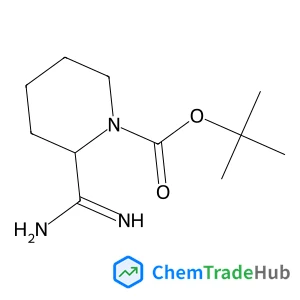
2-Methyl-2-propanyl 2-carbamimidoyl-1-piperidinecarboxylate
CAS Number:
1258640-98-0
Molecular Formula:
C11H21N3O2
![1-oxaspiro[4.4]nonan-6-one structure](https://static.chemtradehub.com/structs/134/134179-01-4-e051.webp "1-oxaspiro[4.4]nonan-6-one structure")
Recommended Suppliers






Disclaimer
This page provides academic journal information for reference and research purposes only. We are not affiliated with any journal publishers and do not handle publication submissions. For publication-related inquiries, please contact the respective journal publishers directly.
If you notice any inaccuracies in the information displayed, please contact us at support@chemtradehub.com. We will promptly review and address your concerns.