













Preparation of polysubstituted dihydrofurans through a PhI(OAc)2-promoted haloenolcyclization of olefinic dicarbonyl compounds
Literature Information
Publication Date
2018-09-24
DOI
10.1039/C8OB02161A
Impact Factor
3.876
Authors
Ji Liu, Qing-Yun Liu, Xing-Xiao Fang, Gong-Qing Liu, Yong Ling
View Original
Abstract
A metal-free cyclization of olefinic dicarbonyl compounds for the synthesis of various 5-halomethyl-4,5-dihydrofurans is presented. Using (diacetoxyiodo)benzene as the reaction promoter and halotrimethylsilane as the halogen source, the intramolecular haloenolcyclization of the 2-allyl-1,3-dicarbonyl compounds smoothly proceeded, leading to the corresponding 5-halomethyl-4,5-dihydrofurans in good to excellent isolated yields. Moreover, the resulting 5-iodomethyl products could be converted to functionalized furans in almost quantitative yields by treatment with DBU followed by acid-catalyzed rearrangement. The reactions could be carried out on a gram scale and did not require harsh reaction conditions. The good isolated yields, mild conditions, and operational simplicity make this reaction a viable method for the construction of different dihydrofuran and furan structures.
Related Literature
A magnetic cellulose-based carbon fiber hybrid as a dispersive solid-phase extraction material for the simultaneous detection of six bisphenol analogs from environmental samples
Lei Zhang, Tong Liu
2018-05-14
Paper
DOI: 10.1039/C8AN00544C
Analysis of poly(ADP-ribose) polymerase-1 by enzyme-initiated auto-PARylation-controlled aggregation of hemin-graphene nanocomposites
Yong Liu, Xiaolin Xu, Ensheng Xu, Shuangshuang Wu, Wei Wei, Jin Chen
2018-04-04
Paper
DOI: 10.1039/C8AN00009C
Quantitative analysis of multiple high-resolution mass spectrometry images using chemometric methods: quantitation of chlordecone in mouse liver
Saeedeh Mohammadi, Hadi Parastar
2018-04-05
Paper
DOI: 10.1039/C7AN02059G
A simple and sensitive detection of small molecule–protein interactions based on terminal protection-mediated exponential strand displacement amplification
Chang Yeol Lee, Hyo Yong Kim, Soeun Kim, Ki Soo Park, Hyun Gyu Park
2018-03-21
Paper
DOI: 10.1039/C8AN00099A
Site-specific characterization and quantitation of N-glycopeptides in PKM2 knockout breast cancer cells using DiLeu isobaric tags enabled by electron-transfer/higher-energy collision dissociation (EThcD)
Zhengwei Chen, Qing Yu, Ling Hao, Fabao Liu, Jillian Johnson, Zichuan Tian, W. John Kao, Wei Xu
2018-03-23
Paper
DOI: 10.1039/C8AN00216A
Laser-induced surface deformation microscope for the study of the dynamic viscoelasticity of plasma membrane in a living cell
Toshinori Morisaku
2018-04-13
Paper
DOI: 10.1039/C7AN01620D
An enzymatic polymerization-activated silver nanocluster probe for in situ apoptosis assay
Rong Zhu, Xingyu Luo, Lu Deng, Chunyang Lei, Yan Huang, Zhou Nie, Shouzhuo Yao
2018-05-07
Paper
DOI: 10.1039/C8AN00535D
Wettability alteration in a functional capillary tube for visual quantitative point of care testing
Yansheng Li, Xiangyu Jiao, Xin Du, Fang Wang, Qianhui Wei, Yongqiang Wen, Xueji Zhang
2018-05-18
Communication
DOI: 10.1039/C8AN00735G
In vitro diagnosis of DNA methylation biomarkers with digital PCR in breast tumors
Shan Huang, Tian Jian Lu
2018-04-18
Paper
DOI: 10.1039/C8AN00205C
You might also like
Compound Q&A
What is the market or research trend for N-(4-Methoxybenzyl)-2-pyridinamine (CAS: 52818-63-0)?
N-(4-Methoxybenzyl)-2-pyridinamine (CAS: 52818-63-0) is increasingly being used ...
52818-63-0N-(4-Methoxybenzyl)-...
Compound Q&A
What precautions should be taken when handling Ethyl 4-(2-chlorophenyl)-1,3-thiazole-2-carboxylate (CAS: 1050507-06-6)?
When handling Ethyl 4-(2-chlorophenyl)-1,3-thiazole-2-carboxylate, appropriate p...
1050507-06-6Ethyl 4-(2-chlorophe...
Compound Q&A
What regulatory guidelines apply to diethyldiselane (CAS: 628-39-7)?
Diethyldiselane (CAS: 628-39-7) is classified under the Globally Harmonized Syst...
628-39-7Diethyldiselane
Compound Q&A
What is the market or research trend for oxocopper (CAS: 12053-18-8)?
The market for oxocopper (CAS: 12053-18-8) is primarily driven by its use in cat...
12053-18-8oxocopper; oxo-(oxoc...
Compound Q&A
What is the market or research trend for 5-{[(2-Methyl-2-propanyl)oxy]carbonyl}-5-azaspiro[2.4]heptane-7-carboxylic acid?
The market for 5-{[(2-Methyl-2-propanyl)oxy]carbonyl}-5-azaspiro[2.4]heptane-7-c...
1268519-54-55-{[(2-Methyl-2-prop...
Compound Q&A
What is 2-(1-Pyrrolidinyl)-4-pyridinamine (CAS: 35981-63-6)?
2-(1-Pyrrolidinyl)-4-pyridinamine is a chemical compound with the CAS number 359...
35981-63-62-(1-Pyrrolidinyl)-4...
Compound Q&A
What are the physical and chemical properties of 2-(3-Pyridinyl)-1-azabicyclo[2.2.2]octane (CAS: 91556-75-1)?
2-(3-Pyridinyl)-1-azabicyclo[2.2.2]octane (CAS: 91556-75-1) is a crystalline sol...
91556-75-12-(3-Pyridinyl)-1-az...
Compound Q&A
How is (S)-Alpha-allyl-proline hydrochloride (CAS: 129704-91-2) typically synthesized?
(S)-Alpha-allyl-proline hydrochloride is usually synthesized via a Wittig reacti...
129704-91-2(S)-Alpha-allyl-prol...
Compound Q&A
What is 3-Methyl-1,2-oxazole-5-carboxylic acid (CAS: 4857-42-5)?
3-Methyl-1,2-oxazole-5-carboxylic acid (CAS: 4857-42-5) is an organic compound w...
4857-42-53-Methyl-1,2-oxazole...
Compound Q&A
How is Lys-SMCC-DM1 (CAS: 1281816-04-3) typically synthesized?
Lys-SMCC-DM1 is synthesized via a multi-step process involving the coupling of S...
1281816-04-3Lys-SMCC-DM1
Source Journal
Organic & Biomolecular Chemistry

CiteScore:
3.4
Self-citation Rate:
10.3%
Articles per Year:
1041
Organic & Biomolecular Chemistry (OBC) publishes original and high impact research and reviews in organic chemistry. We welcome research that shows new or significantly improved protocols or methodologies in total synthesis, synthetic methodology or physical and theoretical organic chemistry as well as research that shows a significant advance in the organic chemistry or molecular design aspects of chemical biology, catalysis, supramolecular and macromolecular chemistry, theoretical chemistry, mechanism-oriented physical organic chemistry, medicinal chemistry or natural products. Articles published in the journal should report new work which makes a highly-significant impact in the field. Routine and incremental work is generally not suitable for publication in the journal. More details about key areas of our scope are below. In all cases authors should include in their article clear rationale for why their research has been carried out.
Recommended Compounds
![(2R,6S)-6-[(Benzyloxy)methyl]-4-{[(2-methyl-2-propanyl)oxy]carbonyl}-2-morpholinecarboxylic acid structure](https://static.chemtradehub.com/structs/109/1093085-91-6-3382.webp "(2R,6S)-6-[(Benzyloxy)methyl]-4-{[(2-methyl-2-propanyl)oxy]carbonyl}-2-morpholinecarboxylic acid structure")
(2R,6S)-6-[(Benzyloxy)methyl]-4-{[(2-methyl-2-propanyl)oxy]carbonyl}-2-morpholinecarboxylic acid
CAS Number:
1093085-91-6
Molecular Formula:
C18H25NO6
![1-(1-Benzyl-1,2,3,6-tetrahydropyridin-4-yl)-1H-benzo[d]imidazol-2(3H)-one structure](https://static.chemtradehub.com/structs/603/60373-71-9-7dfb.webp "1-(1-Benzyl-1,2,3,6-tetrahydropyridin-4-yl)-1H-benzo[d]imidazol-2(3H)-one structure")
1-(1-Benzyl-1,2,3,6-tetrahydropyridin-4-yl)-1H-benzo[d]imidazol-2(3H)-one
CAS Number:
60373-71-9
Molecular Formula:
C19H19N3O
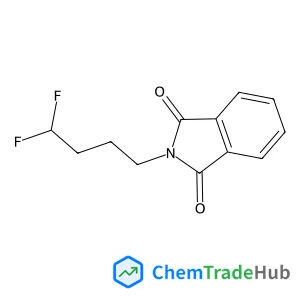
2-(4,4-Difluorobutyl)-1H-isoindole-1,3(2H)-dione
CAS Number:
1265341-14-7
Molecular Formula:
C12H11F2NO2
Recommended Suppliers





Disclaimer
This page provides academic journal information for reference and research purposes only. We are not affiliated with any journal publishers and do not handle publication submissions. For publication-related inquiries, please contact the respective journal publishers directly.
If you notice any inaccuracies in the information displayed, please contact us at support@chemtradehub.com. We will promptly review and address your concerns.