













Through-space interactions between face-to-face, center-to-edge oriented arenes: importance of polar–π effects
Literature Information
Publication Date
2002-12-06
DOI
10.1039/B208871A
Impact Factor
3.876
Authors
Franco Cozzi, Rita Annunziata, Maurizio Benaglia, Mauro Cinquini, Laura Raimondi, Kim K. Baldridge, Jay S. Siegel
View Original
Abstract
Two series of conformationally restricted polycyclic compounds (1–3 and 4–7) have been synthesized as model systems for studying the through-space interactions between face-to-face, center-to-edge (parallel-offset) oriented arenes. These compounds feature different X substituents on one of the interacting rings. By monitoring the variation of the ΔG≠ for the rotation around the aryl–aryl bond in 1–7 as a function of X by 2D [1H,1H] EXSY NMR spectroscopy, it was found that the barriers increase on passing from electron-donating to electron-withdrawing substituted derivatives. Quantum mechanical calculations [MP2/DVZ (2d,p)//B3LYP/DVZ(2d,p)] gave barrier values and variations in agreement with the experimental data. The results are consistent with a repulsive arene–arene interaction dominated by electrostatic effects.
Related Literature
Reconstituting donor T cells increase their biomass following hematopoietic stem cell transplantation
Roy T. Sabo
2018-03-23
Communication
DOI: 10.1039/C8AN00148K
Analysis of 14C-bearing compounds released by the corrosion of irradiated steel using accelerator mass spectrometry
B. Z. Cvetković, G. Salazar, D. Kunz, S. Szidat, E. Wieland
2018-05-07
Paper
DOI: 10.1039/C8AN00237A
An enzymatic reaction mediated glucose sensor activated by MnO2 nanosheets acting as an oxidant and catalyst
Guanwen Yan, Yuan Zhang, Weihua Di
2018-05-01
Paper
DOI: 10.1039/C8AN00657A
Site-specific characterization and quantitation of N-glycopeptides in PKM2 knockout breast cancer cells using DiLeu isobaric tags enabled by electron-transfer/higher-energy collision dissociation (EThcD)
Zhengwei Chen, Qing Yu, Ling Hao, Fabao Liu, Jillian Johnson, Zichuan Tian, W. John Kao, Wei Xu
2018-03-23
Paper
DOI: 10.1039/C8AN00216A
A coumarin-based fluorescent probe for monitoring labile ferrous iron in living systems
Lingliang Long, Ning Wang, Yuanyuan Han, Meiyu Huang, Xiangqi Yuan, Siyu Cao, Aihua Gong, Kun Wang
2018-04-24
Paper
DOI: 10.1039/C8AN00556G
In situ fabrication of hollow ZnO@NC polyhedra from ZIF-8 for the determination of trace Cd(ii)
Qingqing Wang, Jing Li, Dengbin Yu
2018-05-11
Paper
DOI: 10.1039/C8AN00515J
Discrimination analysis of excitatory and inhibitory neurons using Raman spectroscopy
Kosuke Hashimoto, Bibin B. Andriana, Hiroko Matsuyoshi, Hidetoshi Sato
2018-05-24
Paper
DOI: 10.1039/C8AN00051D
A novel electrochemiluminescence biosensor based on S-doped yttrium oxide ultrathin nanosheets for the detection of anti-Dig antibodies
Huan Gao, Suli Liu, Zhaoyin Wang, Ling Si
2018-05-14
Communication
DOI: 10.1039/C8AN00667A
You might also like
Compound Q&A
What is the market or research trend for N-(4-Methoxybenzyl)-2-pyridinamine (CAS: 52818-63-0)?
N-(4-Methoxybenzyl)-2-pyridinamine (CAS: 52818-63-0) is increasingly being used ...
52818-63-0N-(4-Methoxybenzyl)-...
Compound Q&A
What precautions should be taken when handling Ethyl 4-(2-chlorophenyl)-1,3-thiazole-2-carboxylate (CAS: 1050507-06-6)?
When handling Ethyl 4-(2-chlorophenyl)-1,3-thiazole-2-carboxylate, appropriate p...
1050507-06-6Ethyl 4-(2-chlorophe...
Compound Q&A
What regulatory guidelines apply to diethyldiselane (CAS: 628-39-7)?
Diethyldiselane (CAS: 628-39-7) is classified under the Globally Harmonized Syst...
628-39-7Diethyldiselane
Compound Q&A
What is the market or research trend for oxocopper (CAS: 12053-18-8)?
The market for oxocopper (CAS: 12053-18-8) is primarily driven by its use in cat...
12053-18-8oxocopper; oxo-(oxoc...
Compound Q&A
What is the market or research trend for 5-{[(2-Methyl-2-propanyl)oxy]carbonyl}-5-azaspiro[2.4]heptane-7-carboxylic acid?
The market for 5-{[(2-Methyl-2-propanyl)oxy]carbonyl}-5-azaspiro[2.4]heptane-7-c...
1268519-54-55-{[(2-Methyl-2-prop...
Compound Q&A
What is 2-(1-Pyrrolidinyl)-4-pyridinamine (CAS: 35981-63-6)?
2-(1-Pyrrolidinyl)-4-pyridinamine is a chemical compound with the CAS number 359...
35981-63-62-(1-Pyrrolidinyl)-4...
Compound Q&A
What are the physical and chemical properties of 2-(3-Pyridinyl)-1-azabicyclo[2.2.2]octane (CAS: 91556-75-1)?
2-(3-Pyridinyl)-1-azabicyclo[2.2.2]octane (CAS: 91556-75-1) is a crystalline sol...
91556-75-12-(3-Pyridinyl)-1-az...
Compound Q&A
How is (S)-Alpha-allyl-proline hydrochloride (CAS: 129704-91-2) typically synthesized?
(S)-Alpha-allyl-proline hydrochloride is usually synthesized via a Wittig reacti...
129704-91-2(S)-Alpha-allyl-prol...
Compound Q&A
What is 3-Methyl-1,2-oxazole-5-carboxylic acid (CAS: 4857-42-5)?
3-Methyl-1,2-oxazole-5-carboxylic acid (CAS: 4857-42-5) is an organic compound w...
4857-42-53-Methyl-1,2-oxazole...
Compound Q&A
How is Lys-SMCC-DM1 (CAS: 1281816-04-3) typically synthesized?
Lys-SMCC-DM1 is synthesized via a multi-step process involving the coupling of S...
1281816-04-3Lys-SMCC-DM1
Source Journal
Organic & Biomolecular Chemistry

CiteScore:
3.4
Self-citation Rate:
10.3%
Articles per Year:
1041
Organic & Biomolecular Chemistry (OBC) publishes original and high impact research and reviews in organic chemistry. We welcome research that shows new or significantly improved protocols or methodologies in total synthesis, synthetic methodology or physical and theoretical organic chemistry as well as research that shows a significant advance in the organic chemistry or molecular design aspects of chemical biology, catalysis, supramolecular and macromolecular chemistry, theoretical chemistry, mechanism-oriented physical organic chemistry, medicinal chemistry or natural products. Articles published in the journal should report new work which makes a highly-significant impact in the field. Routine and incremental work is generally not suitable for publication in the journal. More details about key areas of our scope are below. In all cases authors should include in their article clear rationale for why their research has been carried out.
Recommended Compounds
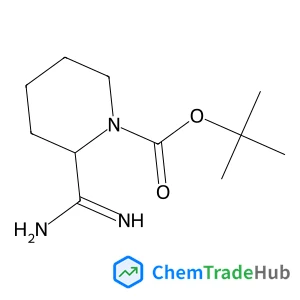
2-Methyl-2-propanyl 2-carbamimidoyl-1-piperidinecarboxylate
CAS Number:
1258640-98-0
Molecular Formula:
C11H21N3O2
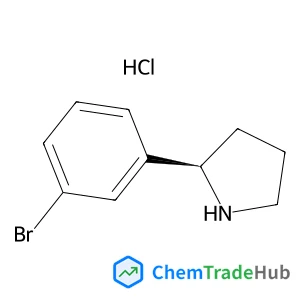
(2R)-2-(3-Bromophenyl)pyrrolidine hydrochloride (1:1)
CAS Number:
1391550-13-2
Molecular Formula:
C10H13BrClN
![1-{3-[4-Amino-3-(4-phenoxyphenyl)-1H-pyrazolo[3,4-d]pyrimidin-1-yl]-1-piperidinyl}-2,3-dihydroxy-1-propanone structure](https://static.chemtradehub.com/structs/122/1226872-27-0-e037.webp "1-{3-[4-Amino-3-(4-phenoxyphenyl)-1H-pyrazolo[3,4-d]pyrimidin-1-yl]-1-piperidinyl}-2,3-dihydroxy-1-propanone structure")
1-{3-[4-Amino-3-(4-phenoxyphenyl)-1H-pyrazolo[3,4-d]pyrimidin-1-yl]-1-piperidinyl}-2,3-dihydroxy-1-propanone
CAS Number:
1226872-27-0
Molecular Formula:
C25H26N6O4
Recommended Suppliers





Disclaimer
This page provides academic journal information for reference and research purposes only. We are not affiliated with any journal publishers and do not handle publication submissions. For publication-related inquiries, please contact the respective journal publishers directly.
If you notice any inaccuracies in the information displayed, please contact us at support@chemtradehub.com. We will promptly review and address your concerns.