


Differential effects of bromination on substrates and inhibitors of kynureninase from Pseudomonas fluorescens
Literature Information
Publication Date
2002-12-09
DOI
10.1039/B208910F
Impact Factor
3.876
Authors
Christian Heiss, Jay Anderson
View Original
Abstract
A series of brominated compounds has been synthesized and evaluated as substrates and inhibitors of kynureninase from Pseudomonas fluorescens. Both 3-bromo-L-kynurenine and 5-bromo-L-kynurenine were found to be substrates with similar kcat values to L-kynurenine, but the Km value for 3-bromo-L-kynurenine is very high (ca. 2 mM) compared to that for 5-bromo-L-kynurenine (11 µM) and L-kynurenine (25 µM). Both isomers of bromokynurenine react with kynureninase within the dead time of the stopped-flow instrument (ca. 1 ms) to form quinonoid intermediates with a λmax of 494 nm that decay with rate constants of 300–600 s−1, similar to L-kynurenine. The two diastereomers of 5-bromodihydro-L-kynurenine were also prepared, and are more potent inhibitors than dihydro-L-kynurenines. (4R)-5-Bromodihydro-L-kynurenine is one of the most potent inhibitors of P. fluorescens kynureninase found to date (Ki = 55 nM) and also acts as a slow substrate; the (4S)-epimer, on the other hand, shows no measurable substrate activity, but it is a potent competitive inhibitor with a Ki value of 170 nM. In contrast, brominated analogs of (S)-(2-aminophenyl)-L-cysteine S,S-dioxide, (S)-(2-amino-4-bromophenyl)-L-cysteine S,S-dioxide and (S)-(2-amino-5-bromophenyl)-L-cysteine S,S-dioxide are competitive inhibitors of kynureninase, with Ki values of about 300 and 400 nm, respectively, about ten-fold higher than the value of 27 nM obtained for the parent compound. These results suggest that the binding modes of substrates and the various classes of inhibitors in the active site of kynureninase are different.
Recommended Journals

Journal of Chemical Sciences

Critical Reviews in Solid State and Materials Sciences

NDT & E International

Electroanalysis

Herald of the Russian Academy of Sciences

Atomization and Sprays

Heteroatom Chemistry

Journal of Asian Natural Products Research

Polycyclic Aromatic Compounds

Acta Metallurgica Sinica-English Letters
Related Literature
Template-controlled topochemical photodimerization based on “organometallic macrocycles” through single-crystal to single-crystal transformation
Ying-Feng Han, Yue-Jian Lin, Wei-Guo Jia, Guo-Liang Wang, Guo-Xin Jin
2008-02-11
Communication
DOI: 10.1039/B717554J
Amplified nitric oxide photorelease in DNA proximity
Fiorella L. Callari, Salvatore Sortino
2008-03-20
Communication
DOI: 10.1039/B800132D
A new enantiopure unsaturated dicarboxylate as a 4-connected unit in a flexible homochiral PtS-type framework
Jian Zhang, Xianhui Bu
2008-02-11
Communication
DOI: 10.1039/B719368H
Highly efficient quenching of excimer fluorescence by perylene diimide in DNA
Nicolas Bouquin, Vladimir L. Malinovskii, Robert Häner
2008-03-28
Communication
DOI: 10.1039/B802193G
Highly luminescent mono- and multilayers of immobilized CdTe nanocrystals: controlling optical properties through post chemical surface modification
Takaaki Tsuruoka, Rena Takahashi, Toshihiro Nakamura, Minoru Fujii, Kensuke Akamatsu, Hidemi Nawafune
2008-01-29
Communication
DOI: 10.1039/B717732A
A near-infrared dye for multichannel imaging
Wellington Pham, Lauren Cassell, Amelie Gillman, Dmitry Koktysh, John C. Gore
2008-02-28
Communication
DOI: 10.1039/B719028J
Interpenetrating single helical capsules
Emanuela Berni, Joachim Garric, Corinne Lamit, Brice Kauffmann, Jean-Michel Léger, Ivan Huc
2008-02-28
Communication
DOI: 10.1039/B719712H
Remote substituent effects on the photooxygenation of 9,10-diarylanthracenes: strong evidence for polar intermediates
Werner Fudickar, Torsten Linker
2008-02-14
Communication
DOI: 10.1039/B719637G
Photo-responsive gel droplet as a nano- or pico-litre container comprising a supramolecular hydrogel
Shinji Matsumoto, Satoshi Yamaguchi, Atsuhiko Wada, Toshihiro Matsui, Masato Ikeda
2008-02-25
Communication
DOI: 10.1039/B719004B
Self-assembly of a peptide rod–coil: a polyproline rod and a cell-penetrating peptide Tat coil
You-Rim Yoon, Yong-beom Lim, Eunji Lee, Myongsoo Lee
2008-03-11
Communication
DOI: 10.1039/B719868J
You might also like
Compound Q&A
What is the market or research trend for N-(4-Methoxybenzyl)-2-pyridinamine (CAS: 52818-63-0)?
N-(4-Methoxybenzyl)-2-pyridinamine (CAS: 52818-63-0) is increasingly being used ...
52818-63-0N-(4-Methoxybenzyl)-...
Compound Q&A
What precautions should be taken when handling Ethyl 4-(2-chlorophenyl)-1,3-thiazole-2-carboxylate (CAS: 1050507-06-6)?
When handling Ethyl 4-(2-chlorophenyl)-1,3-thiazole-2-carboxylate, appropriate p...
1050507-06-6Ethyl 4-(2-chlorophe...
Compound Q&A
What regulatory guidelines apply to diethyldiselane (CAS: 628-39-7)?
Diethyldiselane (CAS: 628-39-7) is classified under the Globally Harmonized Syst...
628-39-7Diethyldiselane
Compound Q&A
What is the market or research trend for oxocopper (CAS: 12053-18-8)?
The market for oxocopper (CAS: 12053-18-8) is primarily driven by its use in cat...
12053-18-8oxocopper; oxo-(oxoc...
Compound Q&A
What is the market or research trend for 5-{[(2-Methyl-2-propanyl)oxy]carbonyl}-5-azaspiro[2.4]heptane-7-carboxylic acid?
The market for 5-{[(2-Methyl-2-propanyl)oxy]carbonyl}-5-azaspiro[2.4]heptane-7-c...
1268519-54-55-{[(2-Methyl-2-prop...
Compound Q&A
What is 2-(1-Pyrrolidinyl)-4-pyridinamine (CAS: 35981-63-6)?
2-(1-Pyrrolidinyl)-4-pyridinamine is a chemical compound with the CAS number 359...
35981-63-62-(1-Pyrrolidinyl)-4...
Compound Q&A
What are the physical and chemical properties of 2-(3-Pyridinyl)-1-azabicyclo[2.2.2]octane (CAS: 91556-75-1)?
2-(3-Pyridinyl)-1-azabicyclo[2.2.2]octane (CAS: 91556-75-1) is a crystalline sol...
91556-75-12-(3-Pyridinyl)-1-az...
Compound Q&A
How is (S)-Alpha-allyl-proline hydrochloride (CAS: 129704-91-2) typically synthesized?
(S)-Alpha-allyl-proline hydrochloride is usually synthesized via a Wittig reacti...
129704-91-2(S)-Alpha-allyl-prol...
Compound Q&A
What is 3-Methyl-1,2-oxazole-5-carboxylic acid (CAS: 4857-42-5)?
3-Methyl-1,2-oxazole-5-carboxylic acid (CAS: 4857-42-5) is an organic compound w...
4857-42-53-Methyl-1,2-oxazole...
Compound Q&A
How is Lys-SMCC-DM1 (CAS: 1281816-04-3) typically synthesized?
Lys-SMCC-DM1 is synthesized via a multi-step process involving the coupling of S...
1281816-04-3Lys-SMCC-DM1
Source Journal
Organic & Biomolecular Chemistry

CiteScore:
3.4
Self-citation Rate:
10.3%
Articles per Year:
1041
Organic & Biomolecular Chemistry (OBC) publishes original and high impact research and reviews in organic chemistry. We welcome research that shows new or significantly improved protocols or methodologies in total synthesis, synthetic methodology or physical and theoretical organic chemistry as well as research that shows a significant advance in the organic chemistry or molecular design aspects of chemical biology, catalysis, supramolecular and macromolecular chemistry, theoretical chemistry, mechanism-oriented physical organic chemistry, medicinal chemistry or natural products. Articles published in the journal should report new work which makes a highly-significant impact in the field. Routine and incremental work is generally not suitable for publication in the journal. More details about key areas of our scope are below. In all cases authors should include in their article clear rationale for why their research has been carried out.
Recommended Compounds
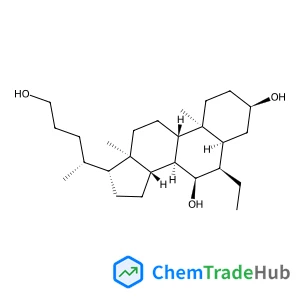
(3alpha,5beta,6alpha,7alpha)-6-Ethylcholane-3,7,24-triol
CAS Number:
1537866-49-1
Molecular Formula:
C26H46O3
Recommended Suppliers






Disclaimer
This page provides academic journal information for reference and research purposes only. We are not affiliated with any journal publishers and do not handle publication submissions. For publication-related inquiries, please contact the respective journal publishers directly.
If you notice any inaccuracies in the information displayed, please contact us at support@chemtradehub.com. We will promptly review and address your concerns.