












Silver-catalyzed intermolecular amination of fluoroarenes
Literature Information
Publication Date
2018-08-15
DOI
10.1039/C8OB01749B
Impact Factor
3.876
Authors
Yu Wang, Chenlong Wei, Ruyun Tang, Haosheng Zhan, Jing Lin, Zhenhua Liu, Weihua Tao, Zhongxue Fang
View Original
Abstract
A novel highly selective Ag-catalyzed intermolecular amination of fluoroarenes has been developed. This transformation starts from readily available 4-carbonyl fluorobenzene and NaN3 or other nitrogen-source, via amination followed by C–F bond cleavage, thus affording the desired 4-carbonyl arylamine products under mild conditions. The reaction is accelerated using a small amount of water. This pathway is distinct from a previously reported radical amination reaction.
Recommended Journals
Related Literature
Interpenetrating single helical capsules
Emanuela Berni, Joachim Garric, Corinne Lamit, Brice Kauffmann, Jean-Michel Léger, Ivan Huc
2008-02-28
Communication
DOI: 10.1039/B719712H
Template-controlled topochemical photodimerization based on “organometallic macrocycles” through single-crystal to single-crystal transformation
Ying-Feng Han, Yue-Jian Lin, Wei-Guo Jia, Guo-Liang Wang, Guo-Xin Jin
2008-02-11
Communication
DOI: 10.1039/B717554J
Fluorescence microscopy coupled to electrochemistry: a powerful tool for the controlled electrochemical switch of fluorescent molecules
Fabien Miomandre, Rachel Meallet-Renault, Jean-Jacques Vachon, Robert Bernard Pansu, Pierre Audebert
2008-02-19
Communication
DOI: 10.1039/B718899D
Stabilization of cobalt oxyhydrate superconductor
Zhi Ren, Cao Wang, Xiang-fan Xu, Guang-han Cao, Zhu-an Xu, Yu-heng Zhang
2008-03-03
Communication
DOI: 10.1039/B800378E
Highly efficient quenching of excimer fluorescence by perylene diimide in DNA
Nicolas Bouquin, Vladimir L. Malinovskii, Robert Häner
2008-03-28
Communication
DOI: 10.1039/B802193G
Single microbead SELEX for efficient ssDNA aptamer generation against botulinum neurotoxin‡
Jeffrey B.-H. Tok, Nicholas O. Fischer
2008-03-18
Communication
DOI: 10.1039/B717936G
Controlled regio- and chemoselective addition of isothiocyanate to the dione moiety of a cage-opened fullerene-mixed peroxide derivative
Zheming Wang
2008-02-25
Communication
DOI: 10.1039/B800722E
Synthesis of metallic magnesium nanoparticles by sonoelectrochemistry
Iris Haas, Aharon Gedanken
2008-02-08
Communication
DOI: 10.1039/B717670H
Mutual induced coordination in halogen-bonded anionic assemblies with (6,3) cation-templated topologies
Pierangelo Metrangolo, Frank Meyer, Tullio Pilati, Giancarlo Terraneo
2008-01-14
Communication
DOI: 10.1039/B716879A
You might also like
Compound Q&A
What is the market or research trend for N-(4-Methoxybenzyl)-2-pyridinamine (CAS: 52818-63-0)?
N-(4-Methoxybenzyl)-2-pyridinamine (CAS: 52818-63-0) is increasingly being used ...
52818-63-0N-(4-Methoxybenzyl)-...
Compound Q&A
What precautions should be taken when handling Ethyl 4-(2-chlorophenyl)-1,3-thiazole-2-carboxylate (CAS: 1050507-06-6)?
When handling Ethyl 4-(2-chlorophenyl)-1,3-thiazole-2-carboxylate, appropriate p...
1050507-06-6Ethyl 4-(2-chlorophe...
Compound Q&A
What regulatory guidelines apply to diethyldiselane (CAS: 628-39-7)?
Diethyldiselane (CAS: 628-39-7) is classified under the Globally Harmonized Syst...
628-39-7Diethyldiselane
Compound Q&A
What is the market or research trend for oxocopper (CAS: 12053-18-8)?
The market for oxocopper (CAS: 12053-18-8) is primarily driven by its use in cat...
12053-18-8oxocopper; oxo-(oxoc...
Compound Q&A
What is the market or research trend for 5-{[(2-Methyl-2-propanyl)oxy]carbonyl}-5-azaspiro[2.4]heptane-7-carboxylic acid?
The market for 5-{[(2-Methyl-2-propanyl)oxy]carbonyl}-5-azaspiro[2.4]heptane-7-c...
1268519-54-55-{[(2-Methyl-2-prop...
Compound Q&A
What is 2-(1-Pyrrolidinyl)-4-pyridinamine (CAS: 35981-63-6)?
2-(1-Pyrrolidinyl)-4-pyridinamine is a chemical compound with the CAS number 359...
35981-63-62-(1-Pyrrolidinyl)-4...
Compound Q&A
What are the physical and chemical properties of 2-(3-Pyridinyl)-1-azabicyclo[2.2.2]octane (CAS: 91556-75-1)?
2-(3-Pyridinyl)-1-azabicyclo[2.2.2]octane (CAS: 91556-75-1) is a crystalline sol...
91556-75-12-(3-Pyridinyl)-1-az...
Compound Q&A
How is (S)-Alpha-allyl-proline hydrochloride (CAS: 129704-91-2) typically synthesized?
(S)-Alpha-allyl-proline hydrochloride is usually synthesized via a Wittig reacti...
129704-91-2(S)-Alpha-allyl-prol...
Compound Q&A
What is 3-Methyl-1,2-oxazole-5-carboxylic acid (CAS: 4857-42-5)?
3-Methyl-1,2-oxazole-5-carboxylic acid (CAS: 4857-42-5) is an organic compound w...
4857-42-53-Methyl-1,2-oxazole...
Compound Q&A
How is Lys-SMCC-DM1 (CAS: 1281816-04-3) typically synthesized?
Lys-SMCC-DM1 is synthesized via a multi-step process involving the coupling of S...
1281816-04-3Lys-SMCC-DM1
Source Journal
Organic & Biomolecular Chemistry

CiteScore:
3.4
Self-citation Rate:
10.3%
Articles per Year:
1041
Organic & Biomolecular Chemistry (OBC) publishes original and high impact research and reviews in organic chemistry. We welcome research that shows new or significantly improved protocols or methodologies in total synthesis, synthetic methodology or physical and theoretical organic chemistry as well as research that shows a significant advance in the organic chemistry or molecular design aspects of chemical biology, catalysis, supramolecular and macromolecular chemistry, theoretical chemistry, mechanism-oriented physical organic chemistry, medicinal chemistry or natural products. Articles published in the journal should report new work which makes a highly-significant impact in the field. Routine and incremental work is generally not suitable for publication in the journal. More details about key areas of our scope are below. In all cases authors should include in their article clear rationale for why their research has been carried out.
Recommended Compounds
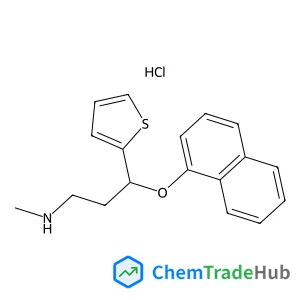
N-Methyl-3-(1-naphthyloxy)-3-(2-thienyl)-1-propanamine hydrochloride (1:1)
CAS Number:
1188266-11-6
Molecular Formula:
C18H20ClNOS
![(2R,6S)-6-[(Benzyloxy)methyl]-4-{[(2-methyl-2-propanyl)oxy]carbonyl}-2-morpholinecarboxylic acid structure](https://static.chemtradehub.com/structs/109/1093085-91-6-3382.webp "(2R,6S)-6-[(Benzyloxy)methyl]-4-{[(2-methyl-2-propanyl)oxy]carbonyl}-2-morpholinecarboxylic acid structure")
(2R,6S)-6-[(Benzyloxy)methyl]-4-{[(2-methyl-2-propanyl)oxy]carbonyl}-2-morpholinecarboxylic acid
CAS Number:
1093085-91-6
Molecular Formula:
C18H25NO6
Recommended Suppliers





Disclaimer
This page provides academic journal information for reference and research purposes only. We are not affiliated with any journal publishers and do not handle publication submissions. For publication-related inquiries, please contact the respective journal publishers directly.
If you notice any inaccuracies in the information displayed, please contact us at support@chemtradehub.com. We will promptly review and address your concerns.