












Photo-responsive disassembly of supramolecular polymer bottlebrushes in water
Literature Information
Publication Date
2023-10-12
DOI
10.1039/D3PY00963G
Impact Factor
5.582
Authors
Luke Harvey, Jean-Michel Guigner, Laurent Bouteiller, Erwan Nicol, Olivier Colombani
View Original
Abstract
We report the 5-step synthesis and self-assembly of an azobenzene-bisurea sticker flanked by two alkyl spacers and poly(ethylene oxide) arms. In the trans-azobenzene configuration, long nano-cylinders can be obtained by first molecularly dissolving the polymer in DMSO, followed by the slow addition of water. The addition of water triggers 1D self-assembly through a combination of strong, cooperative H-bonding between urea motifs and hydrophobic effects. UV-light irradiation triggers the photo-isomerization of azobenzene units into their non-planar cis configuration, rapidly and irreversibly disrupting the photo-responsive assemblies.
Related Literature
Unraveling the atomic structure of Ge-rich sulfide glasses
Gabriel J. Cuello, Shinji Kohara, Chris J. Benmore, David L. Price, Eugene Bychkov
2013-04-08
Paper
DOI: 10.1039/C3CP50536G
The electronic structure of pyracene: a spectroscopic and computational study
Johannes Auerswald, Bernd Engels, Ingo Fischer, Thiemo Gerbich, Jörg Herterich, Anke Krueger, Melanie Lang, Hans-Christian Schmitt, Christof Schon, Christof Walter
2013-03-27
Paper
DOI: 10.1039/C3CP44271C
Self-discharge of electrochemical double layer capacitors
Andrzej Lewandowski, Pawel Jakobczyk, Maciej Galinski, Marcin Biegun
2013-03-22
Perspective
DOI: 10.1039/C3CP44612C
Organic spin-valves: from unipolar to bipolar devices
Z. Valy Vardeny
2013-04-25
Perspective
DOI: 10.1039/C3CP50639H
Free volume in ionic liquids: a connection of experimentally accessible observables from PALS and PVT experiments with the molecular structure from XRD data‡
Yang Yu, Günter Dlubek, Reinhard Krause-Rehberg, Jürgen Pionteck, Dirk Pfefferkorn, Safak Bulut, Dana Bejan, Christian Friedrich
2013-04-10
Paper
DOI: 10.1039/C3CP43306D
Lone-pair distribution and plumbite network formation in high lead silicate glass, 80PbO·20SiO2
Oliver L. G. Alderman, Alex C. Hannon, Diane Holland, Steve Feller, Gloria Lehr, Adam J. Vitale, Uwe Hoppe, Martin v. Zimmerman, Anke Watenphul
2013-04-29
Paper
DOI: 10.1039/C3CP51348C
Ultra-slow dynamics in low density amorphous ice revealed by deuteron NMR: indication of a glass transition
Florian Löw, Katrin Amann-Winkel, Thomas Loerting, Franz Fujara, Burkhard Geil
2013-05-10
Paper
DOI: 10.1039/C3CP50818H
Mechanisms behind sulfur promoted oxidation of methane
Johan Gustafson, Marco Di Michiel, Mark A. Newton
2013-02-11
Paper
DOI: 10.1039/C3CP44289F
Molecular dynamics investigation of the disordered crystal structure of hexagonal LiBH4
Keith Refson
2013-01-29
Paper
DOI: 10.1039/C3CP44520H
The impact of spectator species on the interaction of H2O2 with platinum – implications for the oxygen reduction reaction pathways
Ioannis Katsounaros, Josef C. Meier, Udo Benedikt, P. Ulrich Biedermann, Angel Cuesta, Alexander A. Auer, Karl J. J. Mayrhofer
2013-03-01
Paper
DOI: 10.1039/C3CP50649E
You might also like
Compound Q&A
What is the market or research trend for N-(4-Methoxybenzyl)-2-pyridinamine (CAS: 52818-63-0)?
N-(4-Methoxybenzyl)-2-pyridinamine (CAS: 52818-63-0) is increasingly being used ...
52818-63-0N-(4-Methoxybenzyl)-...
Compound Q&A
What precautions should be taken when handling Ethyl 4-(2-chlorophenyl)-1,3-thiazole-2-carboxylate (CAS: 1050507-06-6)?
When handling Ethyl 4-(2-chlorophenyl)-1,3-thiazole-2-carboxylate, appropriate p...
1050507-06-6Ethyl 4-(2-chlorophe...
Compound Q&A
What regulatory guidelines apply to diethyldiselane (CAS: 628-39-7)?
Diethyldiselane (CAS: 628-39-7) is classified under the Globally Harmonized Syst...
628-39-7Diethyldiselane
Compound Q&A
What is the market or research trend for oxocopper (CAS: 12053-18-8)?
The market for oxocopper (CAS: 12053-18-8) is primarily driven by its use in cat...
12053-18-8oxocopper; oxo-(oxoc...
Compound Q&A
What is the market or research trend for 5-{[(2-Methyl-2-propanyl)oxy]carbonyl}-5-azaspiro[2.4]heptane-7-carboxylic acid?
The market for 5-{[(2-Methyl-2-propanyl)oxy]carbonyl}-5-azaspiro[2.4]heptane-7-c...
1268519-54-55-{[(2-Methyl-2-prop...
Compound Q&A
What is 2-(1-Pyrrolidinyl)-4-pyridinamine (CAS: 35981-63-6)?
2-(1-Pyrrolidinyl)-4-pyridinamine is a chemical compound with the CAS number 359...
35981-63-62-(1-Pyrrolidinyl)-4...
Compound Q&A
What are the physical and chemical properties of 2-(3-Pyridinyl)-1-azabicyclo[2.2.2]octane (CAS: 91556-75-1)?
2-(3-Pyridinyl)-1-azabicyclo[2.2.2]octane (CAS: 91556-75-1) is a crystalline sol...
91556-75-12-(3-Pyridinyl)-1-az...
Compound Q&A
How is (S)-Alpha-allyl-proline hydrochloride (CAS: 129704-91-2) typically synthesized?
(S)-Alpha-allyl-proline hydrochloride is usually synthesized via a Wittig reacti...
129704-91-2(S)-Alpha-allyl-prol...
Compound Q&A
What is 3-Methyl-1,2-oxazole-5-carboxylic acid (CAS: 4857-42-5)?
3-Methyl-1,2-oxazole-5-carboxylic acid (CAS: 4857-42-5) is an organic compound w...
4857-42-53-Methyl-1,2-oxazole...
Compound Q&A
How is Lys-SMCC-DM1 (CAS: 1281816-04-3) typically synthesized?
Lys-SMCC-DM1 is synthesized via a multi-step process involving the coupling of S...
1281816-04-3Lys-SMCC-DM1
Source Journal
Polymer Chemistry

CiteScore:
8.6
Self-citation Rate:
7.3%
Articles per Year:
457
Polymer Chemistry welcomes submissions in all areas of polymer science that have a strong focus on macromolecular chemistry. Manuscripts may cover a broad range of fields, yet no direct application focus is required.
Recommended Compounds
![(2R,6S)-6-[(Benzyloxy)methyl]-4-{[(2-methyl-2-propanyl)oxy]carbonyl}-2-morpholinecarboxylic acid structure](https://static.chemtradehub.com/structs/109/1093085-91-6-3382.webp "(2R,6S)-6-[(Benzyloxy)methyl]-4-{[(2-methyl-2-propanyl)oxy]carbonyl}-2-morpholinecarboxylic acid structure")
(2R,6S)-6-[(Benzyloxy)methyl]-4-{[(2-methyl-2-propanyl)oxy]carbonyl}-2-morpholinecarboxylic acid
CAS Number:
1093085-91-6
Molecular Formula:
C18H25NO6
![1-[6-(1H-Imidazol-1-yl)-3-pyridinyl]methanamine structure](https://static.chemtradehub.com/structs/914/914637-08-4-8825.webp "1-[6-(1H-Imidazol-1-yl)-3-pyridinyl]methanamine structure")
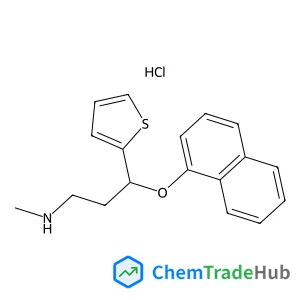
N-Methyl-3-(1-naphthyloxy)-3-(2-thienyl)-1-propanamine hydrochloride (1:1)
CAS Number:
1188266-11-6
Molecular Formula:
C18H20ClNOS
Recommended Suppliers






Disclaimer
This page provides academic journal information for reference and research purposes only. We are not affiliated with any journal publishers and do not handle publication submissions. For publication-related inquiries, please contact the respective journal publishers directly.
If you notice any inaccuracies in the information displayed, please contact us at support@chemtradehub.com. We will promptly review and address your concerns.