












Organic spin-valves: from unipolar to bipolar devices
Literature Information
Publication Date
2013-04-25
DOI
10.1039/C3CP50639H
Impact Factor
3.676
Authors
Z. Valy Vardeny
View Original
Abstract
We review the recent advances in both unipolar and bipolar organic spin valves. We discuss mechanisms that dominate the spin relaxation of injected spin aligned carriers and limit their spin diffusion length. A space charge limited current model with ferromagnetic electrodes is used to describe the bipolar organic spin valve operation. For unipolar spin valves we take into account finite spin diffusion length and obtain a general expression that is valid for devices with thick organic interlayers. For bipolar spin valves where the injected spin aligned electrons and holes selectively form polaron pairs having singlet or triplet spin configurations, we obtain modified expressions for the magneto-resistance and magneto-electroluminescence and show that they are proportional to the difference in singlet–triplet generation rates and the spin injection polarization degree of the ferromagnetic electrodes.
Recommended Journals
Related Literature
Non-adiabatic quantum interference in the ultracold Li + LiNa → Li2 + Na reaction
Brian K. Kendrick, Hui Li, Ming Li, Svetlana Kotochigova, Naduvalath Balakrishnan
2021-02-12
Paper
DOI: 10.1039/D0CP05499B
HPO42− enhanced catalytic activity of N, S, B, and O-codoped carbon nanosphere-armored Co9S8 nanoparticles for organic pollutants degradation via peroxymonosulfate activation: critical roles of superoxide radical, singlet oxygen and electron transfer
Genxing Zhu, Jialu Zhu, Qi Liu, Xinlong Fu, Ziyi Chen, Kai Li, Fengyi Cao, Qi Qin, Mingli Jiao
2021-02-05
Paper
DOI: 10.1039/D0CP04773B
Non-collinear antiferromagnetism to compensated ferrimagnetism in Ti(Fe1−xCox)2 (x = 0, 0.5 and 1) alloys: experiment and theory
S. Shanmukharao Samatham, Akhilesh Kumar Patel, K. G. Suresh, R. Nirmala
2021-02-08
Paper
DOI: 10.1039/D0CP06368A
Excitation and ionisation cross-sections in condensed-phase biomaterials by electrons down to very low energy: application to liquid water and genetic building blocks
Isabel Abril, Rafael Garcia-Molina
2021-02-10
Paper
DOI: 10.1039/D0CP04951D
Photocatalytic oxygen evolution triggered by photon upconverted emission based on triplet–triplet annihilation
Shutaro Tateyama, Fuminao Kishimoto
2021-02-26
Paper
DOI: 10.1039/D0CP06139E
Predicting OH stretching fundamental wavenumbers of alcohols for conformational assignment: different correction patterns for density functional and wave-function-based methods
Robert Medel, Martin A. Suhm
2021-02-25
Paper
DOI: 10.1039/D1CP00342A
Structural, elastic and electronic properties of atomically thin pyridyne: theoretical predictions
Chuan Liu, Shuaishuai Wang, Xuchun Wang, Xiangju Ye, Zirong Li, Jumeng Wei, Ping Cheng, Yingjie Li
2021-02-10
Paper
DOI: 10.1039/D0CP06504H
Hydrogen adsorption on inorganic benzenes decorated with alkali metal cations: theoretical study
Igor K. Petrushenko, Holger F. Bettinger
2021-02-16
Paper
DOI: 10.1039/D1CP00025J
Conformational H-bonding modulation of the iron active site cysteine ligand of superoxide reductase: absorption and resonance Raman studies
Alain Desbois, Julien Valton, Yohann Moreau, Stéphane Torelli, Vincent Nivière
2021-01-14
Paper
DOI: 10.1039/D0CP03898A
Polaron-formation revealed by transient XUV imaginary refractive index changes in different iron compounds
Wenfan Chen
2021-02-10
Communication
DOI: 10.1039/D1CP00103E
You might also like
Compound Q&A
What is the market or research trend for N-(4-Methoxybenzyl)-2-pyridinamine (CAS: 52818-63-0)?
N-(4-Methoxybenzyl)-2-pyridinamine (CAS: 52818-63-0) is increasingly being used ...
52818-63-0N-(4-Methoxybenzyl)-...
Compound Q&A
What precautions should be taken when handling Ethyl 4-(2-chlorophenyl)-1,3-thiazole-2-carboxylate (CAS: 1050507-06-6)?
When handling Ethyl 4-(2-chlorophenyl)-1,3-thiazole-2-carboxylate, appropriate p...
1050507-06-6Ethyl 4-(2-chlorophe...
Compound Q&A
What regulatory guidelines apply to diethyldiselane (CAS: 628-39-7)?
Diethyldiselane (CAS: 628-39-7) is classified under the Globally Harmonized Syst...
628-39-7Diethyldiselane
Compound Q&A
What is the market or research trend for oxocopper (CAS: 12053-18-8)?
The market for oxocopper (CAS: 12053-18-8) is primarily driven by its use in cat...
12053-18-8oxocopper; oxo-(oxoc...
Compound Q&A
What is the market or research trend for 5-{[(2-Methyl-2-propanyl)oxy]carbonyl}-5-azaspiro[2.4]heptane-7-carboxylic acid?
The market for 5-{[(2-Methyl-2-propanyl)oxy]carbonyl}-5-azaspiro[2.4]heptane-7-c...
1268519-54-55-{[(2-Methyl-2-prop...
Compound Q&A
What is 2-(1-Pyrrolidinyl)-4-pyridinamine (CAS: 35981-63-6)?
2-(1-Pyrrolidinyl)-4-pyridinamine is a chemical compound with the CAS number 359...
35981-63-62-(1-Pyrrolidinyl)-4...
Compound Q&A
What are the physical and chemical properties of 2-(3-Pyridinyl)-1-azabicyclo[2.2.2]octane (CAS: 91556-75-1)?
2-(3-Pyridinyl)-1-azabicyclo[2.2.2]octane (CAS: 91556-75-1) is a crystalline sol...
91556-75-12-(3-Pyridinyl)-1-az...
Compound Q&A
How is (S)-Alpha-allyl-proline hydrochloride (CAS: 129704-91-2) typically synthesized?
(S)-Alpha-allyl-proline hydrochloride is usually synthesized via a Wittig reacti...
129704-91-2(S)-Alpha-allyl-prol...
Compound Q&A
What is 3-Methyl-1,2-oxazole-5-carboxylic acid (CAS: 4857-42-5)?
3-Methyl-1,2-oxazole-5-carboxylic acid (CAS: 4857-42-5) is an organic compound w...
4857-42-53-Methyl-1,2-oxazole...
Compound Q&A
How is Lys-SMCC-DM1 (CAS: 1281816-04-3) typically synthesized?
Lys-SMCC-DM1 is synthesized via a multi-step process involving the coupling of S...
1281816-04-3Lys-SMCC-DM1
Source Journal
Physical Chemistry Chemical Physics

CiteScore:
5.5
Self-citation Rate:
10.3%
Articles per Year:
3036
Physical Chemistry Chemical Physics (PCCP) is an international journal co-owned by 19 physical chemistry and physics societies from around the world. This journal publishes original, cutting-edge research in physical chemistry, chemical physics and biophysical chemistry. To be suitable for publication in PCCP, articles must include significant innovation and/or insight into physical chemistry; this is the most important criterion that reviewers and Editors will judge against when evaluating submissions. The journal has a broad scope and welcomes contributions spanning experiment, theory, computation and data science. Topical coverage includes spectroscopy, dynamics, kinetics, statistical mechanics, thermodynamics, electrochemistry, catalysis, surface science, quantum mechanics, quantum computing and machine learning. Interdisciplinary research areas such as polymers and soft matter, materials, nanoscience, energy, surfaces/interfaces, and biophysical chemistry are welcomed if they demonstrate significant innovation and/or insight into physical chemistry. Joined experimental/theoretical studies are particularly appreciated when complementary and based on up-to-date approaches.
Recommended Compounds
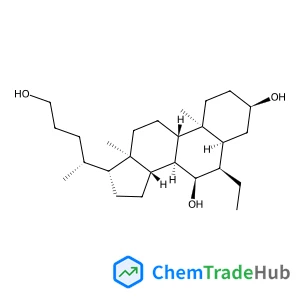
(3alpha,5beta,6alpha,7alpha)-6-Ethylcholane-3,7,24-triol
CAS Number:
1537866-49-1
Molecular Formula:
C26H46O3
![(2R,6S)-6-[(Benzyloxy)methyl]-4-{[(2-methyl-2-propanyl)oxy]carbonyl}-2-morpholinecarboxylic acid structure](https://static.chemtradehub.com/structs/109/1093085-91-6-3382.webp "(2R,6S)-6-[(Benzyloxy)methyl]-4-{[(2-methyl-2-propanyl)oxy]carbonyl}-2-morpholinecarboxylic acid structure")
(2R,6S)-6-[(Benzyloxy)methyl]-4-{[(2-methyl-2-propanyl)oxy]carbonyl}-2-morpholinecarboxylic acid
CAS Number:
1093085-91-6
Molecular Formula:
C18H25NO6
![1-[6-(1H-Imidazol-1-yl)-3-pyridinyl]methanamine structure](https://static.chemtradehub.com/structs/914/914637-08-4-8825.webp "1-[6-(1H-Imidazol-1-yl)-3-pyridinyl]methanamine structure")
Recommended Suppliers







Disclaimer
This page provides academic journal information for reference and research purposes only. We are not affiliated with any journal publishers and do not handle publication submissions. For publication-related inquiries, please contact the respective journal publishers directly.
If you notice any inaccuracies in the information displayed, please contact us at support@chemtradehub.com. We will promptly review and address your concerns.