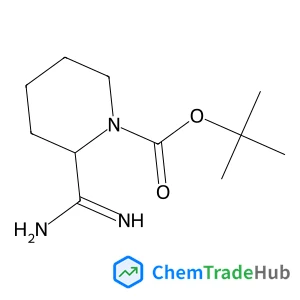
2-Methyl-2-propanyl 2-carbamimidoyl-1-piperidinecarboxylate
CAS Number:
1258640-98-0
Molecular Formula:
C11H21N3O2
Andrzej Lewandowski, Pawel Jakobczyk, Maciej Galinski, Marcin Biegun
Spontaneous voltage drop between EDLC electrodes, when it is kept under the open-circuit condition, is commonly called ‘self-discharge’ and is interpreted as a result of energy loss by the device. Three mechanisms of self-discharge were proposed: due to a leakage-current, faradaic reactions and charge redistribution. According to the law of energy preservation, if the voltage drop is associated with the energy loss, the energy would more likely be exchanged with the environment. While heat generation was measured during EDLC charging and discharging, the corresponding effect during storage under open-circuit conditions has not been reported. This may support the conclusion that voltage changes during ‘self-discharge’ are not related to a considerable energy loss. Moreover, it has been shown that a two-stage charging process, i.e. first galvanostatic charging followed by a potentiostatic charge redistribution, resulted in considerably slower potential changes when the device was switched to the open circuit. All discussed models were based on the assumption that the energy accumulated by EDLCs is proportional to the voltage in the second power, with capacitance (C/2) as the proportionality constant. However, it has been shown that during EDLC charging or discharging through a resistance R, equations valid for ‘dielectric’ and electrolytic capacitors, do not hold in the case of EDLCs. Consequently, the assumption that the energetic state of the EDLC is proportional at any time to the voltage in the second power may not be valid due to considerable variability of the ‘constant’ C. Therefore, voltage changes may not reflect the energetic state of the device.
Jialu Wang, Martha Sibrian-Vazquez, Jorge O. Escobedo, Mark Lowry, Lei Wang, Yu-Hsuan Chu, Richard G. Moore, Robert M. Strongin
DOI: 10.1039/C3AN01168B
D. Hosseini, Q. Imtiaz, P. M. Abdala, S. Yoon, A. M. Kierzkowska, A. Weidenkaff, C. R. Müller
DOI: 10.1039/C5TA01088H
Haibo Zhu, Yongzhen Wu, Jingchuan Liu, Weiwei Zhang, Wenjun Wu, Wei-Hong Zhu
DOI: 10.1039/C5TA01371B
Mengru Li, Ran Li, Bo Han, Haojie Ma, Xueyan Hou, Yulong Kang, Yuqi Zhang, Ji-Jiang Wang
DOI: 10.1039/D1AN02139G
Long Chuan Zhang, Yu Meng Yang, Ling Liang, Yong Jian Jiang, Chun Mei Li, Yuan Fang Li, Lei Zhan, Hong Yan Zou
DOI: 10.1039/D1AN02147H
Virginia Chu, João Gonçalves
DOI: 10.1039/D1AN01810H
Ya-Xin Wang, Dong-Xia Wang, Jia-Yi Ma, Jing Wang, Yi-Chen Du, De-Ming Kong
DOI: 10.1039/D1AN00275A
DOI: 10.1039/JA9860100145
N-(4-Methoxybenzyl)-2-pyridinamine (CAS: 52818-63-0) is increasingly being used ...
When handling Ethyl 4-(2-chlorophenyl)-1,3-thiazole-2-carboxylate, appropriate p...
Diethyldiselane (CAS: 628-39-7) is classified under the Globally Harmonized Syst...
The market for oxocopper (CAS: 12053-18-8) is primarily driven by its use in cat...
The market for 5-{[(2-Methyl-2-propanyl)oxy]carbonyl}-5-azaspiro[2.4]heptane-7-c...
2-(1-Pyrrolidinyl)-4-pyridinamine is a chemical compound with the CAS number 359...
2-(3-Pyridinyl)-1-azabicyclo[2.2.2]octane (CAS: 91556-75-1) is a crystalline sol...
(S)-Alpha-allyl-proline hydrochloride is usually synthesized via a Wittig reacti...
3-Methyl-1,2-oxazole-5-carboxylic acid (CAS: 4857-42-5) is an organic compound w...
Lys-SMCC-DM1 is synthesized via a multi-step process involving the coupling of S...

Physical Chemistry Chemical Physics (PCCP) is an international journal co-owned by 19 physical chemistry and physics societies from around the world. This journal publishes original, cutting-edge research in physical chemistry, chemical physics and biophysical chemistry. To be suitable for publication in PCCP, articles must include significant innovation and/or insight into physical chemistry; this is the most important criterion that reviewers and Editors will judge against when evaluating submissions. The journal has a broad scope and welcomes contributions spanning experiment, theory, computation and data science. Topical coverage includes spectroscopy, dynamics, kinetics, statistical mechanics, thermodynamics, electrochemistry, catalysis, surface science, quantum mechanics, quantum computing and machine learning. Interdisciplinary research areas such as polymers and soft matter, materials, nanoscience, energy, surfaces/interfaces, and biophysical chemistry are welcomed if they demonstrate significant innovation and/or insight into physical chemistry. Joined experimental/theoretical studies are particularly appreciated when complementary and based on up-to-date approaches.
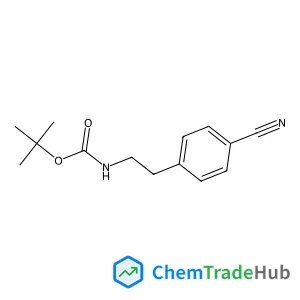
![N-{[(2-Methyl-2-propanyl)oxy]carbonyl}-L-methionylglycine structure](https://static.chemtradehub.com/structs/234/23446-03-9-e1e5.webp "N-{[(2-Methyl-2-propanyl)oxy]carbonyl}-L-methionylglycine structure")