













Thermal and nonthermal processing of an underutilized fruit Emblica officinalis (Amla): a sustainable approach
Literature Information
Publication Date
2023-07-24
DOI
10.1039/D3FB00058C
Impact Factor
0
Authors
Rishika Tewari, Vivek Kumar, H. K. Sharma
View Original
Abstract
Indian gooseberry or amla (Emblica officinalis) belongs to the Euphorbiaceae family and is undoubtedly the chief medicinal plant of the Indian Ayurvedic medicine system. The unique array of biologically active compounds in amla endows it with ethnomedical and pharmacological value. Almost every part of the amla tree can be utilized in various medicinal formulations for the treatment of several ailments including cancer, dyslipidemia, diabetes, digestive issues and neurological disorders. However, the post-harvest losses of this fruit are as high as 30–40%, and thus the production of value-added products of amla fruit is profitable to both consumers and farmers, as it helps in capturing the benefits throughout the year. Therefore, in this comprehensive review, we provide a better understanding on the quality of amla based on its various bioactive components. Also, we present the thermal and non-thermal processing, packaging and storage, value-added product and health aspects of the amla fruit in detail.
Related Literature
On the methodology of the determination of charge concentration dependent mobility from organic field-effect transistor characteristics
Miroslav Menšík, Petr Toman, Urszula Bielecka, Wojciech Bartkowiak, Jiří Pfleger, Bartosz Paruzel
2017-12-12
Paper
DOI: 10.1039/C7CP06423C
The aromatic character of [10]annulenes and dicupra[10]annulenes from current density calculations
Maria Dimitrova, Dage Sundholm
2017-11-20
Paper
DOI: 10.1039/C7CP07212K
A general spin-complete spin-flip configuration interaction method
Joani Mato, Mark S. Gordon
2018-01-10
Paper
DOI: 10.1039/C7CP06837A
A thermodynamic description for water, hydrogen fluoride and hydrogen dissolutions in cryolite-base molten salts
Patrice Chartrand
2018-06-01
Paper
DOI: 10.1039/C8CP02678E
Theoretical investigation on the interaction between RhIII octaethylporphyrin and a graphite basal surface: a comparison study of DFT, DFT-D, and AFM
Kohei Tada, Yasushi Maeda, Hiroyuki Ozaki, Shingo Tanaka, Shin-ichi Yamazaki
2018-07-19
Paper
DOI: 10.1039/C8CP02923G
Double defects modified carbon nitride nanosheets with enhanced photocatalytic hydrogen evolution
Shumei Chen, Huabin Zhang, Jian Zhang
2018-05-30
Paper
DOI: 10.1039/C8CP01986J
Water thermophoresis in carbon nanotubes: the interplay between thermophoretic and friction forces
Elton Oyarzua, Harvey A. Zambrano
2018-01-02
Paper
DOI: 10.1039/C7CP05749K
Hidden magnetic order in plutonium dioxide nuclear fuel
Ashley E. Shields, Mark T. Storr, Andrew S. Wills
2018-07-26
Paper
DOI: 10.1039/C8CP03583K
Analyses of trajectory on-the-fly based on the global reaction route map
Takuro Tsutsumi, Yuriko Ono, Satoshi Maeda, Tetsuya Taketsugu
2017-12-08
Paper
DOI: 10.1039/C7CP06528K
Protonation state and fine structure of the active site determine the reactivity of dehydratase: hydration and isomerization of β-myrcene catalyzed by linalool dehydratase/isomerase from Castellaniella defragrans
Xiya Wang, Hao Su, Rutao Liu, Yongjun Liu
2018-06-01
Paper
DOI: 10.1039/C8CP02362J
You might also like
Compound Q&A
What industries use (1R,3S)-1,3-Cyclopentanediol (CAS: 16326-97-9)?
(1R,3S)-1,3-Cyclopentanediol finds applications in various industries. In the ph...
16326-97-9(1R,3S)-1,3-Cyclopen...
Compound Q&A
What precautions should be taken when handling N'-[4-(Dimethylamino)phenyl]-N,N-dimethyl-1,4-benzenediamine (CAS: 637-31-0)?
When handling N'-[4-(Dimethylamino)phenyl]-N,N-dimethyl-1,4-benzenediamine, it i...
637-31-0N'-[4-(Dimethylamino...
Compound Q&A
Are there alternatives to 5-(2,4-Difluorophenyl)-2-methoxypyrimidine (CAS: 1352318-16-1) in synthesis?
There are several alternatives to 5-(2,4-Difluorophenyl)-2-methoxypyrimidine in ...
1352318-16-15-(2,4-Difluoropheny...
Compound Q&A
What regulatory guidelines apply to 1-(3-Methoxyphenoxy)propan-2-ol (CAS: 382141-68-6)?
1-(3-Methoxyphenoxy)propan-2-ol (CAS: 382141-68-6) must comply with the Globally...
382141-68-61-(3-Methoxyphenoxy)...
Compound Q&A
Is Tetrodotoxin Citrate (CAS: 18660-81-6) safe?
Tetrodotoxin Citrate is extremely dangerous and should be handled with extreme c...
18660-81-6Tetrodotoxin Citrate
Compound Q&A
What are the main uses of 2-Methyl-2-propanyl [(1R,3S)-3-hydroxycyclopentyl]carbamate (CAS: 225641-84-9)?
2-Methyl-2-propanyl [(1R,3S)-3-hydroxycyclopentyl]carbamate (CAS: 225641-84-9) i...
225641-84-92-Methyl-2-propanyl ...
Compound Q&A
How should waste containing 4-(2-Hydroxyhexafluoroisopropyl)Benzoic Acid (CAS: 16261-80-6) be handled?
Waste containing 4-(2-Hydroxyhexafluoroisopropyl)Benzoic Acid (CAS: 16261-80-6) ...
16261-80-64-(2-Hydroxyhexafluo...
Compound Q&A
How is 2-Methyl-2-proanyl {(2S)-1-[(benzyloxy)amino]-3-hydroxy-3-methyl-1-oxo-2-butanyl}carbamate (CAS: 102507-19-7) typically synthesized?
2-Methyl-2-proanyl {(2S)-1-[(benzyloxy)amino]-3-hydroxy-3-methyl-1-oxo-2-butanyl...
102507-19-72-Methyl-2-propanyl ...
Compound Q&A
What is Benzeneethanamine, α-ethyl-, hydrochloride (1:1) (CAS: 20735-15-3)?
Benzeneethanamine, α-ethyl-, hydrochloride (1:1) is an organic compound with the...
20735-15-3Benzeneethanamine, α...
Compound Q&A
Are there alternatives to 3-{(E)-[4-(Dimethylamino)phenyl]diazenyl}benzoic acid (CAS: 20691-84-3) in synthesis?
In the synthesis of compounds similar to 3-{(E)-[4-(Dimethylamino)phenyl]diazeny...
20691-84-33-{(E)-[4-(Dimethyla...
Source Journal
Recommended Compounds

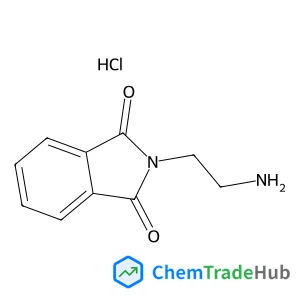
2-(2-Aminoethyl)-1H-isoindole-1,3(2H)-dione hydrochloride (1:1)
CAS Number:
30250-67-0
Molecular Formula:
C10H11ClN2O2
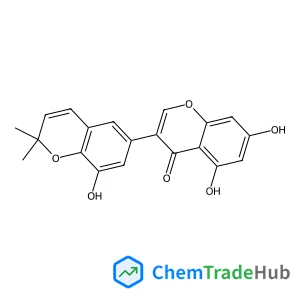
5,7,8'-Trihydroxy-2',2'-dimethyl-2'H,4H-3,6'-bichromen-4-one
CAS Number:
129280-33-7
Molecular Formula:
C20H16O6
Recommended Suppliers






Disclaimer
This page provides academic journal information for reference and research purposes only. We are not affiliated with any journal publishers and do not handle publication submissions. For publication-related inquiries, please contact the respective journal publishers directly.
If you notice any inaccuracies in the information displayed, please contact us at support@chemtradehub.com. We will promptly review and address your concerns.