












A general spin-complete spin-flip configuration interaction method
Literature Information
Publication Date
2018-01-10
DOI
10.1039/C7CP06837A
Impact Factor
3.676
Authors
Joani Mato, Mark S. Gordon
View Original
Abstract
A new, general spin-correct spin-flip configuration interaction (SF-CI) method is introduced by extending the occupation restricted multiple active spaces (ORMAS) CI method in GAMESS. SF-ORMAS is a single reference CI method that utilizes a high-spin restricted open shell determinant on which an arbitrary amount of spin-flipped excitations are carried out to generate a wave function of desired multiplicity. Furthermore, the SF-ORMAS method allows for a flexible design of the active space(s) to fit the chemical problem at hand. Therefore, a variety of spin-flip schemes can be implemented within this one formalism. As SF-ORMAS mostly accounts for static correlation, dynamic correlation is included through perturbation theory. The new method is demonstrated for single and multiple bond breaking, diradical systems, vertical excitations of linear alkenes, and the singlet–triplet energy gap of silicon trimer.
Related Literature
A straightforward zinc-catalysed reduction of sulfoxides to sulfides
Stephan Enthaler
2011-02-08
Paper
DOI: 10.1039/C0CY00039F
Precise engineering and visualization of signs and magnitudes of DNA writhe on the basis of PNA invasion
Dawei Li, Zhaoqi Yang, Yi Long, Guanjia Zhao, Bei Lv, Shuhui Hiew, Magdeline Tao Tao Ng, Juanjuan Guo, HongKee Tan, Hao Zhang, Weixing Yuan, Haibin Su, Tianhu Li
2011-09-05
Communication
DOI: 10.1039/C1CC13158C
syn-Selective asymmetric cross-aldol reactions between aldehydes and glyoxylic acid derivatives catalyzed by an axially chiral amino sulfonamide‡
Taichi Kano, Akira Noishiki, Ryu Sakamoto, Keiji Maruoka
2011-09-05
Communication
DOI: 10.1039/C1CC14347F
Two-dimensional zeolites: dream or reality?
Wieslaw J. Roth, Jiří Čejka
2011-02-08
Perspective
DOI: 10.1039/C0CY00027B
Synthesis, characterization and ethylene oligomerization behaviour of 8-(1-aryliminoethylidene)quinaldinylnickel dihalides
Shengju Song, Tianpengfei Xiao, Tongling Liang, Fosong Wang, Carl Redshaw, Wen-Hua Sun
2011-02-08
Paper
DOI: 10.1039/C0CY00002G
Expedient entry to the piperazinohydroisoquinoline ring system using a sequential Ugi/Pictet–Spengler/reductive methylation reaction protocol
Ma.-Angeles Cano-Herrera, Luis D. Miranda
2011-09-01
Communication
DOI: 10.1039/C1CC10759C
Functionalization of luminescent cyclometalated iridium(iii) polypyridine complexes with a fluorous moiety: photophysics, protein-binding, bioconjugation, and cellular uptake properties
Siu-Kit Leung, Hua-Wei Liu, Kenneth Kam-Wing Lo
2011-04-27
Communication
DOI: 10.1039/C1CC11423A
Selective Diels–Alder cycloaddition on semiconducting single-walled carbon nanotubes for potential separation application
Jiao-Tong Sun, Lu-Yang Zhao, Chun-Yan Hong, Cai-Yuan Pan
2011-09-05
Communication
DOI: 10.1039/C1CC13437J
You might also like
Compound Q&A
What industries use (1R,3S)-1,3-Cyclopentanediol (CAS: 16326-97-9)?
(1R,3S)-1,3-Cyclopentanediol finds applications in various industries. In the ph...
16326-97-9(1R,3S)-1,3-Cyclopen...
Compound Q&A
What precautions should be taken when handling N'-[4-(Dimethylamino)phenyl]-N,N-dimethyl-1,4-benzenediamine (CAS: 637-31-0)?
When handling N'-[4-(Dimethylamino)phenyl]-N,N-dimethyl-1,4-benzenediamine, it i...
637-31-0N'-[4-(Dimethylamino...
Compound Q&A
Are there alternatives to 5-(2,4-Difluorophenyl)-2-methoxypyrimidine (CAS: 1352318-16-1) in synthesis?
There are several alternatives to 5-(2,4-Difluorophenyl)-2-methoxypyrimidine in ...
1352318-16-15-(2,4-Difluoropheny...
Compound Q&A
What regulatory guidelines apply to 1-(3-Methoxyphenoxy)propan-2-ol (CAS: 382141-68-6)?
1-(3-Methoxyphenoxy)propan-2-ol (CAS: 382141-68-6) must comply with the Globally...
382141-68-61-(3-Methoxyphenoxy)...
Compound Q&A
Is Tetrodotoxin Citrate (CAS: 18660-81-6) safe?
Tetrodotoxin Citrate is extremely dangerous and should be handled with extreme c...
18660-81-6Tetrodotoxin Citrate
Compound Q&A
What are the main uses of 2-Methyl-2-propanyl [(1R,3S)-3-hydroxycyclopentyl]carbamate (CAS: 225641-84-9)?
2-Methyl-2-propanyl [(1R,3S)-3-hydroxycyclopentyl]carbamate (CAS: 225641-84-9) i...
225641-84-92-Methyl-2-propanyl ...
Compound Q&A
How should waste containing 4-(2-Hydroxyhexafluoroisopropyl)Benzoic Acid (CAS: 16261-80-6) be handled?
Waste containing 4-(2-Hydroxyhexafluoroisopropyl)Benzoic Acid (CAS: 16261-80-6) ...
16261-80-64-(2-Hydroxyhexafluo...
Compound Q&A
How is 2-Methyl-2-proanyl {(2S)-1-[(benzyloxy)amino]-3-hydroxy-3-methyl-1-oxo-2-butanyl}carbamate (CAS: 102507-19-7) typically synthesized?
2-Methyl-2-proanyl {(2S)-1-[(benzyloxy)amino]-3-hydroxy-3-methyl-1-oxo-2-butanyl...
102507-19-72-Methyl-2-propanyl ...
Compound Q&A
What is Benzeneethanamine, α-ethyl-, hydrochloride (1:1) (CAS: 20735-15-3)?
Benzeneethanamine, α-ethyl-, hydrochloride (1:1) is an organic compound with the...
20735-15-3Benzeneethanamine, α...
Compound Q&A
Are there alternatives to 3-{(E)-[4-(Dimethylamino)phenyl]diazenyl}benzoic acid (CAS: 20691-84-3) in synthesis?
In the synthesis of compounds similar to 3-{(E)-[4-(Dimethylamino)phenyl]diazeny...
20691-84-33-{(E)-[4-(Dimethyla...
Source Journal
Physical Chemistry Chemical Physics

CiteScore:
5.5
Self-citation Rate:
10.3%
Articles per Year:
3036
Physical Chemistry Chemical Physics (PCCP) is an international journal co-owned by 19 physical chemistry and physics societies from around the world. This journal publishes original, cutting-edge research in physical chemistry, chemical physics and biophysical chemistry. To be suitable for publication in PCCP, articles must include significant innovation and/or insight into physical chemistry; this is the most important criterion that reviewers and Editors will judge against when evaluating submissions. The journal has a broad scope and welcomes contributions spanning experiment, theory, computation and data science. Topical coverage includes spectroscopy, dynamics, kinetics, statistical mechanics, thermodynamics, electrochemistry, catalysis, surface science, quantum mechanics, quantum computing and machine learning. Interdisciplinary research areas such as polymers and soft matter, materials, nanoscience, energy, surfaces/interfaces, and biophysical chemistry are welcomed if they demonstrate significant innovation and/or insight into physical chemistry. Joined experimental/theoretical studies are particularly appreciated when complementary and based on up-to-date approaches.
Recommended Compounds
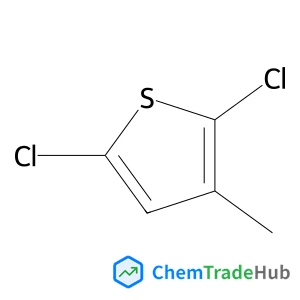

2-Methyl-2-propanyl (3R,5S)-6-chloro-3,5-dihydroxyhexanoate
CAS Number:
154026-93-4
Molecular Formula:
C10H19ClO4
Recommended Suppliers





Disclaimer
This page provides academic journal information for reference and research purposes only. We are not affiliated with any journal publishers and do not handle publication submissions. For publication-related inquiries, please contact the respective journal publishers directly.
If you notice any inaccuracies in the information displayed, please contact us at support@chemtradehub.com. We will promptly review and address your concerns.