












A thermodynamic description for water, hydrogen fluoride and hydrogen dissolutions in cryolite-base molten salts
Literature Information
Publication Date
2018-06-01
DOI
10.1039/C8CP02678E
Impact Factor
3.676
Authors
Patrice Chartrand
View Original
Abstract
This paper presents a quantitative thermodynamic description for water, hydrogen fluoride and hydrogen dissolutions in cryolite-base molten salts, which is of technological importance to the Hall–Héroult electrolytic aluminum extraction cell. The Modified Quasichemical Model in the Quadruplet Approximation (MQMQA), as used to treat a large variety of molten salt systems, was adopted to thermodynamically describe the present liquid phase; all solid solutions were modeled using the Compound Energy Formalism (CEF); the gas phase was thermodynamically treated as an ideal mixture of all possible species. The model parameters were mainly obtained by critical evaluations and optimizations of thermodynamic and phase equilibrium data available from relative experimental measurements and theoretical predictions (first-principles calculations and empirical estimations) for the lower-order subsystems. These optimized model parameters were thereafter merged within the Kohler/Toop interpolation scheme, facilitating the prediction of gas solubility (H2O, HF and H2) in multicomponent cryolite-base molten salts using the FactSage thermochemical software. Several interesting diagrams were finally obtained in order to provide useful information for the industrial partners dedicated to the Hall–Héroult electrolytic aluminum production or other molten-salt technologies (the purification process and electroslag refining).
Related Literature
NOBIN-based phosphoramidite and phosphorodiamiditeligands and their use in asymmetric nickel-catalysed hydrovinylation
Mike Schmitkamp, Walter Leitner, Giancarlo Franciò
2012-11-01
Paper
DOI: 10.1039/C2CY20657A
An energy efficient and facile synthesis of high molecular weight polyesters using ketenes
Martin Wolffs
2011-08-30
Communication
DOI: 10.1039/C1CC14055H
[60]Fullerene-based monolayers as neuroprotective biocompatible hybrid materials‡
Davide Giust, José Luis Albasanz, Mairena Martín, Riccardo Marega, Arnaud Delforge
2011-08-24
Communication
DOI: 10.1039/C1CC13971A
Epoxidation of olefins with homogeneous catalysts – quo vadis?
Simone A. Hauser, Mirza Cokoja, Fritz E. Kühn
2012-10-24
Perspective
DOI: 10.1039/C2CY20595E
A novel pH-sensitive (±)-α-tocopherol–5-fluorouracil adduct with antioxidant and anticancer properties
Dong-Wei Li, Fang-Fang Tian, Yu-Shu Ge, Xin-Liang Ding, Jia-Han Li, Zi-Qiang Xu, Mei-Fang Zhang, Xiao-Le Han, Ran Li, Feng-Lei Jiang
2011-09-05
Communication
DOI: 10.1039/C1CC13821A
Fluorescence sensing of caffeine in water with polysulfonated pyrenes
Sébastien Rochat, Stephan N. Steinmann, Clémence Corminboeuf, Kay Severin
2011-08-26
Communication
DOI: 10.1039/C1CC13927D
Two-dimensional zeolites: dream or reality?
Wieslaw J. Roth, Jiří Čejka
2011-02-08
Perspective
DOI: 10.1039/C0CY00027B
Pentametallic lanthanide-alkoxide square-based pyramids: high energy barrier for thermal relaxation in a holmium single molecule magnet‡
Robin J. Blagg, Floriana Tuna, Eric J. L. McInnes, Richard E. P. Winpenny
2011-09-01
Communication
DOI: 10.1039/C1CC14186D
β-Cyclodextrin for design of alumina supported cobalt catalysts efficient in Fischer–Tropsch synthesis
Anne Griboval-Constant, Andrei Y. Khodakov, Fabrice Diehl
2011-08-26
Communication
DOI: 10.1039/C1CC13800F
Titanium nitride catalyst cathode in a Li–air fuel cell with an acidic aqueous solution
Ping He, Yonggang Wang, Haoshen Zhou
2011-09-05
Communication
DOI: 10.1039/C1CC14144A
You might also like
Compound Q&A
What industries use (1R,3S)-1,3-Cyclopentanediol (CAS: 16326-97-9)?
(1R,3S)-1,3-Cyclopentanediol finds applications in various industries. In the ph...
16326-97-9(1R,3S)-1,3-Cyclopen...
Compound Q&A
What precautions should be taken when handling N'-[4-(Dimethylamino)phenyl]-N,N-dimethyl-1,4-benzenediamine (CAS: 637-31-0)?
When handling N'-[4-(Dimethylamino)phenyl]-N,N-dimethyl-1,4-benzenediamine, it i...
637-31-0N'-[4-(Dimethylamino...
Compound Q&A
Are there alternatives to 5-(2,4-Difluorophenyl)-2-methoxypyrimidine (CAS: 1352318-16-1) in synthesis?
There are several alternatives to 5-(2,4-Difluorophenyl)-2-methoxypyrimidine in ...
1352318-16-15-(2,4-Difluoropheny...
Compound Q&A
What regulatory guidelines apply to 1-(3-Methoxyphenoxy)propan-2-ol (CAS: 382141-68-6)?
1-(3-Methoxyphenoxy)propan-2-ol (CAS: 382141-68-6) must comply with the Globally...
382141-68-61-(3-Methoxyphenoxy)...
Compound Q&A
Is Tetrodotoxin Citrate (CAS: 18660-81-6) safe?
Tetrodotoxin Citrate is extremely dangerous and should be handled with extreme c...
18660-81-6Tetrodotoxin Citrate
Compound Q&A
What are the main uses of 2-Methyl-2-propanyl [(1R,3S)-3-hydroxycyclopentyl]carbamate (CAS: 225641-84-9)?
2-Methyl-2-propanyl [(1R,3S)-3-hydroxycyclopentyl]carbamate (CAS: 225641-84-9) i...
225641-84-92-Methyl-2-propanyl ...
Compound Q&A
How should waste containing 4-(2-Hydroxyhexafluoroisopropyl)Benzoic Acid (CAS: 16261-80-6) be handled?
Waste containing 4-(2-Hydroxyhexafluoroisopropyl)Benzoic Acid (CAS: 16261-80-6) ...
16261-80-64-(2-Hydroxyhexafluo...
Compound Q&A
How is 2-Methyl-2-proanyl {(2S)-1-[(benzyloxy)amino]-3-hydroxy-3-methyl-1-oxo-2-butanyl}carbamate (CAS: 102507-19-7) typically synthesized?
2-Methyl-2-proanyl {(2S)-1-[(benzyloxy)amino]-3-hydroxy-3-methyl-1-oxo-2-butanyl...
102507-19-72-Methyl-2-propanyl ...
Compound Q&A
What is Benzeneethanamine, α-ethyl-, hydrochloride (1:1) (CAS: 20735-15-3)?
Benzeneethanamine, α-ethyl-, hydrochloride (1:1) is an organic compound with the...
20735-15-3Benzeneethanamine, α...
Compound Q&A
Are there alternatives to 3-{(E)-[4-(Dimethylamino)phenyl]diazenyl}benzoic acid (CAS: 20691-84-3) in synthesis?
In the synthesis of compounds similar to 3-{(E)-[4-(Dimethylamino)phenyl]diazeny...
20691-84-33-{(E)-[4-(Dimethyla...
Source Journal
Physical Chemistry Chemical Physics

CiteScore:
5.5
Self-citation Rate:
10.3%
Articles per Year:
3036
Physical Chemistry Chemical Physics (PCCP) is an international journal co-owned by 19 physical chemistry and physics societies from around the world. This journal publishes original, cutting-edge research in physical chemistry, chemical physics and biophysical chemistry. To be suitable for publication in PCCP, articles must include significant innovation and/or insight into physical chemistry; this is the most important criterion that reviewers and Editors will judge against when evaluating submissions. The journal has a broad scope and welcomes contributions spanning experiment, theory, computation and data science. Topical coverage includes spectroscopy, dynamics, kinetics, statistical mechanics, thermodynamics, electrochemistry, catalysis, surface science, quantum mechanics, quantum computing and machine learning. Interdisciplinary research areas such as polymers and soft matter, materials, nanoscience, energy, surfaces/interfaces, and biophysical chemistry are welcomed if they demonstrate significant innovation and/or insight into physical chemistry. Joined experimental/theoretical studies are particularly appreciated when complementary and based on up-to-date approaches.
Recommended Compounds
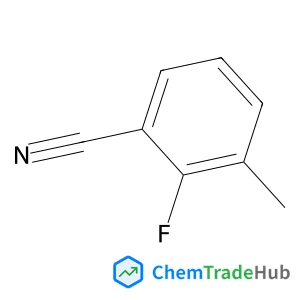
![N-[(9H-Fluoren-9-ylmethoxy)carbonyl]-beta-phenyl-L-phenylalanine structure](https://static.chemtradehub.com/structs/201/201484-50-6-c2fc.webp "N-[(9H-Fluoren-9-ylmethoxy)carbonyl]-beta-phenyl-L-phenylalanine structure")
N-[(9H-Fluoren-9-ylmethoxy)carbonyl]-beta-phenyl-L-phenylalanine
CAS Number:
201484-50-6
Molecular Formula:
C30H25NO4
![N-[(1S,2R,4S)-2-Amino-4-(dimethylcarbamoyl)cyclohexyl]-N'-(5-chloro-2-pyridinyl)ethanediamide structure](https://static.chemtradehub.com/structs/480/480452-37-7-0898.webp "N-[(1S,2R,4S)-2-Amino-4-(dimethylcarbamoyl)cyclohexyl]-N'-(5-chloro-2-pyridinyl)ethanediamide structure")
N-[(1S,2R,4S)-2-Amino-4-(dimethylcarbamoyl)cyclohexyl]-N'-(5-chloro-2-pyridinyl)ethanediamide
CAS Number:
480452-37-7
Molecular Formula:
C16H22ClN5O3
Recommended Suppliers






Disclaimer
This page provides academic journal information for reference and research purposes only. We are not affiliated with any journal publishers and do not handle publication submissions. For publication-related inquiries, please contact the respective journal publishers directly.
If you notice any inaccuracies in the information displayed, please contact us at support@chemtradehub.com. We will promptly review and address your concerns.