












The aromatic character of [10]annulenes and dicupra[10]annulenes from current density calculations
Literature Information
Publication Date
2017-11-20
DOI
10.1039/C7CP07212K
Impact Factor
3.676
Authors
Maria Dimitrova, Dage Sundholm
View Original
Abstract
We have investigated the aromatic properties of seven low-lying isomers of [10]annulene and of the recently synthesized dicupra[10]annulene compounds that were crystallised with two or four lithium counterions (Wei et al., J. Am. Chem. Soc., 2016, 138, 60–63). The molecular structures of the [10]annulene conformers and the dicupra[10]annulenes with bulky trimethylsilyl (TMS) and phenyl groups, as well as the corresponding unsubstituted dicupra[10]annulenes were optimised using density functional theory, employing a semi-empirical dispersion correction to consider van der Waals interactions. The structures of the hydrocarbon annulenes were subsequently optimised at the SCS-MP2/def2-QZVPD level. Single-point coupled-cluster calculations with explicit treatment of the electron correlation CCSD(F12)(T) were performed to obtain the relative energies of the hydrocarbon annulenes. Four of the conformations lie close in energy relative to each other. Three substituted and three unsubstituted dicupra[10]annulene structures with either four, two or no Li+ counterions were investigated. Magnetically induced current densities calculated using the GIMIC program were used for the assessment of the aromatic properties of the studied molecules. The conformations of [10]annulene with lowest energies are non-aromatic. The calculations revealed that the electron donation of the lithium atoms to the dicupra[10]annulene core significantly affects the electronic and molecular structures of the dicupra[10]annulenes. The annulene ring is non-planar for all studied dicupra[10]annulenes except for the unsubstituted one with four Li+ counterions, which was also found to be the only molecule that sustains a strong diatropic ring current around the dicupra[10]annulene ring. The other five dicupra[10]annulenes sustain very weak net ring currents and can be considered non-aromatic.
Related Literature
Programmed placement of gold nanoparticles onto a slit-type DNA origami scaffold
Yangyang Yang, Tomoko Emura, Kumi Hidaka
2011-08-24
Communication
DOI: 10.1039/C1CC13984C
Direct spectroscopic evidence for binding of anastrozole to the iron heme of human aromatase. Peering into the mechanism of aromatase inhibition
Sara Maurelli, Mario Chiesa, Elio Giamello, Giovanna Di Nardo, Valentina E. V. Ferrero, Gianfranco Gilardi, Sabine Van Doorslaer
2011-08-22
Communication
DOI: 10.1039/C1CC13872C
syn-Selective asymmetric cross-aldol reactions between aldehydes and glyoxylic acid derivatives catalyzed by an axially chiral amino sulfonamide‡
Taichi Kano, Akira Noishiki, Ryu Sakamoto, Keiji Maruoka
2011-09-05
Communication
DOI: 10.1039/C1CC14347F
A novel pathway for maytansinoid release from thioether linked antibody–drug conjugates (ADCs) under oxidative conditions
Nathan Fishkin, Erin K. Maloney, Ravi V. J. Chari, Rajeeva Singh
2011-08-26
Communication
DOI: 10.1039/C1CC14164C
Potassium tert-butoxide mediated Heck-type cyclization/isomerization–benzofurans from organocatalytic radical cross-coupling reactions
Magnus Rueping, Matthias Leiendecker, Arindam Das, Thomas Poisson, Lan Bui
2011-09-05
Communication
DOI: 10.1039/C1CC14297F
A highly efficient silver niobium alumina catalyst for the selective catalytic reduction of NO by n-decane
Hubert P. Mutin, Gérard Delahay
2011-08-24
Communication
DOI: 10.1039/C1CC12792F
Direct electrochemistry of an [FeFe]-hydrogenase on a TiO2 Electrode
Simone Morra, Francesca Valetti, Sheila J. Sadeghi, Paul W. King, Toby Meyer, Gianfranco Gilardi
2011-08-24
Communication
DOI: 10.1039/C1CC14535E
The preparation of 2H-1,4-benzoxazin-3-(4H)-ones viapalladium-catalyzed intramolecular C–O bond formation
Kai E. O. Ylijoki, E. Peter Kündig
2011-08-24
Communication
DOI: 10.1039/C1CC14209G
Patterning small-molecule biocapture surfaces: microcontact insertion printing vs.photolithography‡
H. H. Cao, A. I. Guttentag, J. E. McManigle, A. L. Gibb, M. M. Martinez, R. M. Nezarati, J. M. Hinds, W.-S. Liao, A. M. Andrews
2011-08-26
Communication
DOI: 10.1039/C1CC13002A
You might also like
Compound Q&A
What industries use (1R,3S)-1,3-Cyclopentanediol (CAS: 16326-97-9)?
(1R,3S)-1,3-Cyclopentanediol finds applications in various industries. In the ph...
16326-97-9(1R,3S)-1,3-Cyclopen...
Compound Q&A
What precautions should be taken when handling N'-[4-(Dimethylamino)phenyl]-N,N-dimethyl-1,4-benzenediamine (CAS: 637-31-0)?
When handling N'-[4-(Dimethylamino)phenyl]-N,N-dimethyl-1,4-benzenediamine, it i...
637-31-0N'-[4-(Dimethylamino...
Compound Q&A
Are there alternatives to 5-(2,4-Difluorophenyl)-2-methoxypyrimidine (CAS: 1352318-16-1) in synthesis?
There are several alternatives to 5-(2,4-Difluorophenyl)-2-methoxypyrimidine in ...
1352318-16-15-(2,4-Difluoropheny...
Compound Q&A
What regulatory guidelines apply to 1-(3-Methoxyphenoxy)propan-2-ol (CAS: 382141-68-6)?
1-(3-Methoxyphenoxy)propan-2-ol (CAS: 382141-68-6) must comply with the Globally...
382141-68-61-(3-Methoxyphenoxy)...
Compound Q&A
Is Tetrodotoxin Citrate (CAS: 18660-81-6) safe?
Tetrodotoxin Citrate is extremely dangerous and should be handled with extreme c...
18660-81-6Tetrodotoxin Citrate
Compound Q&A
What are the main uses of 2-Methyl-2-propanyl [(1R,3S)-3-hydroxycyclopentyl]carbamate (CAS: 225641-84-9)?
2-Methyl-2-propanyl [(1R,3S)-3-hydroxycyclopentyl]carbamate (CAS: 225641-84-9) i...
225641-84-92-Methyl-2-propanyl ...
Compound Q&A
How should waste containing 4-(2-Hydroxyhexafluoroisopropyl)Benzoic Acid (CAS: 16261-80-6) be handled?
Waste containing 4-(2-Hydroxyhexafluoroisopropyl)Benzoic Acid (CAS: 16261-80-6) ...
16261-80-64-(2-Hydroxyhexafluo...
Compound Q&A
How is 2-Methyl-2-proanyl {(2S)-1-[(benzyloxy)amino]-3-hydroxy-3-methyl-1-oxo-2-butanyl}carbamate (CAS: 102507-19-7) typically synthesized?
2-Methyl-2-proanyl {(2S)-1-[(benzyloxy)amino]-3-hydroxy-3-methyl-1-oxo-2-butanyl...
102507-19-72-Methyl-2-propanyl ...
Compound Q&A
What is Benzeneethanamine, α-ethyl-, hydrochloride (1:1) (CAS: 20735-15-3)?
Benzeneethanamine, α-ethyl-, hydrochloride (1:1) is an organic compound with the...
20735-15-3Benzeneethanamine, α...
Compound Q&A
Are there alternatives to 3-{(E)-[4-(Dimethylamino)phenyl]diazenyl}benzoic acid (CAS: 20691-84-3) in synthesis?
In the synthesis of compounds similar to 3-{(E)-[4-(Dimethylamino)phenyl]diazeny...
20691-84-33-{(E)-[4-(Dimethyla...
Source Journal
Physical Chemistry Chemical Physics

CiteScore:
5.5
Self-citation Rate:
10.3%
Articles per Year:
3036
Physical Chemistry Chemical Physics (PCCP) is an international journal co-owned by 19 physical chemistry and physics societies from around the world. This journal publishes original, cutting-edge research in physical chemistry, chemical physics and biophysical chemistry. To be suitable for publication in PCCP, articles must include significant innovation and/or insight into physical chemistry; this is the most important criterion that reviewers and Editors will judge against when evaluating submissions. The journal has a broad scope and welcomes contributions spanning experiment, theory, computation and data science. Topical coverage includes spectroscopy, dynamics, kinetics, statistical mechanics, thermodynamics, electrochemistry, catalysis, surface science, quantum mechanics, quantum computing and machine learning. Interdisciplinary research areas such as polymers and soft matter, materials, nanoscience, energy, surfaces/interfaces, and biophysical chemistry are welcomed if they demonstrate significant innovation and/or insight into physical chemistry. Joined experimental/theoretical studies are particularly appreciated when complementary and based on up-to-date approaches.
Recommended Compounds
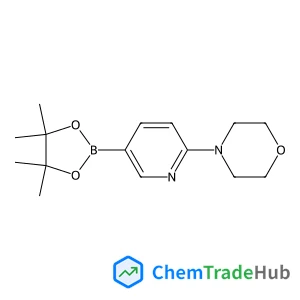
4-(5-(4,4,5,5-tetramethyl-1,3,2-dioxaborolan-2-yl)pyridin-2-yl)morpholine
CAS Number:
485799-04-0
Molecular Formula:
C15H23BN2O3
![N-[(9H-Fluoren-9-ylmethoxy)carbonyl]-beta-phenyl-L-phenylalanine structure](https://static.chemtradehub.com/structs/201/201484-50-6-c2fc.webp "N-[(9H-Fluoren-9-ylmethoxy)carbonyl]-beta-phenyl-L-phenylalanine structure")
N-[(9H-Fluoren-9-ylmethoxy)carbonyl]-beta-phenyl-L-phenylalanine
CAS Number:
201484-50-6
Molecular Formula:
C30H25NO4
Recommended Suppliers






Disclaimer
This page provides academic journal information for reference and research purposes only. We are not affiliated with any journal publishers and do not handle publication submissions. For publication-related inquiries, please contact the respective journal publishers directly.
If you notice any inaccuracies in the information displayed, please contact us at support@chemtradehub.com. We will promptly review and address your concerns.