












Protonation state and fine structure of the active site determine the reactivity of dehydratase: hydration and isomerization of β-myrcene catalyzed by linalool dehydratase/isomerase from Castellaniella defragrans
Literature Information
Publication Date
2018-06-01
DOI
10.1039/C8CP02362J
Impact Factor
3.676
Authors
Xiya Wang, Hao Su, Rutao Liu, Yongjun Liu
View Original
Abstract
Linalool dehydratase/isomerase (LinD) from Castellaniella defragrans is a bifunctional enzyme that catalyzes the hydration of β-myrcene to (S)-linalool and the isomerization of (S)-linalool to geraniol. In this paper, on the basis of recently obtained crystal structures, the catalytic mechanism of LinD has been explored by a combined quantum mechanics and molecular mechanics (QM/MM) approach. Two computational models have been constructed. Model I (LinD-linalool) was derived from the crystal structure of the selenomethionine derivative of LinD (Semet–LinD) in complex with the natural substrate geraniol, whereas model II (LinD-β-myrcene) was constructed from the crystal structure of LinD in complex with β-myrcene. In addition to a minor conformational difference of the active sites, the two models also differ in the protonation state of key residues. In model I, the pocket residue Asp39′ was set to be deprotonated and His129 was protonated on ND1, whereas in model II, Asp38′ was set to be deprotonated and His128 was protonated on NE2. Our calculations reveal model II as the active one, which implies that hydration and dehydration are sensitive to the protonation state and fine structure of the active site. On the basis of model II, the conversion details from β-myrcene to geraniol can be obtained. Firstly, β-myrcene is hydrated by a crystal water (W14) and is converted into the stable intermediate (S)-linalool, then linalool is isomerized to geraniol with an overall energy barrier of 24.6 kcal mol−1. Besides, linalool can also reversibly convert into the reactant with an energy barrier of 24.1 kcal mol−1. It is also found that the intermediate IM1 can directly transform to geraniol without first converting to (S)-linalool. His128 and Tyr65 form hydrogen bonds to stabilize the structure of the active site, but they do not act as general acid/base catalysts during the catalytic reactions.
Related Literature
Precise engineering and visualization of signs and magnitudes of DNA writhe on the basis of PNA invasion
Dawei Li, Zhaoqi Yang, Yi Long, Guanjia Zhao, Bei Lv, Shuhui Hiew, Magdeline Tao Tao Ng, Juanjuan Guo, HongKee Tan, Hao Zhang, Weixing Yuan, Haibin Su, Tianhu Li
2011-09-05
Communication
DOI: 10.1039/C1CC13158C
Acyl hydrazides as peptoid sub-monomers
Bani Kanta Sarma, Muhammed Yousufuddin, Thomas Kodadek
2011-09-05
Communication
DOI: 10.1039/C1CC12750K
Simple methods for tuning the pore diameter of mesoporous carbon
Ulka B. Suryavanshi, Toru Ijima, Yasuhiko Hayashi, Masaki Tanemura
2011-08-26
Communication
DOI: 10.1039/C1CC13471J
Yeast cell wall particles: a promising class of nature-inspired microcarriers for multimodal imaging
João Nuno Moreira, Carlos F. G. C. Geraldes, Silvia Rizzitelli, Silvio Aime, Enzo Terreno
2011-09-01
Communication
DOI: 10.1039/C1CC14019A
Retracted Article: Measuring Si–C60 chemical forces via single molecule spectroscopy‡
Cristina Chiutu, Andrew Stannard, Adam M. Sweetman, Philip Moriarty
2011-08-24
Communication
DOI: 10.1039/C1CC14147C
Functionalization of luminescent cyclometalated iridium(iii) polypyridine complexes with a fluorous moiety: photophysics, protein-binding, bioconjugation, and cellular uptake properties
Siu-Kit Leung, Hua-Wei Liu, Kenneth Kam-Wing Lo
2011-04-27
Communication
DOI: 10.1039/C1CC11423A
Fluorescence sensing of caffeine in water with polysulfonated pyrenes
Sébastien Rochat, Stephan N. Steinmann, Clémence Corminboeuf, Kay Severin
2011-08-26
Communication
DOI: 10.1039/C1CC13927D
β-Cyclodextrin for design of alumina supported cobalt catalysts efficient in Fischer–Tropsch synthesis
Anne Griboval-Constant, Andrei Y. Khodakov, Fabrice Diehl
2011-08-26
Communication
DOI: 10.1039/C1CC13800F
You might also like
Compound Q&A
What industries use (1R,3S)-1,3-Cyclopentanediol (CAS: 16326-97-9)?
(1R,3S)-1,3-Cyclopentanediol finds applications in various industries. In the ph...
16326-97-9(1R,3S)-1,3-Cyclopen...
Compound Q&A
What precautions should be taken when handling N'-[4-(Dimethylamino)phenyl]-N,N-dimethyl-1,4-benzenediamine (CAS: 637-31-0)?
When handling N'-[4-(Dimethylamino)phenyl]-N,N-dimethyl-1,4-benzenediamine, it i...
637-31-0N'-[4-(Dimethylamino...
Compound Q&A
Are there alternatives to 5-(2,4-Difluorophenyl)-2-methoxypyrimidine (CAS: 1352318-16-1) in synthesis?
There are several alternatives to 5-(2,4-Difluorophenyl)-2-methoxypyrimidine in ...
1352318-16-15-(2,4-Difluoropheny...
Compound Q&A
What regulatory guidelines apply to 1-(3-Methoxyphenoxy)propan-2-ol (CAS: 382141-68-6)?
1-(3-Methoxyphenoxy)propan-2-ol (CAS: 382141-68-6) must comply with the Globally...
382141-68-61-(3-Methoxyphenoxy)...
Compound Q&A
Is Tetrodotoxin Citrate (CAS: 18660-81-6) safe?
Tetrodotoxin Citrate is extremely dangerous and should be handled with extreme c...
18660-81-6Tetrodotoxin Citrate
Compound Q&A
What are the main uses of 2-Methyl-2-propanyl [(1R,3S)-3-hydroxycyclopentyl]carbamate (CAS: 225641-84-9)?
2-Methyl-2-propanyl [(1R,3S)-3-hydroxycyclopentyl]carbamate (CAS: 225641-84-9) i...
225641-84-92-Methyl-2-propanyl ...
Compound Q&A
How should waste containing 4-(2-Hydroxyhexafluoroisopropyl)Benzoic Acid (CAS: 16261-80-6) be handled?
Waste containing 4-(2-Hydroxyhexafluoroisopropyl)Benzoic Acid (CAS: 16261-80-6) ...
16261-80-64-(2-Hydroxyhexafluo...
Compound Q&A
How is 2-Methyl-2-proanyl {(2S)-1-[(benzyloxy)amino]-3-hydroxy-3-methyl-1-oxo-2-butanyl}carbamate (CAS: 102507-19-7) typically synthesized?
2-Methyl-2-proanyl {(2S)-1-[(benzyloxy)amino]-3-hydroxy-3-methyl-1-oxo-2-butanyl...
102507-19-72-Methyl-2-propanyl ...
Compound Q&A
What is Benzeneethanamine, α-ethyl-, hydrochloride (1:1) (CAS: 20735-15-3)?
Benzeneethanamine, α-ethyl-, hydrochloride (1:1) is an organic compound with the...
20735-15-3Benzeneethanamine, α...
Compound Q&A
Are there alternatives to 3-{(E)-[4-(Dimethylamino)phenyl]diazenyl}benzoic acid (CAS: 20691-84-3) in synthesis?
In the synthesis of compounds similar to 3-{(E)-[4-(Dimethylamino)phenyl]diazeny...
20691-84-33-{(E)-[4-(Dimethyla...
Source Journal
Physical Chemistry Chemical Physics

CiteScore:
5.5
Self-citation Rate:
10.3%
Articles per Year:
3036
Physical Chemistry Chemical Physics (PCCP) is an international journal co-owned by 19 physical chemistry and physics societies from around the world. This journal publishes original, cutting-edge research in physical chemistry, chemical physics and biophysical chemistry. To be suitable for publication in PCCP, articles must include significant innovation and/or insight into physical chemistry; this is the most important criterion that reviewers and Editors will judge against when evaluating submissions. The journal has a broad scope and welcomes contributions spanning experiment, theory, computation and data science. Topical coverage includes spectroscopy, dynamics, kinetics, statistical mechanics, thermodynamics, electrochemistry, catalysis, surface science, quantum mechanics, quantum computing and machine learning. Interdisciplinary research areas such as polymers and soft matter, materials, nanoscience, energy, surfaces/interfaces, and biophysical chemistry are welcomed if they demonstrate significant innovation and/or insight into physical chemistry. Joined experimental/theoretical studies are particularly appreciated when complementary and based on up-to-date approaches.
Recommended Compounds
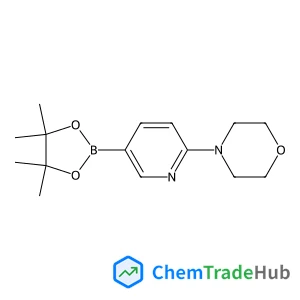
4-(5-(4,4,5,5-tetramethyl-1,3,2-dioxaborolan-2-yl)pyridin-2-yl)morpholine
CAS Number:
485799-04-0
Molecular Formula:
C15H23BN2O3
![Ethyl 3-((6-(4,5-dihydro-1H-benzo[d]azepin-3(2H)-yl)-2-(pyridin-2-yl)pyrimidin-4-yl)amino)propanoate structure](https://static.chemtradehub.com/structs/137/1373423-53-0-496a.webp "Ethyl 3-((6-(4,5-dihydro-1H-benzo[d]azepin-3(2H)-yl)-2-(pyridin-2-yl)pyrimidin-4-yl)amino)propanoate structure")
Ethyl 3-((6-(4,5-dihydro-1H-benzo[d]azepin-3(2H)-yl)-2-(pyridin-2-yl)pyrimidin-4-yl)amino)propanoate
CAS Number:
1373423-53-0
Molecular Formula:
C24H27N5O2
Recommended Suppliers





Disclaimer
This page provides academic journal information for reference and research purposes only. We are not affiliated with any journal publishers and do not handle publication submissions. For publication-related inquiries, please contact the respective journal publishers directly.
If you notice any inaccuracies in the information displayed, please contact us at support@chemtradehub.com. We will promptly review and address your concerns.