













On the methodology of the determination of charge concentration dependent mobility from organic field-effect transistor characteristics
Literature Information
Publication Date
2017-12-12
DOI
10.1039/C7CP06423C
Impact Factor
3.676
Authors
Miroslav Menšík, Petr Toman, Urszula Bielecka, Wojciech Bartkowiak, Jiří Pfleger, Bartosz Paruzel
View Original
Abstract
We developed a new methodology for determining charge concentration dependent mobility from organic field-effect transistor (OFET) characteristics, applicable for semiconducting polymers with structural and energy disorder. We show that basic formulae recommended by the “IEEE Standard for Test Methods for the Characterization of Organic Transistors and Materials” for the determination of the field-effect mobility as obtained from the slope ISD1/2vs. VSG (in the saturation regime) or from the transconductance dISD/dVSG (in the linear regime) are not suitable for materials with concentration dependent charge carrier mobility. We propose alternative expressions, which can be directly analytically derived from the drift–diffusion equation with the mobility explicitly dependent on the charge concentration. This methodology for mobility determination was used for analysis of the experimental data obtained for a poly(3-hexylthiophene)-based OFET with the bottom gate–bottom SD electrode configuration.
Related Literature
Determination of relative binding affinities of labeling molecules with amino acids by using scanning tunneling microscopy‡
Xiaobo Mao, Aihua Yang, Lin Niu, Shengnan Wang, Denghua Li, Yuanyuan Guo, Yibing Wang, Yanlian Yang, Chen Wang
2011-08-25
Communication
DOI: 10.1039/C1CC12380G
Programmed placement of gold nanoparticles onto a slit-type DNA origami scaffold
Yangyang Yang, Tomoko Emura, Kumi Hidaka
2011-08-24
Communication
DOI: 10.1039/C1CC13984C
Efficient coating of polystyrene microspheres with graphene nanosheets
Yunxing Li, Zhaoqun Wang, Liang Yang, Hao Gu
2011-08-24
Communication
DOI: 10.1039/C1CC14614A
Structural rearrangements of Ru nanoparticles supported on carbon nanotubes under microwave irradiation
Bingsen Zhang, Xiaojuan Ni, Wei Zhang, Lidong Shao, Qiang Zhang, Frank Girgsdies, Changhai Liang, Robert Schlögl
2011-08-31
Communication
DOI: 10.1039/C1CC13858H
Oxidative, photo-activated TiO2nanoparticles in the catalytic acetylation of primary alcohols
Chien-Tien Chen, Jun-Qi Kao, Cheng-Yuan Liu, Ling-Yu Jiang
2011-01-31
Communication
DOI: 10.1039/C0CY00005A
Breaking the Fischer–Tropsch synthesis selectivity: direct conversion of syngas to gasoline over hierarchical Co/H-ZSM-5 catalysts
Sina Sartipi, Kshitij Parashar, Michiel Makkee, Jorge Gascon, Freek Kapteijn
2012-12-06
Communication
DOI: 10.1039/C2CY20744C
NOBIN-based phosphoramidite and phosphorodiamiditeligands and their use in asymmetric nickel-catalysed hydrovinylation
Mike Schmitkamp, Walter Leitner, Giancarlo Franciò
2012-11-01
Paper
DOI: 10.1039/C2CY20657A
Improvement of the prediction ability of multivariate calibration by a method based on the combination of data fusion and least squares support vector machines
Shouxin Ren, Ling Gao
2011-01-18
Paper
DOI: 10.1039/C0AN00433B
Retracted Article: Measuring Si–C60 chemical forces via single molecule spectroscopy‡
Cristina Chiutu, Andrew Stannard, Adam M. Sweetman, Philip Moriarty
2011-08-24
Communication
DOI: 10.1039/C1CC14147C
Bimetallic aluminium(acen) complexes as catalysts for the synthesis of cyclic carbonates from carbon dioxide and epoxides
Michael North, Carl Young
2011-02-08
Paper
DOI: 10.1039/C0CY00023J
You might also like
Compound Q&A
What industries use (1R,3S)-1,3-Cyclopentanediol (CAS: 16326-97-9)?
(1R,3S)-1,3-Cyclopentanediol finds applications in various industries. In the ph...
16326-97-9(1R,3S)-1,3-Cyclopen...
Compound Q&A
What precautions should be taken when handling N'-[4-(Dimethylamino)phenyl]-N,N-dimethyl-1,4-benzenediamine (CAS: 637-31-0)?
When handling N'-[4-(Dimethylamino)phenyl]-N,N-dimethyl-1,4-benzenediamine, it i...
637-31-0N'-[4-(Dimethylamino...
Compound Q&A
Are there alternatives to 5-(2,4-Difluorophenyl)-2-methoxypyrimidine (CAS: 1352318-16-1) in synthesis?
There are several alternatives to 5-(2,4-Difluorophenyl)-2-methoxypyrimidine in ...
1352318-16-15-(2,4-Difluoropheny...
Compound Q&A
What regulatory guidelines apply to 1-(3-Methoxyphenoxy)propan-2-ol (CAS: 382141-68-6)?
1-(3-Methoxyphenoxy)propan-2-ol (CAS: 382141-68-6) must comply with the Globally...
382141-68-61-(3-Methoxyphenoxy)...
Compound Q&A
Is Tetrodotoxin Citrate (CAS: 18660-81-6) safe?
Tetrodotoxin Citrate is extremely dangerous and should be handled with extreme c...
18660-81-6Tetrodotoxin Citrate
Compound Q&A
What are the main uses of 2-Methyl-2-propanyl [(1R,3S)-3-hydroxycyclopentyl]carbamate (CAS: 225641-84-9)?
2-Methyl-2-propanyl [(1R,3S)-3-hydroxycyclopentyl]carbamate (CAS: 225641-84-9) i...
225641-84-92-Methyl-2-propanyl ...
Compound Q&A
How should waste containing 4-(2-Hydroxyhexafluoroisopropyl)Benzoic Acid (CAS: 16261-80-6) be handled?
Waste containing 4-(2-Hydroxyhexafluoroisopropyl)Benzoic Acid (CAS: 16261-80-6) ...
16261-80-64-(2-Hydroxyhexafluo...
Compound Q&A
How is 2-Methyl-2-proanyl {(2S)-1-[(benzyloxy)amino]-3-hydroxy-3-methyl-1-oxo-2-butanyl}carbamate (CAS: 102507-19-7) typically synthesized?
2-Methyl-2-proanyl {(2S)-1-[(benzyloxy)amino]-3-hydroxy-3-methyl-1-oxo-2-butanyl...
102507-19-72-Methyl-2-propanyl ...
Compound Q&A
What is Benzeneethanamine, α-ethyl-, hydrochloride (1:1) (CAS: 20735-15-3)?
Benzeneethanamine, α-ethyl-, hydrochloride (1:1) is an organic compound with the...
20735-15-3Benzeneethanamine, α...
Compound Q&A
Are there alternatives to 3-{(E)-[4-(Dimethylamino)phenyl]diazenyl}benzoic acid (CAS: 20691-84-3) in synthesis?
In the synthesis of compounds similar to 3-{(E)-[4-(Dimethylamino)phenyl]diazeny...
20691-84-33-{(E)-[4-(Dimethyla...
Source Journal
Physical Chemistry Chemical Physics

CiteScore:
5.5
Self-citation Rate:
10.3%
Articles per Year:
3036
Physical Chemistry Chemical Physics (PCCP) is an international journal co-owned by 19 physical chemistry and physics societies from around the world. This journal publishes original, cutting-edge research in physical chemistry, chemical physics and biophysical chemistry. To be suitable for publication in PCCP, articles must include significant innovation and/or insight into physical chemistry; this is the most important criterion that reviewers and Editors will judge against when evaluating submissions. The journal has a broad scope and welcomes contributions spanning experiment, theory, computation and data science. Topical coverage includes spectroscopy, dynamics, kinetics, statistical mechanics, thermodynamics, electrochemistry, catalysis, surface science, quantum mechanics, quantum computing and machine learning. Interdisciplinary research areas such as polymers and soft matter, materials, nanoscience, energy, surfaces/interfaces, and biophysical chemistry are welcomed if they demonstrate significant innovation and/or insight into physical chemistry. Joined experimental/theoretical studies are particularly appreciated when complementary and based on up-to-date approaches.
Recommended Compounds

4-(5-(4,4,5,5-tetramethyl-1,3,2-dioxaborolan-2-yl)pyridin-2-yl)morpholine
CAS Number:
485799-04-0
Molecular Formula:
C15H23BN2O3
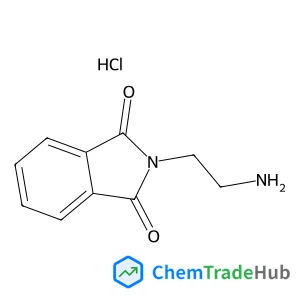
2-(2-Aminoethyl)-1H-isoindole-1,3(2H)-dione hydrochloride (1:1)
CAS Number:
30250-67-0
Molecular Formula:
C10H11ClN2O2


Recommended Suppliers






Disclaimer
This page provides academic journal information for reference and research purposes only. We are not affiliated with any journal publishers and do not handle publication submissions. For publication-related inquiries, please contact the respective journal publishers directly.
If you notice any inaccuracies in the information displayed, please contact us at support@chemtradehub.com. We will promptly review and address your concerns.