













On-site airborne pathogen detection for infection risk mitigation
Literature Information
Publication Date
2023-10-26
DOI
10.1039/D3CS00417A
Impact Factor
54.564
Authors
Andrew J. deMello, Maosheng Yao, Junji Cao
View Original
Abstract
Human-infecting pathogens that transmit through the air pose a significant threat to public health. As a prominent instance, the severe acute respiratory syndrome coronavirus 2 (SARS-CoV-2) that caused the COVID-19 pandemic has affected the world in an unprecedented manner over the past few years. Despite the dissipating pandemic gloom, the lessons we have learned in dealing with pathogen-laden aerosols should be thoroughly reviewed because the airborne transmission risk may have been grossly underestimated. From a bioanalytical chemistry perspective, on-site airborne pathogen detection can be an effective non-pharmaceutic intervention (NPI) strategy, with on-site airborne pathogen detection and early-stage infection risk evaluation reducing the spread of disease and enabling life-saving decisions to be made. In light of this, we summarize the recent advances in highly efficient pathogen-laden aerosol sampling approaches, bioanalytical sensing technologies, and the prospects for airborne pathogen exposure measurement and evidence-based transmission interventions. We also discuss open challenges facing general bioaerosols detection, such as handling complex aerosol samples, improving sensitivity for airborne pathogen quantification, and establishing a risk assessment system with high spatiotemporal resolution for mitigating airborne transmission risks. This review provides a multidisciplinary outlook for future opportunities to improve the on-site airborne pathogen detection techniques, thereby enhancing the preparedness for more on-site bioaerosols measurement scenarios, such as monitoring high-risk pathogens on airplanes, weaponized pathogen aerosols, influenza variants at the workplace, and pollutant correlated with sick building syndromes.
Related Literature
Base-induced synthesis of N-dialkylaminomethyl-2H-1,2,3-triazoles from N-sulfonyl-1,2,3-triazoles
Yu Jiang, Qiang Wang, Run Sun, Xiang-Ying Tang
2016-04-11
Research Article
DOI: 10.1039/C6QO00102E
Allylic borylation of tertiary allylic alcohols: a divergent and straightforward access to allylic boronates
Kohei Harada, Marina Nogami, Keiichi Hirano, Daisuke Kurauchi, Hisano Kato, Kazunori Miyamoto, Tatsuo Saito
2016-03-01
Research Article
DOI: 10.1039/C6QO00009F
Pd(ii)-catalyzed β-C–H arylation of O-methyl ketoximes with iodoarenes
Yucheng Mu, Yemin Zhang, Xiaobi Jing, Zhuangzhi Shi
2016-01-21
Research Article
DOI: 10.1039/C5QO00438A
Organoselenium-catalyzed synthesis of indoles through intramolecular C–H amination
Xuelin Zhang, Ruizhi Guo, Xiaodan Zhao
2015-07-29
Research Article
DOI: 10.1039/C5QO00179J
Cu-catalyzed sequential C–N bond formations: expeditious synthesis of tetracyclic indoloindol-3-ones
Anand M. Kulkarni, Kolluru Srinivas, Mukund V. Deshpande, Chepuri V. Ramana
2015-11-03
Research Article
DOI: 10.1039/C5QO00248F
Silver-catalyzed [3 + 2] cycloaddition of isocyanides with diazo compounds: new regioselective access to 1,4-disubstituted-1,2,3-triazoles
Shuai Wang, Li-Jun Yang, Jun-Liang Zeng, Yan Zheng
2015-09-01
Research Article
DOI: 10.1039/C5QO00219B
Asymmetric total synthesis of Lycopodium alkaloids α-obscurine, N-desmethyl-α-obscurine, β-obscurine and N-desmethyl-β-obscurine
Jian-Guo Fu, Guang-Qiang Xu, Rui Ding, Guo-Qiang Lin, Bing-Feng Sun
2015-11-18
Research Article
DOI: 10.1039/C5QO00355E
Direct isoperfluoropropylation of arenediazonium salts with hexafluoropropylene
Yajun Li, Yongming Wu
2015-12-29
Research Article
DOI: 10.1039/C5QO00388A
Palladium-catalyzed decarboxylative alkoxycarbonylation of potassium aryltrifluoroborates with potassium oxalate monoesters
Jinmin Miao, Ping Fang, Sahota Jagdeep, Haibo Ge
2015-12-11
Research Article
DOI: 10.1039/C5QO00349K
Organocatalytic enantioselective Mukaiyama–Mannich reaction of fluorinated enol silyl ethers and cyclic N-sulfonyl ketimines
Jin-Sheng Yu
2015-12-28
Research Article
DOI: 10.1039/C5QO00407A
You might also like
Compound Q&A
What is Ethyl 3-cyclohexylpropanoate (CAS: 10094-36-7)?
Ethyl 3-cyclohexylpropanoate is a clear, colorless to light yellow liquid with a...
10094-36-7Ethyl 3-cyclohexylpr...
Compound Q&A
How should waste containing 2-(Hydroxymethyl)-5-(methoxycarbonyl)-6-methyl-4-(2-nitrophenyl)nicotinic acid (CAS: 34783-31-8) be handled?
Waste containing 2-(Hydroxymethyl)-5-(methoxycarbonyl)-6-methyl-4-(2-nitrophenyl...
34783-31-82-(Hydroxymethyl)-5-...
Compound Q&A
How should waste containing 2,4,6-Tris(pentafluoroethyl)-1,3,5-triazine (CAS: 858-46-8) be handled?
Waste containing 2,4,6-Tris(pentafluoroethyl)-1,3,5-triazine (CAS: 858-46-8) sho...
858-46-82,4,6-Tris(pentafluo...
Compound Q&A
What precautions should be taken when handling Chloroac-nle-oh (CAS: 56787-36-1)?
When handling Chloroac-nle-oh (CAS: 56787-36-1), it is essential to wear appropr...
56787-36-1Chloroac-nle-oh
Compound Q&A
What industries use Ethyl 6-phenylimidazo[2,1-b][1,3]thiazole-3-carboxylate (CAS: 752244-05-6)?
Ethyl 6-phenylimidazo[2,1-b][1,3]thiazole-3-carboxylate is primarily used in the...
752244-05-6Ethyl 6-phenylimidaz...
Compound Q&A
Are there alternatives to alpha-(2-Bromophenyl)benzylamine (CAS: 55095-15-3) in synthesis?
Alternatives to alpha-(2-Bromophenyl)benzylamine (CAS: 55095-15-3) in synthesis ...
55095-15-3alpha-(2-Bromophenyl...
Compound Q&A
How should waste containing 2-Chloro-5-methoxypyridine (CAS: 139585-48-1) be handled?
Waste containing 2-Chloro-5-methoxypyridine (CAS: 139585-48-1) should be managed...
139585-48-12-Chloro-5-methoxypy...
Compound Q&A
What industries use 1-(4-Methoxyphenyl)-2,5-dimethyl-1H-pyrrole (CAS: 5044-27-9)?
1-(4-Methoxyphenyl)-2,5-dimethyl-1H-pyrrole (CAS: 5044-27-9) is used in various ...
5044-27-91-(4-Methoxyphenyl)-...
Compound Q&A
Are there alternatives to 3-Bromo-5-(N-Boc)aminomethylisoxazole (CAS: 903131-45-3) in synthesis?
There are alternative reagents and compounds that can be used in the synthesis o...
903131-45-33-Bromo-5-(N-Boc)ami...
Compound Q&A
What is Tungsten(IV) oxide (CAS: 12036-22-5)?
Tungsten(IV) oxide, also known as tungsten dioxide, is a chemical compound with ...
12036-22-5Tungsten(IV) oxide
Source Journal
Chemical Society Reviews

CiteScore:
80.8
Self-citation Rate:
1.2%
Articles per Year:
250
Chem Soc Rev publishes review articles covering important topics at the forefront of the chemical sciences. Reviews should be of the very highest quality and international impact. We particularly encourage international and multidisciplinary collaborations among our authors. Our scope covers the breadth of the chemical sciences, including interdisciplinary topics where the article has a basis in chemistry. Topics include: Analytical chemistry Biomaterials chemistry Bioorganic/medicinal chemistry Catalysis Chemical Biology Coordination Chemistry Crystal Engineering Energy Sustainable chemistry Green chemistry Inorganic chemistry Inorganic materials Main group chemistry Nanoscience Organic chemistry Organic materials Organometallics Physical chemistry Supramolecular chemistry Synthetic methodology Theoretical and computational chemistry
Recommended Compounds
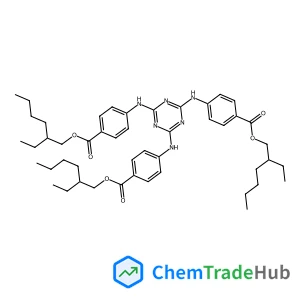
Tris(2-ethylhexyl) 4,4',4''-(1,3,5-triazine-2,4,6-triyltriimino)tribenzoate
CAS Number:
88122-99-0
Molecular Formula:
C48H66N6O6

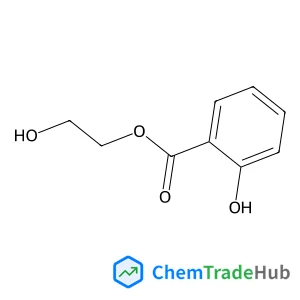
![3-[(4-Nitrobenzyl)oxy]-3-oxopropanoic Acid structure](https://static.chemtradehub.com/structs/773/77359-11-6-0d04.webp "3-[(4-Nitrobenzyl)oxy]-3-oxopropanoic Acid structure")
Recommended Suppliers






Disclaimer
This page provides academic journal information for reference and research purposes only. We are not affiliated with any journal publishers and do not handle publication submissions. For publication-related inquiries, please contact the respective journal publishers directly.
If you notice any inaccuracies in the information displayed, please contact us at support@chemtradehub.com. We will promptly review and address your concerns.