













Te-doped-WSe2/W as a stable monolith catalyst for ampere-level current density hydrogen evolution reaction
Literature Information
Publication Date
2024-01-03
DOI
10.1039/D3CP05790A
Impact Factor
3.676
Authors
Xingchen Zhang, Dongfang Zhang, Xinya Chen, Dingyi Zhou, Jinying Zhang, Zhiyong Wang
View Original
Abstract
The development of efficient electrocatalysts for the hydrogen evolution reaction (HER) holds immense importance in the context of large-scale hydrogen production from water. Nevertheless, the practical application of such catalysts still relies on precious platinum-based materials. There is a pressing need to design high-performing, non-precious metal electrocatalysts capable of generating hydrogen at substantial current levels. We report here a stable monolith catalyst of Te-doped-WSe2 directly supported by a highly conductive W mesh. This catalyst demonstrates outstanding electrocatalytic performance and stability in acidic electrolytes, especially under high current conditions, surpassing the capabilities of commercial 5% Pt/C catalysts. Specifically, at current densities of 10 and 1200 mA cm−2, it exhibits a minimal overpotential of 79 and 232 mV, along with a small Tafel slope of 55 mV dec−1, respectively. The remarkable catalytic activity of Te–WSe2 can be attributed to the exceptional electron transfer facilitated by the stable monolithic structure, as well as the abundant and efficient active sites in the material. In addition, density functional theory calculations further indicate that Te doping adjusts H atom adsorption on various positions of WSe2, making it closer to thermal neutrality compared to the original material. This study presents an innovative approach to develop cost-effective HER electrocatalysts that perform optimally under high current density conditions.
Related Literature
The importance of timescale for hydrogen bonding in imidazolium chloride ionic liquids
Ioannis Skarmoutsos, Tom Welton, Patricia A. Hunt
2014-01-13
Paper
DOI: 10.1039/C3CP54551B
Plasmon-enhanced water splitting on TiO2-passivated GaP photocatalysts
Jing Qiu, Guangtong Zeng, Prathamesh Pavaskar, Zhen Li
2013-12-20
Paper
DOI: 10.1039/C3CP54674H
Conformer-selective photoelectron spectroscopy of α-lactalbumin derived multianions in the gas phase
Matthias Vonderach, Marc-Oliver Winghart, Luke MacAleese, Fabien Chirot, Rodolphe Antoine, Philippe Dugourd, Patrick Weis
2013-12-12
Paper
DOI: 10.1039/C3CP54596B
Lithium diffusion in congruent LiNbO3 single crystals at low temperatures probed by neutron reflectometry
E. Hüger, J. Rahn, J. Stahn, T. Geue
2014-01-02
Paper
DOI: 10.1039/C3CP54939A
Atomistic insights into the nanohelix of hydrogenated graphene: formation, characterization and application
Liuyang Zhang, Xianqiao Wang
2013-11-19
Paper
DOI: 10.1039/C3CP53978D
Facile fabrication of robust superhydrophobic multilayered film based on bioinspired poly(dopamine)-modified carbon nanotubes
Jin-lei Wang, Ke-feng Ren, Hao Chang, Shi-miao Zhang, Lie-jiang Jin, Jian Ji
2013-12-02
Paper
DOI: 10.1039/C3CP54354D
Emission ellipsometry used to probe aggregation of the luminescent 2,1,3-benzothiadiazole dyes and ordering in an E7 liquid crystal matrix
Paulo Alliprandini Filho, Gustavo G. Dalkiranis, Raigna A. S. Z. Armond, Eralci M. Therézio, Ivan H. Bechtold, André A. Vieira, Rodrigo Cristiano, Hugo Gallardo, Osvaldo N. Oliveira, Jr.
2013-11-26
Paper
DOI: 10.1039/C3CP53803F
Experimental and theoretical study on the sensing mechanism of a fluorescence probe for hypochloric acid: a Se⋯N nonbonding interaction modulated twisting process
Songqiu Yang, Peng Li, Panwang Zhou, Keli Han
2013-11-26
Paper
DOI: 10.1039/C3CP54093F
Electron impact induced anion production in acetylene
Ewelina Szymańska, Iztok Čadež, E. Krishnakumar, Nigel J. Mason
2013-11-27
Paper
DOI: 10.1039/C3CP54459A
You might also like
Compound Q&A
What is the market or research trend for N-(4-Methoxybenzyl)-2-pyridinamine (CAS: 52818-63-0)?
N-(4-Methoxybenzyl)-2-pyridinamine (CAS: 52818-63-0) is increasingly being used ...
52818-63-0N-(4-Methoxybenzyl)-...
Compound Q&A
What precautions should be taken when handling Ethyl 4-(2-chlorophenyl)-1,3-thiazole-2-carboxylate (CAS: 1050507-06-6)?
When handling Ethyl 4-(2-chlorophenyl)-1,3-thiazole-2-carboxylate, appropriate p...
1050507-06-6Ethyl 4-(2-chlorophe...
Compound Q&A
What regulatory guidelines apply to diethyldiselane (CAS: 628-39-7)?
Diethyldiselane (CAS: 628-39-7) is classified under the Globally Harmonized Syst...
628-39-7Diethyldiselane
Compound Q&A
What is the market or research trend for oxocopper (CAS: 12053-18-8)?
The market for oxocopper (CAS: 12053-18-8) is primarily driven by its use in cat...
12053-18-8oxocopper; oxo-(oxoc...
Compound Q&A
What is the market or research trend for 5-{[(2-Methyl-2-propanyl)oxy]carbonyl}-5-azaspiro[2.4]heptane-7-carboxylic acid?
The market for 5-{[(2-Methyl-2-propanyl)oxy]carbonyl}-5-azaspiro[2.4]heptane-7-c...
1268519-54-55-{[(2-Methyl-2-prop...
Compound Q&A
What is 2-(1-Pyrrolidinyl)-4-pyridinamine (CAS: 35981-63-6)?
2-(1-Pyrrolidinyl)-4-pyridinamine is a chemical compound with the CAS number 359...
35981-63-62-(1-Pyrrolidinyl)-4...
Compound Q&A
What are the physical and chemical properties of 2-(3-Pyridinyl)-1-azabicyclo[2.2.2]octane (CAS: 91556-75-1)?
2-(3-Pyridinyl)-1-azabicyclo[2.2.2]octane (CAS: 91556-75-1) is a crystalline sol...
91556-75-12-(3-Pyridinyl)-1-az...
Compound Q&A
How is (S)-Alpha-allyl-proline hydrochloride (CAS: 129704-91-2) typically synthesized?
(S)-Alpha-allyl-proline hydrochloride is usually synthesized via a Wittig reacti...
129704-91-2(S)-Alpha-allyl-prol...
Compound Q&A
What is 3-Methyl-1,2-oxazole-5-carboxylic acid (CAS: 4857-42-5)?
3-Methyl-1,2-oxazole-5-carboxylic acid (CAS: 4857-42-5) is an organic compound w...
4857-42-53-Methyl-1,2-oxazole...
Compound Q&A
How is Lys-SMCC-DM1 (CAS: 1281816-04-3) typically synthesized?
Lys-SMCC-DM1 is synthesized via a multi-step process involving the coupling of S...
1281816-04-3Lys-SMCC-DM1
Source Journal
Physical Chemistry Chemical Physics

CiteScore:
5.5
Self-citation Rate:
10.3%
Articles per Year:
3036
Physical Chemistry Chemical Physics (PCCP) is an international journal co-owned by 19 physical chemistry and physics societies from around the world. This journal publishes original, cutting-edge research in physical chemistry, chemical physics and biophysical chemistry. To be suitable for publication in PCCP, articles must include significant innovation and/or insight into physical chemistry; this is the most important criterion that reviewers and Editors will judge against when evaluating submissions. The journal has a broad scope and welcomes contributions spanning experiment, theory, computation and data science. Topical coverage includes spectroscopy, dynamics, kinetics, statistical mechanics, thermodynamics, electrochemistry, catalysis, surface science, quantum mechanics, quantum computing and machine learning. Interdisciplinary research areas such as polymers and soft matter, materials, nanoscience, energy, surfaces/interfaces, and biophysical chemistry are welcomed if they demonstrate significant innovation and/or insight into physical chemistry. Joined experimental/theoretical studies are particularly appreciated when complementary and based on up-to-date approaches.
Recommended Compounds

2-(4,4-Difluorobutyl)-1H-isoindole-1,3(2H)-dione
CAS Number:
1265341-14-7
Molecular Formula:
C12H11F2NO2
![1-(1-Benzyl-1,2,3,6-tetrahydropyridin-4-yl)-1H-benzo[d]imidazol-2(3H)-one structure](https://static.chemtradehub.com/structs/603/60373-71-9-7dfb.webp "1-(1-Benzyl-1,2,3,6-tetrahydropyridin-4-yl)-1H-benzo[d]imidazol-2(3H)-one structure")
1-(1-Benzyl-1,2,3,6-tetrahydropyridin-4-yl)-1H-benzo[d]imidazol-2(3H)-one
CAS Number:
60373-71-9
Molecular Formula:
C19H19N3O
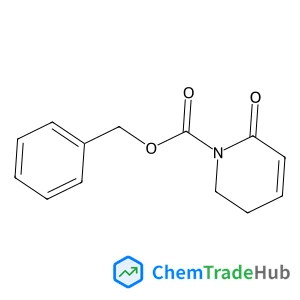
Benzyl 6-oxo-3,6-dihydro-1(2H)-pyridinecarboxylate
CAS Number:
725746-35-0
Molecular Formula:
C13H13NO3
![1-{3-[4-Amino-3-(4-phenoxyphenyl)-1H-pyrazolo[3,4-d]pyrimidin-1-yl]-1-piperidinyl}-2,3-dihydroxy-1-propanone structure](https://static.chemtradehub.com/structs/122/1226872-27-0-e037.webp "1-{3-[4-Amino-3-(4-phenoxyphenyl)-1H-pyrazolo[3,4-d]pyrimidin-1-yl]-1-piperidinyl}-2,3-dihydroxy-1-propanone structure")
1-{3-[4-Amino-3-(4-phenoxyphenyl)-1H-pyrazolo[3,4-d]pyrimidin-1-yl]-1-piperidinyl}-2,3-dihydroxy-1-propanone
CAS Number:
1226872-27-0
Molecular Formula:
C25H26N6O4
Recommended Suppliers






Disclaimer
This page provides academic journal information for reference and research purposes only. We are not affiliated with any journal publishers and do not handle publication submissions. For publication-related inquiries, please contact the respective journal publishers directly.
If you notice any inaccuracies in the information displayed, please contact us at support@chemtradehub.com. We will promptly review and address your concerns.