


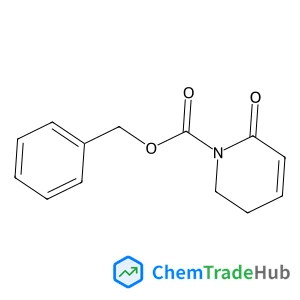
Benzyl 6-oxo-3,6-dihydro-1(2H)-pyridinecarboxylate
CAS Number:
725746-35-0
Molecular Formula:
C13H13NO3
Jin-lei Wang, Ke-feng Ren, Hao Chang, Shi-miao Zhang, Lie-jiang Jin, Jian Ji
Thin organic films containing carbon nanotubes (CNTs) have received increasing attention in many fields. In this study, a robust thin superhydrophobic film has been created by using layer-by-layer assembly of the carbon nanotubes wrapped by poly(dopamine) (CNT@PDA) and poly(ethyleneimine) (PEI). UV-vis spectroscopy, ellipsometry, and quartz crystal microbalance with dissipation (QCM-D) measurements confirmed that the sequential deposition of PEI and CNT@PDA resulted in a linear growth of the (PEI–CNT@PDA) film. This thin film contained as much as 77 wt% CNTs. Moreover, a very stable and flexible free-standing (PEI–CNT@PDA) film could be obtained by employing cellulose acetate (CA) as a sacrificial layer. The film could even withstand ultrasonication in saturated SDS aqueous solution for 30 min. SEM observations indicated that the ultrathin film consisted of nanoscale interpenetrating networks of entangled CNTs and exhibited a very rough surface morphology. The (PEI–CNT@PDA) film turned superhydrophobic after being coated with a low-surface-energy compound. The superhydrophobic films showed excellent resistance against the adhesion of both platelets and Escherichia coli (E. coli). The (PEI–CNT@PDA) films and the proposed methodology may find applications in the area of medical devices to reduce device-associated thrombosis and infection.

NDT & E International

Herald of the Russian Academy of Sciences

Critical Reviews in Solid State and Materials Sciences

Bioorganic & Medicinal Chemistry

Topics in Catalysis

Heteroatom Chemistry

Colloid Journal

Polycyclic Aromatic Compounds

Journal of Chemical Sciences

Journal of the Indian Institute of Science
Zhaoyong Sun, Amar Kumbhar, Kai Sun, Qingsheng Liu
DOI: 10.1039/B719176F
Ying-Feng Han, Yue-Jian Lin, Wei-Guo Jia, Guo-Liang Wang, Guo-Xin Jin
DOI: 10.1039/B717554J
Meiyan Fu, Yi Xiao, Xuhong Qian, Defeng Zhao, Yufang Xu
DOI: 10.1039/B718544H
Ruth Pérez-Fernández, Michael Pittelkow, Ana M. Belenguer, Jeremy K. M. Sanders
DOI: 10.1039/B718075F
Shinobu Takizawa, Tomomi Katayama, Chiaki Kameyama, Kiyotaka Onitsuka, Takeyuki Suzuki, Takeshi Yanagida, Tomoji Kawai, Hiroaki Sasai
DOI: 10.1039/B717068H
Suobo Zhang, Zhaohui Su
DOI: 10.1039/B801784K
Anaïs Medina, Christian G. Claessens, G. M. Aminur Rahman, Al Mokhtar Lamsabhi, Otilia Mó, Manuel Yáñez, Dirk M. Guldi, Tomás Torres
DOI: 10.1039/B719226F
N-(4-Methoxybenzyl)-2-pyridinamine (CAS: 52818-63-0) is increasingly being used ...
When handling Ethyl 4-(2-chlorophenyl)-1,3-thiazole-2-carboxylate, appropriate p...
Diethyldiselane (CAS: 628-39-7) is classified under the Globally Harmonized Syst...
The market for oxocopper (CAS: 12053-18-8) is primarily driven by its use in cat...
The market for 5-{[(2-Methyl-2-propanyl)oxy]carbonyl}-5-azaspiro[2.4]heptane-7-c...
2-(1-Pyrrolidinyl)-4-pyridinamine is a chemical compound with the CAS number 359...
2-(3-Pyridinyl)-1-azabicyclo[2.2.2]octane (CAS: 91556-75-1) is a crystalline sol...
(S)-Alpha-allyl-proline hydrochloride is usually synthesized via a Wittig reacti...
3-Methyl-1,2-oxazole-5-carboxylic acid (CAS: 4857-42-5) is an organic compound w...
Lys-SMCC-DM1 is synthesized via a multi-step process involving the coupling of S...

Physical Chemistry Chemical Physics (PCCP) is an international journal co-owned by 19 physical chemistry and physics societies from around the world. This journal publishes original, cutting-edge research in physical chemistry, chemical physics and biophysical chemistry. To be suitable for publication in PCCP, articles must include significant innovation and/or insight into physical chemistry; this is the most important criterion that reviewers and Editors will judge against when evaluating submissions. The journal has a broad scope and welcomes contributions spanning experiment, theory, computation and data science. Topical coverage includes spectroscopy, dynamics, kinetics, statistical mechanics, thermodynamics, electrochemistry, catalysis, surface science, quantum mechanics, quantum computing and machine learning. Interdisciplinary research areas such as polymers and soft matter, materials, nanoscience, energy, surfaces/interfaces, and biophysical chemistry are welcomed if they demonstrate significant innovation and/or insight into physical chemistry. Joined experimental/theoretical studies are particularly appreciated when complementary and based on up-to-date approaches.

![1-oxaspiro[4.4]nonan-6-one structure](https://static.chemtradehub.com/structs/134/134179-01-4-e051.webp "1-oxaspiro[4.4]nonan-6-one structure")
![N-{[(2-Methyl-2-propanyl)oxy]carbonyl}-L-methionylglycine structure](https://static.chemtradehub.com/structs/234/23446-03-9-e1e5.webp "N-{[(2-Methyl-2-propanyl)oxy]carbonyl}-L-methionylglycine structure")





