












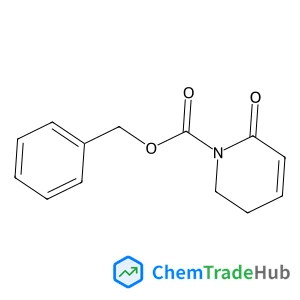
Benzyl 6-oxo-3,6-dihydro-1(2H)-pyridinecarboxylate
CAS Number:
725746-35-0
Molecular Formula:
C13H13NO3
Ioannis Skarmoutsos, Tom Welton, Patricia A. Hunt
Hydrogen bond (H-bond) dynamics have been investigated for “hot” 1-ethyl-3-methylimidazolium chloride and “cold” 1-butyl-3-methylimidazolium chloride ionic liquids (IL). While the average number of H-bonds remains constant for a ≈100 °C temperature change we show that the underlying dynamics of the H-bonding changes dramatically. H-bond dynamics are investigated based on distance and angle criteria, and on the H-bond state (zero, single or bifurcated H-bonds). Temperature effects on the cation ring reorientational dynamics are also examined. Angle deformations are found to be more important than bond stretching in determining the lifetime of individual H-bonds, and decay occurs on two time scales related to the magnitude of the deviation from linearity. Rapid angular oscillation of the anion breaks the H-bond (for the first time) and minimal temperature effects indicate that H-bonds are readily reformed even near the melting point. Intermittent H-bonds repeatedly break and reform over a longer timescale, and exhibit very strong temperature effects. In the hot IL H-bonding with ring and alkyl chain H-atoms occurs, ring reorientational dynamics is anisotropic and the corresponding lifetimes are similar to the intermittent H-bond lifetimes. In the cold IL ring H-atoms dominate the H-bonding and intermittent H-bonds last for ≈5 ns, ring reorientation occurs on a much slower timescale. The hot IL favours single H-bonds, but the individual ions often change, while the cold IL favours bifurcated H-bonds with the same co-located ions.
Stuart W. Haynes, Paulina K. Sydor, Anna E. Stanley, Lijiang Song, Gregory L. Challis
DOI: 10.1039/B801677A
You-Rim Yoon, Yong-beom Lim, Eunji Lee, Myongsoo Lee
DOI: 10.1039/B719868J
Patrick Eisenberger, Iris Kieltsch, Nicolas Armanino, Antonio Togni
DOI: 10.1039/B801424H
Chuan-Feng Chen, Zhi-Tang Huang
DOI: 10.1039/B800258D
Andrés de la Escosura, Martijn Verwegen, Friso D. Sikkema, Marta Comellas-Aragonès, Andrei Kirilyuk, Theo Rasing, Roeland J. M. Nolte, Jeroen J. L. M. Cornelissen
DOI: 10.1039/B800936H
Junwon Kim, Hye-Young Park, Jaeseung Kim, Jiyoung Ryu, Do Yoon Kwon, Regis Grailhe, Rita Song
DOI: 10.1039/B719434J
Yue-Ling Bai, Jun Tao, Rong-Bin Huang, Lan-Sun Zheng, Shao-Liang Zheng, Kazuyoshi Oshida, Yasuaki Einaga
DOI: 10.1039/B718456E
Bronwyn H. Gillon, Brian O. Patrick, Derek P. Gates
DOI: 10.1039/B719199E
N-(4-Methoxybenzyl)-2-pyridinamine (CAS: 52818-63-0) is increasingly being used ...
When handling Ethyl 4-(2-chlorophenyl)-1,3-thiazole-2-carboxylate, appropriate p...
Diethyldiselane (CAS: 628-39-7) is classified under the Globally Harmonized Syst...
The market for oxocopper (CAS: 12053-18-8) is primarily driven by its use in cat...
The market for 5-{[(2-Methyl-2-propanyl)oxy]carbonyl}-5-azaspiro[2.4]heptane-7-c...
2-(1-Pyrrolidinyl)-4-pyridinamine is a chemical compound with the CAS number 359...
2-(3-Pyridinyl)-1-azabicyclo[2.2.2]octane (CAS: 91556-75-1) is a crystalline sol...
(S)-Alpha-allyl-proline hydrochloride is usually synthesized via a Wittig reacti...
3-Methyl-1,2-oxazole-5-carboxylic acid (CAS: 4857-42-5) is an organic compound w...
Lys-SMCC-DM1 is synthesized via a multi-step process involving the coupling of S...

Physical Chemistry Chemical Physics (PCCP) is an international journal co-owned by 19 physical chemistry and physics societies from around the world. This journal publishes original, cutting-edge research in physical chemistry, chemical physics and biophysical chemistry. To be suitable for publication in PCCP, articles must include significant innovation and/or insight into physical chemistry; this is the most important criterion that reviewers and Editors will judge against when evaluating submissions. The journal has a broad scope and welcomes contributions spanning experiment, theory, computation and data science. Topical coverage includes spectroscopy, dynamics, kinetics, statistical mechanics, thermodynamics, electrochemistry, catalysis, surface science, quantum mechanics, quantum computing and machine learning. Interdisciplinary research areas such as polymers and soft matter, materials, nanoscience, energy, surfaces/interfaces, and biophysical chemistry are welcomed if they demonstrate significant innovation and/or insight into physical chemistry. Joined experimental/theoretical studies are particularly appreciated when complementary and based on up-to-date approaches.
![1-[6-(1H-Imidazol-1-yl)-3-pyridinyl]methanamine structure](https://static.chemtradehub.com/structs/914/914637-08-4-8825.webp "1-[6-(1H-Imidazol-1-yl)-3-pyridinyl]methanamine structure")
![5'-Fluoro-[2,3'-biindolinylidene]-2',3-dione structure](https://static.chemtradehub.com/structs/251/251903-00-1-9cb1.webp "5'-Fluoro-[2,3'-biindolinylidene]-2',3-dione structure")
![N-{[(2-Methyl-2-propanyl)oxy]carbonyl}-L-methionylglycine structure](https://static.chemtradehub.com/structs/234/23446-03-9-e1e5.webp "N-{[(2-Methyl-2-propanyl)oxy]carbonyl}-L-methionylglycine structure")
![1-oxaspiro[4.4]nonan-6-one structure](https://static.chemtradehub.com/structs/134/134179-01-4-e051.webp "1-oxaspiro[4.4]nonan-6-one structure")





