


Site specifically probing the unfolding process of human telomere i-motif DNA using vibrationally enhanced alkynyl stretch
Literature Information
Publication Date
2024-01-04
DOI
10.1039/D3CP05328H
Impact Factor
3.676
Authors
View Original
Abstract
The microscopic unfolding process of a cytosine-rich DNA forming i-motif by hemi-protonated base pairs is related to gene regulation. However, the detailed thermal unfolding mechanism and the protonation/deprotonation status of site-specific cytosine in DNA in a physiological environment are still obscure. To address this issue, a vibration-enhanced CC probe tagged on 5′E terminal cytosine of human telomere i-motif DNA was examined using linear and nonlinear infrared (IR) spectroscopies and quantum-chemistry calculations. The CC probe extended into the major groove of the i-motif was found using nonlinear IR results only to introduce a minor steric effect on both steady-state structure and local structure dynamics; however, its IR absorption profile effectively reports the cleavage of the hemi-protonated base pair of C1–C13 upon the unfolding with C1 remaining protonated. The temperature mid-point (Tm) of the local transition reported using the CC tag was slightly lower than the Tm of global transition, and the enthalpy of the former exceeds 60% of the global transition. It is shown that the base-pair unraveling is noncooperative, with outer base pairs breaking first and being likely the rate limiting step. Our results offered an in-depth understanding of the macroscopic unfolding characteristics of the i-motif DNA and provided a nonlinear IR approach to monitoring the local structural transition and dynamics of DNA and its complexes.
Recommended Journals

Current Pharmaceutical Biotechnology

Molecular Diversity

Advanced Engineering Materials

Angewandte Chemie International Edition

CrystEngComm

Environmental Toxicology and Pharmacology

Nature Reviews Drug Discovery

Journal of Enzyme inhibition and Medicinal Chemistry

Lab on a Chip

Journal of Medical Biochemistry
Related Literature
Slow deactivation channels in UV-photoexcited adenine DNA
Xuebo Chen, Weihai Fang, Haobin Wang
2014-01-02
Paper
DOI: 10.1039/C3CP55020F
Synthesis and characterization of graphene: influence of synthesis variables
M. P. Lavin-Lopez, J. L. Valverde, M. C. Cuevas, A. Garrido, L. Sanchez-Silva, P. Martinez, A. Romero-Izquierdo
2013-12-04
Paper
DOI: 10.1039/C3CP54832E
Photochemistry of a 1 : 1 hydrogen-bonded CH3CN : HCOOH complex under astrochemically-relevant conditions
2013-11-01
Paper
DOI: 10.1039/C3CP54041C
Determination of volatility of ionic liquids at the nanoscale by means of ultra-fast scanning calorimetry
Mathias Ahrenberg, Marcel Brinckmann, Jürn W. P. Schmelzer, Martin Beck, Christin Schmidt
2013-11-15
Paper
DOI: 10.1039/C3CP54325K
X-ray absorption spectroscopy and resonant inelastic scattering study of the first lithiation cycle of the Li-ion battery cathode Li2−xMnSiO4
M. Dahbi, T. Gustafsson, K. Edström, D. Newby, K. E. Smith, L.-C. Duda
2013-12-18
Paper
DOI: 10.1039/C3CP54103G
Progress on extending the light absorption spectra of photocatalysts
Zeyan Wang, Yuanyuan Liu, Baibiao Huang, Ying Dai, Zaizhu Lou, Gang Wang, Xiaoyang Zhang, Xiaoyan Qin
2013-11-11
Perspective
DOI: 10.1039/C3CP53817F
Lithium diffusion in congruent LiNbO3 single crystals at low temperatures probed by neutron reflectometry
E. Hüger, J. Rahn, J. Stahn, T. Geue
2014-01-02
Paper
DOI: 10.1039/C3CP54939A
The formation of carbamate ions in interstellar ice analogues
Yamilet Rodríguez-Lazcano, Belén Maté, Víctor J. Herrero, Rafael Escribano, Óscar Gálvez
2013-10-15
Paper
DOI: 10.1039/C3CP53153H
CO2-induced micelle to vesicle transition in zwitterionic–anionic surfactant systems
Wei Li, Yanjuan Yang, Tian Luo, Jianling Zhang, Buxing Han
2013-12-18
Paper
DOI: 10.1039/C3CP54537G
Self-aggregation mechanisms of N-alkyl derivatives of urea and thiourea
Monika Obrzud, Maria Rospenk, Aleksander Koll
2013-12-16
Paper
DOI: 10.1039/C3CP53582G
You might also like
Compound Q&A
What is the market or research trend for N-(4-Methoxybenzyl)-2-pyridinamine (CAS: 52818-63-0)?
N-(4-Methoxybenzyl)-2-pyridinamine (CAS: 52818-63-0) is increasingly being used ...
52818-63-0N-(4-Methoxybenzyl)-...
Compound Q&A
What precautions should be taken when handling Ethyl 4-(2-chlorophenyl)-1,3-thiazole-2-carboxylate (CAS: 1050507-06-6)?
When handling Ethyl 4-(2-chlorophenyl)-1,3-thiazole-2-carboxylate, appropriate p...
1050507-06-6Ethyl 4-(2-chlorophe...
Compound Q&A
What regulatory guidelines apply to diethyldiselane (CAS: 628-39-7)?
Diethyldiselane (CAS: 628-39-7) is classified under the Globally Harmonized Syst...
628-39-7Diethyldiselane
Compound Q&A
What is the market or research trend for oxocopper (CAS: 12053-18-8)?
The market for oxocopper (CAS: 12053-18-8) is primarily driven by its use in cat...
12053-18-8oxocopper; oxo-(oxoc...
Compound Q&A
What is the market or research trend for 5-{[(2-Methyl-2-propanyl)oxy]carbonyl}-5-azaspiro[2.4]heptane-7-carboxylic acid?
The market for 5-{[(2-Methyl-2-propanyl)oxy]carbonyl}-5-azaspiro[2.4]heptane-7-c...
1268519-54-55-{[(2-Methyl-2-prop...
Compound Q&A
What is 2-(1-Pyrrolidinyl)-4-pyridinamine (CAS: 35981-63-6)?
2-(1-Pyrrolidinyl)-4-pyridinamine is a chemical compound with the CAS number 359...
35981-63-62-(1-Pyrrolidinyl)-4...
Compound Q&A
What are the physical and chemical properties of 2-(3-Pyridinyl)-1-azabicyclo[2.2.2]octane (CAS: 91556-75-1)?
2-(3-Pyridinyl)-1-azabicyclo[2.2.2]octane (CAS: 91556-75-1) is a crystalline sol...
91556-75-12-(3-Pyridinyl)-1-az...
Compound Q&A
How is (S)-Alpha-allyl-proline hydrochloride (CAS: 129704-91-2) typically synthesized?
(S)-Alpha-allyl-proline hydrochloride is usually synthesized via a Wittig reacti...
129704-91-2(S)-Alpha-allyl-prol...
Compound Q&A
What is 3-Methyl-1,2-oxazole-5-carboxylic acid (CAS: 4857-42-5)?
3-Methyl-1,2-oxazole-5-carboxylic acid (CAS: 4857-42-5) is an organic compound w...
4857-42-53-Methyl-1,2-oxazole...
Compound Q&A
How is Lys-SMCC-DM1 (CAS: 1281816-04-3) typically synthesized?
Lys-SMCC-DM1 is synthesized via a multi-step process involving the coupling of S...
1281816-04-3Lys-SMCC-DM1
Source Journal
Physical Chemistry Chemical Physics

CiteScore:
5.5
Self-citation Rate:
10.3%
Articles per Year:
3036
Physical Chemistry Chemical Physics (PCCP) is an international journal co-owned by 19 physical chemistry and physics societies from around the world. This journal publishes original, cutting-edge research in physical chemistry, chemical physics and biophysical chemistry. To be suitable for publication in PCCP, articles must include significant innovation and/or insight into physical chemistry; this is the most important criterion that reviewers and Editors will judge against when evaluating submissions. The journal has a broad scope and welcomes contributions spanning experiment, theory, computation and data science. Topical coverage includes spectroscopy, dynamics, kinetics, statistical mechanics, thermodynamics, electrochemistry, catalysis, surface science, quantum mechanics, quantum computing and machine learning. Interdisciplinary research areas such as polymers and soft matter, materials, nanoscience, energy, surfaces/interfaces, and biophysical chemistry are welcomed if they demonstrate significant innovation and/or insight into physical chemistry. Joined experimental/theoretical studies are particularly appreciated when complementary and based on up-to-date approaches.
Recommended Compounds
![N-{[(2-Methyl-2-propanyl)oxy]carbonyl}-L-methionylglycine structure](https://static.chemtradehub.com/structs/234/23446-03-9-e1e5.webp "N-{[(2-Methyl-2-propanyl)oxy]carbonyl}-L-methionylglycine structure")
N-{[(2-Methyl-2-propanyl)oxy]carbonyl}-L-methionylglycine
CAS Number:
23446-03-9
Molecular Formula:
C12H22N2O5S

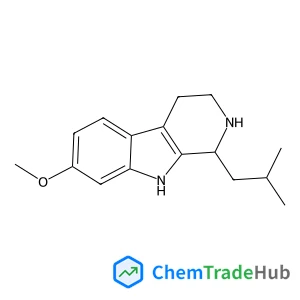
1-Isobutyl-7-methoxy-2,3,4,9-tetrahydro-1H-beta-carboline
CAS Number:
175975-76-5
Molecular Formula:
C16H22N2O
Recommended Suppliers





Disclaimer
This page provides academic journal information for reference and research purposes only. We are not affiliated with any journal publishers and do not handle publication submissions. For publication-related inquiries, please contact the respective journal publishers directly.
If you notice any inaccuracies in the information displayed, please contact us at support@chemtradehub.com. We will promptly review and address your concerns.