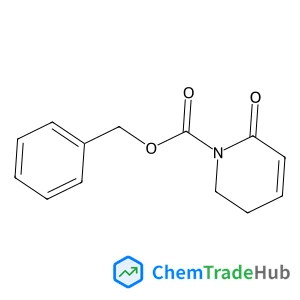
Benzyl 6-oxo-3,6-dihydro-1(2H)-pyridinecarboxylate
CAS Number:
725746-35-0
Molecular Formula:
C13H13NO3
Monika Obrzud, Maria Rospenk, Aleksander Koll
The mechanisms of self-aggregation of N-alkyl and N,N′-dialkyl derivatives of urea and thiourea in weakly polar solvents (chloroform and 1,2-dichloroethane) were examined. The C–H⋯O or C–H⋯S hydrogen bonds formed with these two acidic solvents compete with the N–H⋯O or N–H⋯S hydrogen bonds formed between solute molecules, influencing the self-aggregation of urea derivatives in a particular solvent. The peculiarities of the solvent interactions were discussed and the stronger interaction of chloroform was noted. Aggregation of the N-alkyl derivatives was followed using IR spectroscopy, with two gradual aggregation constants (K1 and K2) determined. The average molecular weight and dipole moments were shown to depend on the concentration, and the form of aggregation was analyzed through the study of the dipole moments. All of the urea derivatives demonstrated an increase in dipole moment with increased concentration, resulting in stronger NH2⋯O hydrogen bond interactions and leading to linear-type aggregation. Contrastingly, the dipole moments of the mono-N-alkyl-substituted thioureas decreased with concentration. Density-functional theory calculation of these processes showed that reliable results could only be obtained if solvent interactions were considered, with a specific combination of local and bulk effects. It was also shown that going from N,N′-disubstituted to N-monoalkyl derivatives the ability to aggregate increases, which is related to a diminished steric hindrance to hydrogen bonding. Finally, it was demonstrated that the mechanisms of self-aggregation depend on the acid–base properties of the solute, hydrogen bonding to the solvent molecules, and steric interactions of the aliphatic chains.
Cong Lin, Sai Chen, Yihua Wang, Fei Gao, Liang Shen
DOI: 10.1039/D1QO01579F
Naoki Komatsu
DOI: 10.1039/B208107E
Gang Huang, Meng Zhang, Hui-Juan Wang, Fa-Bao Li, Fei Yang, Li Liu, Chao-Yang Liu, Abdullah M. Asiri, Khalid A. Alamry
DOI: 10.1039/C8OB01903G
Shi-Qiang Li, Liu-Jun He, Ming Zhang, Dian-Yong Tang, Hong-yu Li, Zhong-Zhu Chen, Zhi-Gang Xu
DOI: 10.1039/D1QO01694F
Michael Harding, Robert Hodgson, Tahir Majid, Kenneth J. McDowall
DOI: 10.1039/B208781B
Carsten Bolm, Li Xiao, Martin Kesselgruber
DOI: 10.1039/B208345K
Yun Lu, Yixing Zhao, Kishan L. Handoo, Vernon D. Parker
DOI: 10.1039/B208186E
Tao Li, Yu Chen, Chunbao Li
DOI: 10.1039/C8OB01505H
Shixuan Cao, Jiatian Li, Taishan Yan, Jie Han
DOI: 10.1039/D1QO01555A
N-(4-Methoxybenzyl)-2-pyridinamine (CAS: 52818-63-0) is increasingly being used ...
When handling Ethyl 4-(2-chlorophenyl)-1,3-thiazole-2-carboxylate, appropriate p...
Diethyldiselane (CAS: 628-39-7) is classified under the Globally Harmonized Syst...
The market for oxocopper (CAS: 12053-18-8) is primarily driven by its use in cat...
The market for 5-{[(2-Methyl-2-propanyl)oxy]carbonyl}-5-azaspiro[2.4]heptane-7-c...
2-(1-Pyrrolidinyl)-4-pyridinamine is a chemical compound with the CAS number 359...
2-(3-Pyridinyl)-1-azabicyclo[2.2.2]octane (CAS: 91556-75-1) is a crystalline sol...
(S)-Alpha-allyl-proline hydrochloride is usually synthesized via a Wittig reacti...
3-Methyl-1,2-oxazole-5-carboxylic acid (CAS: 4857-42-5) is an organic compound w...
Lys-SMCC-DM1 is synthesized via a multi-step process involving the coupling of S...

Physical Chemistry Chemical Physics (PCCP) is an international journal co-owned by 19 physical chemistry and physics societies from around the world. This journal publishes original, cutting-edge research in physical chemistry, chemical physics and biophysical chemistry. To be suitable for publication in PCCP, articles must include significant innovation and/or insight into physical chemistry; this is the most important criterion that reviewers and Editors will judge against when evaluating submissions. The journal has a broad scope and welcomes contributions spanning experiment, theory, computation and data science. Topical coverage includes spectroscopy, dynamics, kinetics, statistical mechanics, thermodynamics, electrochemistry, catalysis, surface science, quantum mechanics, quantum computing and machine learning. Interdisciplinary research areas such as polymers and soft matter, materials, nanoscience, energy, surfaces/interfaces, and biophysical chemistry are welcomed if they demonstrate significant innovation and/or insight into physical chemistry. Joined experimental/theoretical studies are particularly appreciated when complementary and based on up-to-date approaches.
![5'-Fluoro-[2,3'-biindolinylidene]-2',3-dione structure](https://static.chemtradehub.com/structs/251/251903-00-1-9cb1.webp "5'-Fluoro-[2,3'-biindolinylidene]-2',3-dione structure")