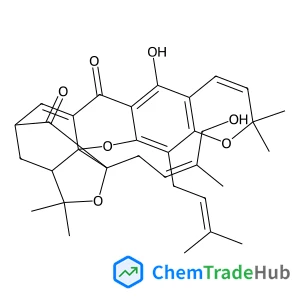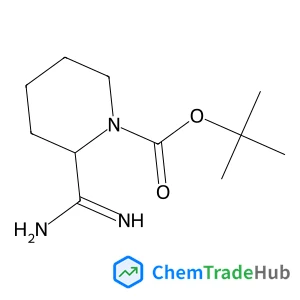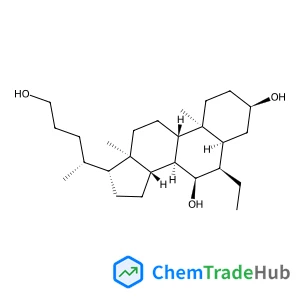
(3alpha,5beta,6alpha,7alpha)-6-Ethylcholane-3,7,24-triol
CAS Number:
1537866-49-1
Molecular Formula:
C26H46O3
Xuebo Chen, Weihai Fang, Haobin Wang
The molecular mechanism for removing the excess energy in DNA bases is responsible for the high photostability of DNA and is thus the subject of intense theoretical/computational investigation. To understand why the excited state decay of the stacked bases is significantly longer than that of the monomers, we carried out electronic structure calculations on an adenine monomer and an aqueous (dA)5 oligonucleotide employing the CASPT2//CASSCF and CASPT2//CASSCF/AMBER levels of theory. The newly-found bright excited state pair Sstack1(1ππ*) and Sstack2(1ππ*) of d(A)5, originated from base stacking, is of intra-base charge transfer nature and occurs in different stacked bases with charge transfer along opposite directions. Two slow deactivation channels of d(A)5 were proposed as a result of the sizable barriers along the relaxation paths starting from the FC point of the Sstack1(1ππ*) state. The SN1P(1nπ*) state of d(A)5 serves as an intermediate state in one relaxation channel, to which a nonadiabatic decay from the Sstack1(1ππ*) state occurs in an energy degeneracy region. A relatively high barrier in this state is found and attributed to the steric hindrance of the DNA environment due to the large NH2 group twisting, which gives a weak and red-shifted fluorescence. Another direct relaxation channel, induced by the C2–H2 bond twisting motion, is found to go through a conical intersection between the Sstack1(1ππ*) and the ground state. The barrier found here enables fluorescence from the Sstack1(1ππ*) state and may explain the bright state emission observed in the fluorescence upconversion measurements. The inter-molecular SCT(1ππ*) state may be involved in the slow relaxation process of the photoexcited adenine oligomers through efficient internal conversion to the intra-base Sstack1(1ππ*) state.
Biao Wang, Yifeng Wang, Yidong Jiang, Mingming Chu, Suosuo Qi, Wanzhen Ju, Danqian Xu
DOI: 10.1039/C8OB01943F
R. Schettini, C. Costabile, G. Della Sala, J. Buirey, M. Tosolini, P. Tecilla, M. C. Vaccaro, I. Bruno, F. De Riccardis, I. Izzo
DOI: 10.1039/C8OB01522H
Michal März, Michal Kohout, Tomáš Neveselý, Josef Chudoba, Dorota Prukała, Stanislaw Niziński, Marek Sikorski, Gotard Burdziński, Radek Cibulka
DOI: 10.1039/C8OB01822G
Ruby Nagelkerke, Gregory R. J. Thatcher, Erwin Buncel
DOI: 10.1039/B208408B
Eugenius Butkus, Julė Malinauskienė, Sigitas Stončius
DOI: 10.1039/B208422H
Bernd Neumann, Hendrik Zipse
DOI: 10.1039/B209981K
Lin Su, Zheng Yu, Peiling Ren, Zhi Luo, Wei Hou, Hongtao Xu
DOI: 10.1039/C8OB02071J
Karim Muratov, Ekaterina Kuchuk, Sreekumar Vellalath, Oleg I. Afanasyev, Alexei P. Moskovets, Gleb Denisov, Denis Chusov
DOI: 10.1039/C8OB01992D
Paola Baiocco, Anna Maria Barreca, Maura Fabbrini, Carlo Galli, Patrizia Gentili
DOI: 10.1039/B208951C
Shixuan Cao, Jiatian Li, Taishan Yan, Jie Han
DOI: 10.1039/D1QO01555A
N-(4-Methoxybenzyl)-2-pyridinamine (CAS: 52818-63-0) is increasingly being used ...
When handling Ethyl 4-(2-chlorophenyl)-1,3-thiazole-2-carboxylate, appropriate p...
Diethyldiselane (CAS: 628-39-7) is classified under the Globally Harmonized Syst...
The market for oxocopper (CAS: 12053-18-8) is primarily driven by its use in cat...
The market for 5-{[(2-Methyl-2-propanyl)oxy]carbonyl}-5-azaspiro[2.4]heptane-7-c...
2-(1-Pyrrolidinyl)-4-pyridinamine is a chemical compound with the CAS number 359...
2-(3-Pyridinyl)-1-azabicyclo[2.2.2]octane (CAS: 91556-75-1) is a crystalline sol...
(S)-Alpha-allyl-proline hydrochloride is usually synthesized via a Wittig reacti...
3-Methyl-1,2-oxazole-5-carboxylic acid (CAS: 4857-42-5) is an organic compound w...
Lys-SMCC-DM1 is synthesized via a multi-step process involving the coupling of S...

Physical Chemistry Chemical Physics (PCCP) is an international journal co-owned by 19 physical chemistry and physics societies from around the world. This journal publishes original, cutting-edge research in physical chemistry, chemical physics and biophysical chemistry. To be suitable for publication in PCCP, articles must include significant innovation and/or insight into physical chemistry; this is the most important criterion that reviewers and Editors will judge against when evaluating submissions. The journal has a broad scope and welcomes contributions spanning experiment, theory, computation and data science. Topical coverage includes spectroscopy, dynamics, kinetics, statistical mechanics, thermodynamics, electrochemistry, catalysis, surface science, quantum mechanics, quantum computing and machine learning. Interdisciplinary research areas such as polymers and soft matter, materials, nanoscience, energy, surfaces/interfaces, and biophysical chemistry are welcomed if they demonstrate significant innovation and/or insight into physical chemistry. Joined experimental/theoretical studies are particularly appreciated when complementary and based on up-to-date approaches.
![N-{[(2-Methyl-2-propanyl)oxy]carbonyl}-L-methionylglycine structure](https://static.chemtradehub.com/structs/234/23446-03-9-e1e5.webp "N-{[(2-Methyl-2-propanyl)oxy]carbonyl}-L-methionylglycine structure")
![N-{15-[(2,5-Dioxo-1-pyrrolidinyl)oxy]-15-oxo-3,6,9,12-tetraoxapentadec-1-yl}-2-(2-propyn-1-yloxy)acetamide structure](https://static.chemtradehub.com/structs/210/2101206-92-0-2eb5.webp "N-{15-[(2,5-Dioxo-1-pyrrolidinyl)oxy]-15-oxo-3,6,9,12-tetraoxapentadec-1-yl}-2-(2-propyn-1-yloxy)acetamide structure")