












Visualizing and characterizing excited states from time-dependent density functional theory
Literature Information
Publication Date
2023-12-12
DOI
10.1039/D3CP04226J
Impact Factor
3.676
Authors
View Original
Abstract
Time-dependent density functional theory (TD-DFT) is the most widely-used electronic structure method for excited states, due to a favorable combination of low cost and semi-quantitative accuracy in many contexts, even if there are well recognized limitations. This Perspective describes various ways in which excited states from TD-DFT calculations can be visualized and analyzed, both qualitatively and quantitatively. This includes not just orbitals and densities but also well-defined statistical measures of electron–hole separation and of Frenkel-type exciton delocalization. Emphasis is placed on mathematical connections between methods that have often been discussed separately. Particular attention is paid to charge-transfer diagnostics, which provide indicators of when TD-DFT may not be trustworthy due to its categorical failure to describe long-range electron transfer. Measures of exciton size and charge separation that are directly connected to the underlying transition density are recommended over more ad hoc metrics for quantifying charge-transfer character.
Recommended Journals
Related Literature
The unimolecular chemistry of [Zn(amino acid)2-H]+ in the gas phase: H2 elimination when the amino acid is a secondary amine
Ameneh Gholami, Travis D. Fridgen
2014-01-06
Paper
DOI: 10.1039/C3CP53716A
A XANES study of LiVPO4F: a factor analysis approach
Yan Qin, Yang Ren, Steve M. Heald, Chengjun Sun, Dehua Zhou, Bryant J. Polzin, Steve E. Trask, Khalil Amine, Yinjin Wei, Gang Chen, Ira Bloom, Zonghai Chen
2014-01-10
Paper
DOI: 10.1039/C3CP54588A
Plasmon-enhanced water splitting on TiO2-passivated GaP photocatalysts
Jing Qiu, Guangtong Zeng, Prathamesh Pavaskar, Zhen Li
2013-12-20
Paper
DOI: 10.1039/C3CP54674H
Three milieux for interstellar chemistry: gas, dust, and ice
2013-10-30
Perspective
DOI: 10.1039/C3CP54065K
In situ IR spectroscopic studies of Ni surface segregation induced by CO adsorption on Cu–Ni/SiO2 bimetallic catalysts
Yunxi Yao, D. Wayne Goodman
2014-01-03
Paper
DOI: 10.1039/C3CP54997F
Electro-reduction of nitrogen on molybdenum nitride: structure, energetics, and vibrational spectra from DFT
Fernando H. Garzon, Neil J. Henson
2013-12-13
Paper
DOI: 10.1039/C3CP54559H
Facile fabrication of robust superhydrophobic multilayered film based on bioinspired poly(dopamine)-modified carbon nanotubes
Jin-lei Wang, Ke-feng Ren, Hao Chang, Shi-miao Zhang, Lie-jiang Jin, Jian Ji
2013-12-02
Paper
DOI: 10.1039/C3CP54354D
Comment on “Volume shrinkage of a metal–organic framework host induced by the dispersive attraction of guest gas molecules”
François-Xavier Coudert, Alain H. Fuchs, Alexander V. Neimark
2014-01-07
Comment
DOI: 10.1039/C3CP54042A
Carbon-coated LiCrTiO4 electrode material promoting phase transition to reduce asymmetric polarization for lithium-ion batteries
Bo Yan, Jing Ye, Xue Li, Yansheng Liu, Haiping You
2013-11-19
Paper
DOI: 10.1039/C3CP54399D
The importance of timescale for hydrogen bonding in imidazolium chloride ionic liquids
Ioannis Skarmoutsos, Tom Welton, Patricia A. Hunt
2014-01-13
Paper
DOI: 10.1039/C3CP54551B
You might also like
Compound Q&A
What is the market or research trend for N-(4-Methoxybenzyl)-2-pyridinamine (CAS: 52818-63-0)?
N-(4-Methoxybenzyl)-2-pyridinamine (CAS: 52818-63-0) is increasingly being used ...
52818-63-0N-(4-Methoxybenzyl)-...
Compound Q&A
What precautions should be taken when handling Ethyl 4-(2-chlorophenyl)-1,3-thiazole-2-carboxylate (CAS: 1050507-06-6)?
When handling Ethyl 4-(2-chlorophenyl)-1,3-thiazole-2-carboxylate, appropriate p...
1050507-06-6Ethyl 4-(2-chlorophe...
Compound Q&A
What regulatory guidelines apply to diethyldiselane (CAS: 628-39-7)?
Diethyldiselane (CAS: 628-39-7) is classified under the Globally Harmonized Syst...
628-39-7Diethyldiselane
Compound Q&A
What is the market or research trend for oxocopper (CAS: 12053-18-8)?
The market for oxocopper (CAS: 12053-18-8) is primarily driven by its use in cat...
12053-18-8oxocopper; oxo-(oxoc...
Compound Q&A
What is the market or research trend for 5-{[(2-Methyl-2-propanyl)oxy]carbonyl}-5-azaspiro[2.4]heptane-7-carboxylic acid?
The market for 5-{[(2-Methyl-2-propanyl)oxy]carbonyl}-5-azaspiro[2.4]heptane-7-c...
1268519-54-55-{[(2-Methyl-2-prop...
Compound Q&A
What is 2-(1-Pyrrolidinyl)-4-pyridinamine (CAS: 35981-63-6)?
2-(1-Pyrrolidinyl)-4-pyridinamine is a chemical compound with the CAS number 359...
35981-63-62-(1-Pyrrolidinyl)-4...
Compound Q&A
What are the physical and chemical properties of 2-(3-Pyridinyl)-1-azabicyclo[2.2.2]octane (CAS: 91556-75-1)?
2-(3-Pyridinyl)-1-azabicyclo[2.2.2]octane (CAS: 91556-75-1) is a crystalline sol...
91556-75-12-(3-Pyridinyl)-1-az...
Compound Q&A
How is (S)-Alpha-allyl-proline hydrochloride (CAS: 129704-91-2) typically synthesized?
(S)-Alpha-allyl-proline hydrochloride is usually synthesized via a Wittig reacti...
129704-91-2(S)-Alpha-allyl-prol...
Compound Q&A
What is 3-Methyl-1,2-oxazole-5-carboxylic acid (CAS: 4857-42-5)?
3-Methyl-1,2-oxazole-5-carboxylic acid (CAS: 4857-42-5) is an organic compound w...
4857-42-53-Methyl-1,2-oxazole...
Compound Q&A
How is Lys-SMCC-DM1 (CAS: 1281816-04-3) typically synthesized?
Lys-SMCC-DM1 is synthesized via a multi-step process involving the coupling of S...
1281816-04-3Lys-SMCC-DM1
Source Journal
Physical Chemistry Chemical Physics

CiteScore:
5.5
Self-citation Rate:
10.3%
Articles per Year:
3036
Physical Chemistry Chemical Physics (PCCP) is an international journal co-owned by 19 physical chemistry and physics societies from around the world. This journal publishes original, cutting-edge research in physical chemistry, chemical physics and biophysical chemistry. To be suitable for publication in PCCP, articles must include significant innovation and/or insight into physical chemistry; this is the most important criterion that reviewers and Editors will judge against when evaluating submissions. The journal has a broad scope and welcomes contributions spanning experiment, theory, computation and data science. Topical coverage includes spectroscopy, dynamics, kinetics, statistical mechanics, thermodynamics, electrochemistry, catalysis, surface science, quantum mechanics, quantum computing and machine learning. Interdisciplinary research areas such as polymers and soft matter, materials, nanoscience, energy, surfaces/interfaces, and biophysical chemistry are welcomed if they demonstrate significant innovation and/or insight into physical chemistry. Joined experimental/theoretical studies are particularly appreciated when complementary and based on up-to-date approaches.
Recommended Compounds

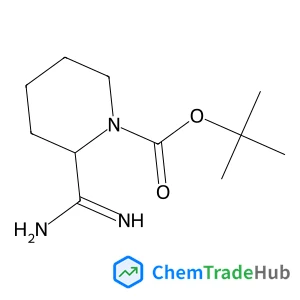
2-Methyl-2-propanyl 2-carbamimidoyl-1-piperidinecarboxylate
CAS Number:
1258640-98-0
Molecular Formula:
C11H21N3O2

Benzyl 6-oxo-3,6-dihydro-1(2H)-pyridinecarboxylate
CAS Number:
725746-35-0
Molecular Formula:
C13H13NO3
![1,10-bis(3,5-dimethylphenyl)-12-hydroxy-4,5,6,7-tetrahydroiindeno[7,1-de:1',7'-fg][1,3,2]dioxaphosphocine 12-oxide structure](https://static.chemtradehub.com/structs/141/1412439-82-7-b9a9.webp "1,10-bis(3,5-dimethylphenyl)-12-hydroxy-4,5,6,7-tetrahydroiindeno[7,1-de:1',7'-fg][1,3,2]dioxaphosphocine 12-oxide structure")
1,10-bis(3,5-dimethylphenyl)-12-hydroxy-4,5,6,7-tetrahydroiindeno[7,1-de:1',7'-fg][1,3,2]dioxaphosphocine 12-oxide
CAS Number:
1412439-82-7
Molecular Formula:
C33H31O4P
Recommended Suppliers





Disclaimer
This page provides academic journal information for reference and research purposes only. We are not affiliated with any journal publishers and do not handle publication submissions. For publication-related inquiries, please contact the respective journal publishers directly.
If you notice any inaccuracies in the information displayed, please contact us at support@chemtradehub.com. We will promptly review and address your concerns.