












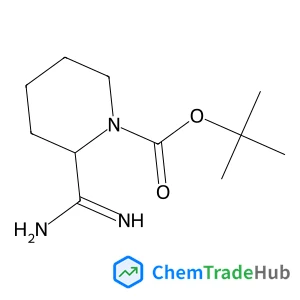
2-Methyl-2-propanyl 2-carbamimidoyl-1-piperidinecarboxylate
CAS Number:
1258640-98-0
Molecular Formula:
C11H21N3O2
Fernando H. Garzon, Neil J. Henson
We used density functional theory to study the electrochemical conversion of nitrogen to ammonia on the (001), (100/010), (101), and (111) surfaces of γ-Mo2N. Based on the calculated free energy profiles for the reduction of nitrogen by the associative and dissociative mechanisms, reactivity was found to decrease in the order (111) > (101) > (100/010) ≈ (001). Namely, the cell potentials needed to drive the reduction to ammonia increase in the following order: −0.7 V on (111), −1.2 V on (101), and −1.4 V on (100/010) and (001) surfaces. The (111) surface was found to be the most reactive for nitrogen due to (i) its ability to adsorb the N2 in the side-on position which activates N–N bonding and (ii) its high affinity for N-adatoms which also prevents accumulation of H-adatoms on the catalytic surface at low cell potentials. We have also calculated vibrational frequencies of different NxHy species adsorbed on various γ-Mo2N surfaces. The frequencies are found to depend strongly on the type of the binding sites available on the crystal facets. A comparison of the calculated frequencies with the frequencies of the corresponding species in transition metal complexes and other metal surfaces shows that the frequencies of several signature modes fall in a similar region and might be used to assign the spectra of hydrogen and nitrogen containing surface species on different metal surfaces.
Ruth I. J. Amos, Brendon S. Gourlay, Brian F. Yates
DOI: 10.1039/B719570B
Elisa Biavardi, Gionata Battistini, Marco Montalti, Roger M. Yebeutchou, Luca Prodi, Enrico Dalcanale
DOI: 10.1039/B801729H
Yue-Ling Bai, Jun Tao, Rong-Bin Huang, Lan-Sun Zheng, Shao-Liang Zheng, Kazuyoshi Oshida, Yasuaki Einaga
DOI: 10.1039/B718456E
Marites A. Guino-o, Charles F. Campana, Karin Ruhlandt-Senge
DOI: 10.1039/B715701K
Jianjun Liang, Jin Yang, Chuandong Jia, Hongrui Zhang, Ning Tang, Christoph Janiak
DOI: 10.1039/B719019K
Linyun Chen, Junfeng Bai, Chunzhao Wang, Yi Pan, Manfred Scheer, Xiaozeng You
DOI: 10.1039/B718476J
Patrick Eisenberger, Iris Kieltsch, Nicolas Armanino, Antonio Togni
DOI: 10.1039/B801424H
Emanuela Berni, Joachim Garric, Corinne Lamit, Brice Kauffmann, Jean-Michel Léger, Ivan Huc
DOI: 10.1039/B719712H
Zhi Ren, Cao Wang, Xiang-fan Xu, Guang-han Cao, Zhu-an Xu, Yu-heng Zhang
DOI: 10.1039/B800378E
N-(4-Methoxybenzyl)-2-pyridinamine (CAS: 52818-63-0) is increasingly being used ...
When handling Ethyl 4-(2-chlorophenyl)-1,3-thiazole-2-carboxylate, appropriate p...
Diethyldiselane (CAS: 628-39-7) is classified under the Globally Harmonized Syst...
The market for oxocopper (CAS: 12053-18-8) is primarily driven by its use in cat...
The market for 5-{[(2-Methyl-2-propanyl)oxy]carbonyl}-5-azaspiro[2.4]heptane-7-c...
2-(1-Pyrrolidinyl)-4-pyridinamine is a chemical compound with the CAS number 359...
2-(3-Pyridinyl)-1-azabicyclo[2.2.2]octane (CAS: 91556-75-1) is a crystalline sol...
(S)-Alpha-allyl-proline hydrochloride is usually synthesized via a Wittig reacti...
3-Methyl-1,2-oxazole-5-carboxylic acid (CAS: 4857-42-5) is an organic compound w...
Lys-SMCC-DM1 is synthesized via a multi-step process involving the coupling of S...

Physical Chemistry Chemical Physics (PCCP) is an international journal co-owned by 19 physical chemistry and physics societies from around the world. This journal publishes original, cutting-edge research in physical chemistry, chemical physics and biophysical chemistry. To be suitable for publication in PCCP, articles must include significant innovation and/or insight into physical chemistry; this is the most important criterion that reviewers and Editors will judge against when evaluating submissions. The journal has a broad scope and welcomes contributions spanning experiment, theory, computation and data science. Topical coverage includes spectroscopy, dynamics, kinetics, statistical mechanics, thermodynamics, electrochemistry, catalysis, surface science, quantum mechanics, quantum computing and machine learning. Interdisciplinary research areas such as polymers and soft matter, materials, nanoscience, energy, surfaces/interfaces, and biophysical chemistry are welcomed if they demonstrate significant innovation and/or insight into physical chemistry. Joined experimental/theoretical studies are particularly appreciated when complementary and based on up-to-date approaches.
![(2R,6S)-6-[(Benzyloxy)methyl]-4-{[(2-methyl-2-propanyl)oxy]carbonyl}-2-morpholinecarboxylic acid structure](https://static.chemtradehub.com/structs/109/1093085-91-6-3382.webp "(2R,6S)-6-[(Benzyloxy)methyl]-4-{[(2-methyl-2-propanyl)oxy]carbonyl}-2-morpholinecarboxylic acid structure")
![5'-Fluoro-[2,3'-biindolinylidene]-2',3-dione structure](https://static.chemtradehub.com/structs/251/251903-00-1-9cb1.webp "5'-Fluoro-[2,3'-biindolinylidene]-2',3-dione structure")
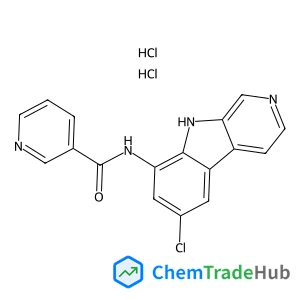
![N-{15-[(2,5-Dioxo-1-pyrrolidinyl)oxy]-15-oxo-3,6,9,12-tetraoxapentadec-1-yl}-2-(2-propyn-1-yloxy)acetamide structure](https://static.chemtradehub.com/structs/210/2101206-92-0-2eb5.webp "N-{15-[(2,5-Dioxo-1-pyrrolidinyl)oxy]-15-oxo-3,6,9,12-tetraoxapentadec-1-yl}-2-(2-propyn-1-yloxy)acetamide structure")





