












Three milieux for interstellar chemistry: gas, dust, and ice
Literature Information
Publication Date
2013-10-30
DOI
10.1039/C3CP54065K
Impact Factor
3.676
Authors
View Original
Abstract
The interdisciplinary science of astrochemistry is 45 years of age, if we pinpoint its origin to have occurred when the first polyatomic molecules were detected in the interstellar gas. Since that time, the field has grown remarkably from an esoteric area of research to one that unites scientists around the globe. Almost 200 different molecules have been detected in the gas-phase of interstellar clouds, mainly by rotational spectroscopy, while dust particles and their icy mantles in colder regions can be probed by vibrational spectroscopy. Astrochemistry is exciting to scientists in a number of different fields. Astronomers are interested in molecular spectra from the heavens because such spectra are excellent probes of the physical conditions where molecules exist, while chemists are interested in the exotic molecules, their spectra, and the unusual chemical processes that produce and destroy them under conditions often very different from those on our home planet. Chemical simulations involving thousands of reactions are now used to calculate concentrations and spectra of interstellar molecules as functions of time. Even biologists share an interest in the subject, because the interstellar clouds of gas and dust, portions of which collapse to form stars and planetary systems, contain organic molecules that may become part of the initial inventory of new planets and may indeed be the precursors of life. An irresistible subject to its practitioners, astrochemistry is proving to be exciting to a much wider audience. In this perspective article, the field is first introduced, and the emphasis is then placed on the three environments in which chemistry occurs in the interstellar medium: the gas phase, the surfaces of bare dust particles, and the ice mantles that cover bare grains in cold dense interstellar clouds. What we do know and what we do not know is distinguished. The status of chemical simulations for a variety of interstellar sources having to do with stellar and planetary evolution is surveyed. An optimistic view of the future of astrochemistry ends the article.
Related Literature
A near-infrared dye for multichannel imaging
Wellington Pham, Lauren Cassell, Amelie Gillman, Dmitry Koktysh, John C. Gore
2008-02-28
Communication
DOI: 10.1039/B719028J
Fully reversible guest exchange in tetraphosphonate cavitand complexes probed by fluorescence spectroscopy
Elisa Biavardi, Gionata Battistini, Marco Montalti, Roger M. Yebeutchou, Luca Prodi, Enrico Dalcanale
2008-03-05
Communication
DOI: 10.1039/B801729H
Inhibition and dispersion of proteobacterial biofilms
Justin J. Richards, Robert W. Huigens III, T. Eric Ballard, Anne Basso, John Cavanagh, Christian Melander
2008-02-08
Communication
DOI: 10.1039/B719802G
One-step solid-state thermolysis of a metal–organic framework: a simple and facile route to large-scale of multiwalled carbon nanotubes
Linyun Chen, Junfeng Bai, Chunzhao Wang, Yi Pan, Manfred Scheer, Xiaozeng You
2008-01-31
Communication
DOI: 10.1039/B718476J
Role and substrate specificity of the Streptomyces coelicolor RedH enzyme in undecylprodiginine biosynthesis
Stuart W. Haynes, Paulina K. Sydor, Anna E. Stanley, Lijiang Song, Gregory L. Challis
2008-03-14
Communication
DOI: 10.1039/B801677A
Synthesis of metallic magnesium nanoparticles by sonoelectrochemistry
Iris Haas, Aharon Gedanken
2008-02-08
Communication
DOI: 10.1039/B717670H
A dinuclear ruthenium(ii) complex that functions as a label-free colorimetric sensor for DNA
Veronica Gonzalez, Tom Wilson, Izumi Kurihara, Arata Imai, Jim A. Thomas, Joe Otsuki
2008-03-20
Communication
DOI: 10.1039/B802073F
A design concept of long-wavelength fluorescent analogs of rhodamine dyes: replacement of oxygen with silicon atom
Meiyan Fu, Yi Xiao, Xuhong Qian, Defeng Zhao, Yufang Xu
2008-02-14
Communication
DOI: 10.1039/B718544H
You might also like
Compound Q&A
What is the market or research trend for N-(4-Methoxybenzyl)-2-pyridinamine (CAS: 52818-63-0)?
N-(4-Methoxybenzyl)-2-pyridinamine (CAS: 52818-63-0) is increasingly being used ...
52818-63-0N-(4-Methoxybenzyl)-...
Compound Q&A
What precautions should be taken when handling Ethyl 4-(2-chlorophenyl)-1,3-thiazole-2-carboxylate (CAS: 1050507-06-6)?
When handling Ethyl 4-(2-chlorophenyl)-1,3-thiazole-2-carboxylate, appropriate p...
1050507-06-6Ethyl 4-(2-chlorophe...
Compound Q&A
What regulatory guidelines apply to diethyldiselane (CAS: 628-39-7)?
Diethyldiselane (CAS: 628-39-7) is classified under the Globally Harmonized Syst...
628-39-7Diethyldiselane
Compound Q&A
What is the market or research trend for oxocopper (CAS: 12053-18-8)?
The market for oxocopper (CAS: 12053-18-8) is primarily driven by its use in cat...
12053-18-8oxocopper; oxo-(oxoc...
Compound Q&A
What is the market or research trend for 5-{[(2-Methyl-2-propanyl)oxy]carbonyl}-5-azaspiro[2.4]heptane-7-carboxylic acid?
The market for 5-{[(2-Methyl-2-propanyl)oxy]carbonyl}-5-azaspiro[2.4]heptane-7-c...
1268519-54-55-{[(2-Methyl-2-prop...
Compound Q&A
What is 2-(1-Pyrrolidinyl)-4-pyridinamine (CAS: 35981-63-6)?
2-(1-Pyrrolidinyl)-4-pyridinamine is a chemical compound with the CAS number 359...
35981-63-62-(1-Pyrrolidinyl)-4...
Compound Q&A
What are the physical and chemical properties of 2-(3-Pyridinyl)-1-azabicyclo[2.2.2]octane (CAS: 91556-75-1)?
2-(3-Pyridinyl)-1-azabicyclo[2.2.2]octane (CAS: 91556-75-1) is a crystalline sol...
91556-75-12-(3-Pyridinyl)-1-az...
Compound Q&A
How is (S)-Alpha-allyl-proline hydrochloride (CAS: 129704-91-2) typically synthesized?
(S)-Alpha-allyl-proline hydrochloride is usually synthesized via a Wittig reacti...
129704-91-2(S)-Alpha-allyl-prol...
Compound Q&A
What is 3-Methyl-1,2-oxazole-5-carboxylic acid (CAS: 4857-42-5)?
3-Methyl-1,2-oxazole-5-carboxylic acid (CAS: 4857-42-5) is an organic compound w...
4857-42-53-Methyl-1,2-oxazole...
Compound Q&A
How is Lys-SMCC-DM1 (CAS: 1281816-04-3) typically synthesized?
Lys-SMCC-DM1 is synthesized via a multi-step process involving the coupling of S...
1281816-04-3Lys-SMCC-DM1
Source Journal
Physical Chemistry Chemical Physics

CiteScore:
5.5
Self-citation Rate:
10.3%
Articles per Year:
3036
Physical Chemistry Chemical Physics (PCCP) is an international journal co-owned by 19 physical chemistry and physics societies from around the world. This journal publishes original, cutting-edge research in physical chemistry, chemical physics and biophysical chemistry. To be suitable for publication in PCCP, articles must include significant innovation and/or insight into physical chemistry; this is the most important criterion that reviewers and Editors will judge against when evaluating submissions. The journal has a broad scope and welcomes contributions spanning experiment, theory, computation and data science. Topical coverage includes spectroscopy, dynamics, kinetics, statistical mechanics, thermodynamics, electrochemistry, catalysis, surface science, quantum mechanics, quantum computing and machine learning. Interdisciplinary research areas such as polymers and soft matter, materials, nanoscience, energy, surfaces/interfaces, and biophysical chemistry are welcomed if they demonstrate significant innovation and/or insight into physical chemistry. Joined experimental/theoretical studies are particularly appreciated when complementary and based on up-to-date approaches.
Recommended Compounds
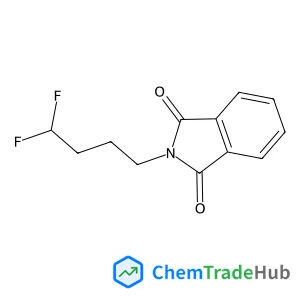
2-(4,4-Difluorobutyl)-1H-isoindole-1,3(2H)-dione
CAS Number:
1265341-14-7
Molecular Formula:
C12H11F2NO2
Recommended Suppliers





Disclaimer
This page provides academic journal information for reference and research purposes only. We are not affiliated with any journal publishers and do not handle publication submissions. For publication-related inquiries, please contact the respective journal publishers directly.
If you notice any inaccuracies in the information displayed, please contact us at support@chemtradehub.com. We will promptly review and address your concerns.