


![Ethyl ({[(2-methyl-2-propanyl)oxy]carbonyl}amino)(2-pyridinyl)acetate structure](https://static.chemtradehub.com/structs/313/313490-90-3-dd15.webp "Ethyl ({[(2-methyl-2-propanyl)oxy]carbonyl}amino)(2-pyridinyl)acetate structure")
Ethyl ({[(2-methyl-2-propanyl)oxy]carbonyl}amino)(2-pyridinyl)acetate
CAS Number:
313490-90-3
Molecular Formula:
C14H20N2O4
Josefine Sprachmann, Niklas Grabicki, Anna Möckel, Jeremy Maltitz, José Refugio Monroy, Glen J. Smales, Oliver Dumele
Covalent organic frameworks (COFs) are a prominent class of organic materials constructed from versatile building blocks via reversible reactions. The quality of imine-linked COFs can be improved by using amine monomers protected with benzophenone forming benzophenone imines. Here, we present a study on substituted benzophenones in COF synthesis via formal transimination. 12 para-substituted N-aryl benzophenone imines, with a range of electron-rich to electron-poor substituents, were prepared and their hydrolysis kinetics were studied spectroscopically. All substituted benzophenone imines can be employed in COF synthesis and lead to COFs with high crystallinity and high porosity. The substituents act innocent to COF formation as the substituted benzophenones are cleaved off. Imines can be tailored to their synthetic demands and utilized in COF formation. This concept can make access to previously unattainable, synthetically complex COF monomers feasible.

Herald of the Russian Academy of Sciences

Cellulose

Critical Reviews in Solid State and Materials Sciences

Polycyclic Aromatic Compounds

Acta Metallurgica Sinica-English Letters

Atomization and Sprays

Bioorganic & Medicinal Chemistry Letters

Medicinal Chemistry Research

Journal of Asian Natural Products Research

Journal of Chemical Sciences
Furen Zhang, Chunmei Li, Chenze Qi
DOI: 10.1039/D0QO00591F
Shi-Chang Gao, Kang Wan, Xu Fang, Yong-Xue Li, Min Xue, Yong Yang
DOI: 10.1039/D0QO00746C
Feng Wu, Li Zhang
DOI: 10.1039/D0QO00825G
Jessica A. Hutchinson, Ian W. Hamley, Charlotte J. C. Edwards-Gayle, Valeria Castelletto, Cristian Piras, Rainer Cramer, Radoslaw Kowalczyk, Jani Seitsonen, Janne Ruokolainen, Robert P. Rambo
DOI: 10.1039/C9OB00550A
Alexandra A. Ageshina, Igor V. Alabugin
DOI: 10.1039/C9OB00615J
Zhaocheng Tang, Wenhao Bao, Jia Li, Baodang Guo, Shuping Huang, Yan Zhang, Yijian Rao
DOI: 10.1039/C9OB00659A
Hongxiang Xue, Mengzhun Guo, Chao Wang, Yuxuan Shen, Rupeng Qi, Yifei Wu, Zhaoqing Xu, Min Chang
DOI: 10.1039/D0QO00696C
Jianshuang Guo, Guoqiang Zhang, Jing Ma, Caili Zhao, Qingqing Xue, Jiyan Wang, Wenjie Liu, Kaihui Liu, Haifeng Wang, Ning Liu, Qitao Song, Jing Li
DOI: 10.1039/C9OB00516A
Zongrui Wang, Hua Li, Jianmei Lu
DOI: 10.1039/D0QO00637H
Alexander Gorbunov, Julia Kuznetsova, Ilya Deltsov, Anastasia Molokanova, Dmitry Cheshkov, Stanislav Bezzubov, Vladimir Kovalev, Ivan Vatsouro
DOI: 10.1039/D0QO00650E
2-(2-Chloroacetamido)-3-phenylpropanoic acid (CAS: 7765-11-9) is generally consi...
2-(Benzyloxy)-5-bromobenzoic acid can be handled safely if appropriate precautio...
(4-Methyl-1,2,5-oxadiazol-3-yl)methanamine hydrochloride is a chemical compound ...
2-(5-Hexylthiophen-2-yl)-4,4,5,5-tetramethyl-1,3,2-dioxaborolane (CAS: 917985-54...
While 4-(8-Methyl-9H-1,3-dioxolo[4,5-h][2,3]benzodiazepin-5-yl)benzenamine (CAS:...
The market for tert-butyl 3-hydroxy-4,5,7,8-tetrahydro-2H-pyrazolo[3,4-d]azepine...
Waste containing 3,5-Diamino-1H-pyrazole-4-carbonitrile (CAS: 6844-58-2) should ...
(6-Fluoro-3-pyridinyl)boronic acid can be synthesized through the reaction of 6-...
Dibenzyl carbonimidoylbiscarbamate (CAS: 10065-79-9) finds applications in vario...
The market for (beta,beta,2,3,4,5,6-~2~H_7_)Phenylalanine (CAS: 74228-83-4) is g...

ChemComm publishes urgent research which is of outstanding significance and interest to experts in the field, while also appealing to the journal’s broad chemistry readership. Our communication format is ideally suited to short, urgent studies that are of such importance that they require accelerated publication. Our scope covers all topics in chemistry, and research at the interface of chemistry and other disciplines (such as materials science, nanoscience, physics, engineering and biology) where there is a significant novelty in the chemistry aspects. Major topic areas covered include: Analytical Chemistry Catalysis Chemical Biology and medicinal chemistry Computational Chemistry and Machine Learning Energy and sustainable chemistry Environmental Chemistry Green Chemistry Inorganic Chemistry Materials Chemistry Nanoscience Organic Chemistry Physical Chemistry Polymer Chemistry Supramolecular Chemistry
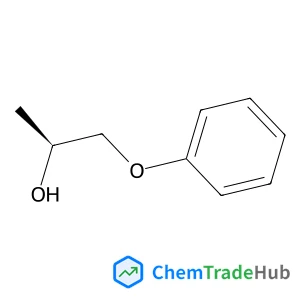
![Heptadecanoic Acid 3-[2-[4-(6-Fluoro-1,2-benzisoxazol-3-yl)-1-piperidinyl]ethyl]-6,7,8,9-tetrahydro-2-methyl-4-oxo-4H-pyrido[1,2-a]pyrimidin-9-yl Ester structure](https://static.chemtradehub.com/structs/140/1404053-62-8-9da4.webp "Heptadecanoic Acid 3-[2-[4-(6-Fluoro-1,2-benzisoxazol-3-yl)-1-piperidinyl]ethyl]-6,7,8,9-tetrahydro-2-methyl-4-oxo-4H-pyrido[1,2-a]pyrimidin-9-yl Ester structure")
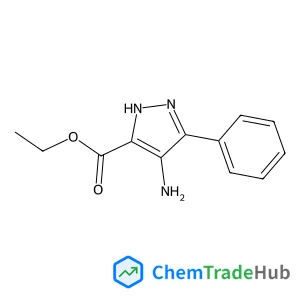
![3,7-Di(1,1':3',1''-terphenyl-5'-yl)-10,11,12,13-tetrahydrodiindeno[7,1-de:1',7'-fg][1,3,2]dioxaphosphocin-5-ol 5-oxide structure](https://static.chemtradehub.com/structs/135/1352810-38-8-3f10.webp "3,7-Di(1,1':3',1''-terphenyl-5'-yl)-10,11,12,13-tetrahydrodiindeno[7,1-de:1',7'-fg][1,3,2]dioxaphosphocin-5-ol 5-oxide structure")




