











Making endo-cyclizations favorable again: a conceptually new synthetic approach to benzotriazoles via azide group directed lithiation/cyclization of 2-azidoaryl bromides
Literature Information
Publication Date
2019-04-08
DOI
10.1039/C9OB00615J
Impact Factor
3.876
Authors
Alexandra A. Ageshina, Igor V. Alabugin
View Original
Abstract
Although benzotriazoles are important and ubiquitous, currently there is only one conceptual approach to their synthesis: bridging the two ortho-amino groups with an electrophilic nitrogen atom. Herein, we disclose a new practical alternative – the endo-cyclization of 2-azidoaryl lithiums obtained in situ from 2-azido-aryl bromides. The scope of the reaction is illustrated using twenty-four examples with a variety of alkyl, alkoxy, perfluoroalkyl, and halogen substituents. We found that the directing effect of the azide group allows selective metal–halogen exchange in aryl azides containing several bromine atoms. Furthermore, (2-bromophenyl)diazomethane undergoes similar cyclization to give an indazole. Thus, cyclizations of aryl lithiums containing an ortho–X = Y = Z group emerge as a new general approach for the synthesis of aromatic heterocycles. DFT computations suggested that the observed endo-selectivity applies to the anionic cyclizations of other functionalities that undergo “1,1-additions” (i.e., azides, diazo compounds, and isonitriles). In contrast, cyclizations with the heteroatomic functionalities that follow the “1,2-addition” pattern (cyanates, thiocyanates, isocyanates, isothiocyanates, and nitriles) prefer the exo-cyclization path. Hence, such reactions expand the current understanding of stereoelectronic factors in anionic cyclizations.
Related Literature
Ferromagnetism in nitrogen-doped BaO: a self-interaction corrected DFT study
Elisa Albanese, Gianfranco Pacchioni
2016-12-22
Paper
DOI: 10.1039/C6CP07535E
A new potential for methylammonium lead iodide
C. M. Handley, C. L. Freeman
2016-12-08
Paper
DOI: 10.1039/C6CP05829A
Dynamic phase change and local structures in IL-containing mixtures: classical MD simulations and experiments
Yang Wu, Xia Wang, Qiaozhen Liu, Dawei Fang, Xuefei Jiang, Wei Guan
2016-12-16
Paper
DOI: 10.1039/C6CP06300D
Interfacial assembly structures and nanotribological properties of saccharic acids
Hongyu Shi, Yuhong Liu, Qingdao Zeng, Yanlian Yang, Chen Wang, Xinchun Lu
2016-11-29
Paper
DOI: 10.1039/C6CP06759J
Energetics and structural characterization of the “DFG-flip” conformational transition of B-RAF kinase: a SITS molecular dynamics study
Qiang Shao, Zhijian Xu, Jinan Wang, Jiye Shi, Weiliang Zhu
2016-12-02
Paper
DOI: 10.1039/C6CP06624K
Screening out unfeasible hypothetical zeolite structures via the closest non-adjacent O⋯O pairs
Junran Lu, Lin Li, Hongxiao Cao, Yi Li, Jihong Yu
2016-12-06
Paper
DOI: 10.1039/C6CP06217B
Quantum ergodicity breaking in semi-classical electron transfer dynamics
2016-12-20
Paper
DOI: 10.1039/C6CP07206B
Uniform and perfectly linear current–voltage characteristics of nitrogen-doped armchair graphene nanoribbons for nanowires
Lingling Liu, Xiao-Fei Li, Qing Yan, Qin-Kun Li, Xiang-Hua Zhang, Mingsen Deng, Qi Qiu
2016-11-29
Communication
DOI: 10.1039/C6CP06640B
You might also like
Compound Q&A
Is 2-(2-chloroacetamido)-3-phenylpropanoic acid (CAS: 7765-11-9) safe?
2-(2-Chloroacetamido)-3-phenylpropanoic acid (CAS: 7765-11-9) is generally consi...
7765-11-92-(2-chloroacetamido...
Compound Q&A
Is 2-(Benzyloxy)-5-bromobenzoic acid (CAS: 62176-31-2) safe?
2-(Benzyloxy)-5-bromobenzoic acid can be handled safely if appropriate precautio...
62176-31-22-(Benzyloxy)-5-brom...
Compound Q&A
What is (4-Methyl-1,2,5-oxadiazol-3-yl)methanamine hydrochloride (CAS: 1159825-48-5)?
(4-Methyl-1,2,5-oxadiazol-3-yl)methanamine hydrochloride is a chemical compound ...
1159825-48-5(4-Methyl-1,2,5-oxad...
Compound Q&A
What is 2-(5-Hexylthiophen-2-yl)-4,4,5,5-tetramethyl-1,3,2-dioxaborolane (CAS: 917985-54-7)?
2-(5-Hexylthiophen-2-yl)-4,4,5,5-tetramethyl-1,3,2-dioxaborolane (CAS: 917985-54...
917985-54-72-(5-Hexylthiophen-2...
Compound Q&A
Are there alternatives to 4-(8-Methyl-9H-1,3-dioxolo[4,5-h][2,3]benzodiazepin-5-yl)benzenamine (CAS: 102771-26-6) in synthesis?
While 4-(8-Methyl-9H-1,3-dioxolo[4,5-h][2,3]benzodiazepin-5-yl)benzenamine (CAS:...
102771-26-64-(8-Methyl-9H-1,3-d...
Compound Q&A
What is the market or research trend for tert-butyl 3-hydroxy-4,5,7,8-tetrahydro-2H-pyrazolo[3,4-d]azepine-6-carboxylate (CAS: 851376-80-2)?
The market for tert-butyl 3-hydroxy-4,5,7,8-tetrahydro-2H-pyrazolo[3,4-d]azepine...
851376-80-2tert-butyl 3-hydroxy...
Compound Q&A
How should waste containing 3,5-Diamino-1H-pyrazole-4-carbonitrile (CAS: 6844-58-2) be handled?
Waste containing 3,5-Diamino-1H-pyrazole-4-carbonitrile (CAS: 6844-58-2) should ...
6844-58-23,5-Diamino-1H-pyraz...
Compound Q&A
How is (6-Fluoro-3-pyridinyl)boronic acid (CAS: 351019-18-6) typically synthesized?
(6-Fluoro-3-pyridinyl)boronic acid can be synthesized through the reaction of 6-...
351019-18-6(6-Fluoro-3-pyridiny...
Compound Q&A
What industries use Dibenzyl carbonimidoylbiscarbamate (CAS: 10065-79-9)?
Dibenzyl carbonimidoylbiscarbamate (CAS: 10065-79-9) finds applications in vario...
10065-79-9Dibenzyl carbonimido...
Compound Q&A
What is the market or research trend for (beta,beta,2,3,4,5,6-~2~H_7_)Phenylalanine (CAS: 74228-83-4)?
The market for (beta,beta,2,3,4,5,6-~2~H_7_)Phenylalanine (CAS: 74228-83-4) is g...
74228-83-4(beta,beta,2,3,4,5,6...
Source Journal
Organic & Biomolecular Chemistry

CiteScore:
3.4
Self-citation Rate:
10.3%
Articles per Year:
1041
Organic & Biomolecular Chemistry (OBC) publishes original and high impact research and reviews in organic chemistry. We welcome research that shows new or significantly improved protocols or methodologies in total synthesis, synthetic methodology or physical and theoretical organic chemistry as well as research that shows a significant advance in the organic chemistry or molecular design aspects of chemical biology, catalysis, supramolecular and macromolecular chemistry, theoretical chemistry, mechanism-oriented physical organic chemistry, medicinal chemistry or natural products. Articles published in the journal should report new work which makes a highly-significant impact in the field. Routine and incremental work is generally not suitable for publication in the journal. More details about key areas of our scope are below. In all cases authors should include in their article clear rationale for why their research has been carried out.
Recommended Compounds
![{3-[Bis(4-hydroxyphenyl)methyl]-1-[2-(dimethylamino)ethyl]-1H-indol-2-yl}[4-(2-chlorophenyl)-1-piperazinyl]methanone structure](https://static.chemtradehub.com/structs/170/170365-25-0-e4d7.webp "{3-[Bis(4-hydroxyphenyl)methyl]-1-[2-(dimethylamino)ethyl]-1H-indol-2-yl}[4-(2-chlorophenyl)-1-piperazinyl]methanone structure")
{3-[Bis(4-hydroxyphenyl)methyl]-1-[2-(dimethylamino)ethyl]-1H-indol-2-yl}[4-(2-chlorophenyl)-1-piperazinyl]methanone
CAS Number:
170365-25-0
Molecular Formula:
C36H37ClN4O3
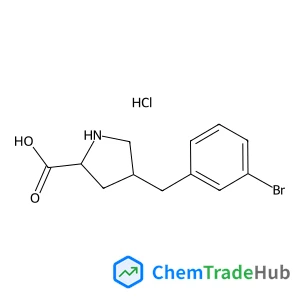
(2S,4R)-4-(3-Bromobenzyl)pyrrolidine-2-carboxylic acid hydrochloride
CAS Number:
1049734-10-2
Molecular Formula:
C12H15BrClNO2
Recommended Suppliers




Disclaimer
This page provides academic journal information for reference and research purposes only. We are not affiliated with any journal publishers and do not handle publication submissions. For publication-related inquiries, please contact the respective journal publishers directly.
If you notice any inaccuracies in the information displayed, please contact us at support@chemtradehub.com. We will promptly review and address your concerns.