


Surface functionalization: an efficient alternative for promoting the catalytic activity of closed shell gold clusters‡
Literature Information
Publication Date
2020-09-21
DOI
10.1039/D0CP01918F
Impact Factor
3.676
Authors
Manzoor Ahmad Dar
View Original
Abstract
Surface functionalization through adsorption of ligands or non-metal atoms is considered to be an interesting and viable approach for tuning the physicochemical properties of gold clusters. Highly stable and magic numbered electronic configurations of thiolate protected gold clusters such as Au25(SR)18, Au38(SR)24etc. with intriguing properties are the direct manifestation of the rich chemistry of the Au–S interface. The present investigation discerns the CO oxidation activity of structurally well characterized sulphur functionalized gold cluster anions AumS4−, m = 6–10. To establish an in-depth understanding, their activities are analyzed and compared with the corresponding pristine gold clusters. It is seen that sulphur functionalization irrespective of a closed or open shell nature leads to a significant decrease in the O2 adsorption energies on the anionic gold clusters. However, in sharp contrast to O2 adsorption, surface functionalization gives rise to multifarious catalytic behavior in AumS4− clusters with catalytic activity ranging from low (for Au6S4−, Au8S4−) to moderate (for Au9S4−, Au10S4−) to very high (for Au7S4−) for CO oxidation. It is interesting to note that the closed shell Au7S4− and Au9S4− clusters with poor O2 adsorption show remarkably low activation barriers and enhanced catalytic activity as compared to the open shell AumS4− clusters with an odd number of electrons. In particular, in the case of Au7S4− the lowest activation energy barriers of 0.01 and 0.21 eV are obtained, making the CO oxidation reaction facile. Moreover, ab initio molecular dynamics are performed to confirm the enhanced catalytic behaviour of Au7S4− and its dynamical stability during the desorption of CO2 molecule from its surface.
Recommended Journals

Electroanalysis

Journal of the Indian Institute of Science

Journal of Chemical Sciences

Polycyclic Aromatic Compounds

Atomization and Sprays

NDT & E International

Critical Reviews in Solid State and Materials Sciences

Cellulose

Bioorganic & Medicinal Chemistry Letters

Journal of Asian Natural Products Research
Related Literature
Surface-enhanced IR–visible sum frequency generation vibrational spectroscopy
Qifeng Li, Chiung Wen Kuo, Zheng Yang, Peilin Chen, Keng C. Chou
2009-02-25
Paper
DOI: 10.1039/B821045D
14N NQR and proton NMR study of ferroelectric phase transition and proton exchange in organic ferroelectric (H2-TPPZ)(Hca)2
Veselko Žagar, Tetsuo Asaji, Yumi Hasegawa
2010-02-22
Paper
DOI: 10.1039/B925326B
Computer simulations of micelle fission
Juanjuan Gao, Shuangyang Li, Xianren Zhang, Wenchuan Wang
2010-02-11
Paper
DOI: 10.1039/B918449J
Quantification of the adhesion strength of fibroblastcells on ethylene glycol terminated self-assembled monolayers by a microfluidic shear force assay
Christof Christophis
2010-03-03
Paper
DOI: 10.1039/B924304F
Probing adsorption and aggregation of insulin at a poly(acrylic acid) brush
Florian Evers, Christian Reichhart, Roland Steitz, Metin Tolan, Claus Czeslik
2010-02-09
Paper
DOI: 10.1039/B925134K
Designing meso- and macropore architectures in hybrid organic–inorganic membranes by combining surfactant and breath figure templating (BFT)
Ozlem Sel, Christel Laberty-Robert, Thierry Azais, Clément Sanchez
2009-03-27
Paper
DOI: 10.1039/B821506E
Structural diversity of dimers of the Alzheimer amyloid-β(25–35) peptide and polymorphism of the resulting fibrils
Guanghong Wei, Andrew I. Jewett, Joan-Emma Shea
2010-03-11
Paper
DOI: 10.1039/C000755M
You might also like
Compound Q&A
How should waste containing 2-Ethyl-4-Methyl-1H-Imidazole-5-Carbaldehyde (CAS: 88634-80-4) be handled?
Waste containing 2-Ethyl-4-Methyl-1H-Imidazole-5-Carbaldehyde (CAS: 88634-80-4) ...
88634-80-42-Ethyl-4-Methyl-1H-...
Compound Q&A
What industries use Triethoxy(octyl)silane (CAS: 1385031-14-0)?
Triethoxy(octyl)silane (CAS: 1385031-14-0) is widely used in the pharmaceuticals...
1385031-14-0Triethoxy(octyl)sila...
Compound Q&A
Are there alternatives to 3-iodo-7-nitro-1H-indazole (CAS: 864724-64-1) in synthesis?
Several alternatives to 3-iodo-7-nitro-1H-indazole (CAS: 864724-64-1) exist in t...
864724-64-13-iodo-7-nitro-1H-in...
Compound Q&A
Are there alternatives to Benzene, bis[(trimethoxysilyl)ethyl] (CAS: 266317-71-9) in synthesis?
Yes, there are alternatives to Benzene, bis[(trimethoxysilyl)ethyl] (CAS: 266317...
266317-71-9Benzene, bis[(trimet...
Compound Q&A
Is Isothiazole-3-carbonitrile (CAS: 1452-17-1) safe?
Isothiazole-3-carbonitrile (CAS: 1452-17-1) is generally considered safe when us...
1452-17-1Isothiazole-3-carbon...
Compound Q&A
Is (3-Chlorophenyl)methanol (CAS: 873-63-2) safe?
(3-Chlorophenyl)methanol (CAS: 873-63-2) is considered low to moderately toxic. ...
873-63-2(3-Chlorophenyl)meth...
Compound Q&A
How is (2S,3S)-2-Hydroxy-3-({[(2-methyl-2-propanyl)oxy]carbonyl}amino)-3-(2-naphthyl)propanoic acid (CAS: 959583-98-3) typically synthesized?
(2S,3S)-2-Hydroxy-3-({[(2-methyl-2-propanyl)oxy]carbonyl}amino)-3-(2-naphthyl)pr...
959583-98-3(2S,3S)-2-Hydroxy-3-...
Compound Q&A
What precautions should be taken when handling Methyl 2-(bromomethyl)-5-methoxybenzoate (CAS: 788081-99-2)?
Proper handling of methyl 2-(bromomethyl)-5-methoxybenzoate requires the use of ...
788081-99-2Methyl 2-(bromomethy...
Compound Q&A
What is 6,8-Dibromoimidazo[1,2-a]pyridine-2-carboxylic acid (CAS: 904805-36-3)?
6,8-Dibromoimidazo[1,2-a]pyridine-2-carboxylic acid (CAS: 904805-36-3) is an aro...
904805-36-36,8-Dibromoimidazo[1...
Compound Q&A
Is 3-Amino-5-bromo-2-pyridinecarbonitrile (CAS: 573675-27-1) safe?
3-Amino-5-bromo-2-pyridinecarbonitrile is considered safe when handled under pro...
573675-27-13-Amino-5-bromo-2-py...
Source Journal
Physical Chemistry Chemical Physics

CiteScore:
5.5
Self-citation Rate:
10.3%
Articles per Year:
3036
Physical Chemistry Chemical Physics (PCCP) is an international journal co-owned by 19 physical chemistry and physics societies from around the world. This journal publishes original, cutting-edge research in physical chemistry, chemical physics and biophysical chemistry. To be suitable for publication in PCCP, articles must include significant innovation and/or insight into physical chemistry; this is the most important criterion that reviewers and Editors will judge against when evaluating submissions. The journal has a broad scope and welcomes contributions spanning experiment, theory, computation and data science. Topical coverage includes spectroscopy, dynamics, kinetics, statistical mechanics, thermodynamics, electrochemistry, catalysis, surface science, quantum mechanics, quantum computing and machine learning. Interdisciplinary research areas such as polymers and soft matter, materials, nanoscience, energy, surfaces/interfaces, and biophysical chemistry are welcomed if they demonstrate significant innovation and/or insight into physical chemistry. Joined experimental/theoretical studies are particularly appreciated when complementary and based on up-to-date approaches.
Recommended Compounds
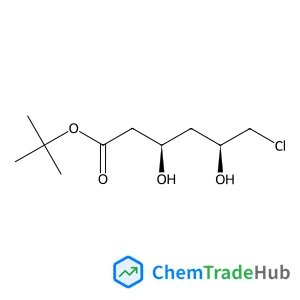
2-Methyl-2-propanyl (3R,5S)-6-chloro-3,5-dihydroxyhexanoate
CAS Number:
154026-93-4
Molecular Formula:
C10H19ClO4
Recommended Suppliers





Disclaimer
This page provides academic journal information for reference and research purposes only. We are not affiliated with any journal publishers and do not handle publication submissions. For publication-related inquiries, please contact the respective journal publishers directly.
If you notice any inaccuracies in the information displayed, please contact us at support@chemtradehub.com. We will promptly review and address your concerns.