













Dynamics and kinetics of the OH + HO2 → H2O + O2 (1Δg) reaction on a global full-dimensional singlet-state potential energy surface
Literature Information
Publication Date
2020-10-28
DOI
10.1039/D0CP04611F
Impact Factor
3.676
Authors
Xiaoxiao Lu, Bina Fu, Dong H. Zhang
View Original
Abstract
The OH + HO2 → H2O + O2 reaction is a prototype of radical–radical reactions, which plays an eminent role in combustion and atmosphere chemistry. Extensive studies have been focused on the ground triplet electronic state, but investigation on the singlet excited state is rare. Here, we report a full-dimensional singlet-state potential energy surface (PES) for this reaction, which was constructed using the fundamental invariant neural network (FI-NN) fitting to roughly 130 000 energy points calculated by the CASPT2/AVTZ method. Extensive quasiclassical trajectory (QCT) calculations were performed on the FI-NN PES in a wide range of collision energies and temperatures. The pathway via a shallow minimum with a direct abstraction mechanism is identified as a dominant reaction path due to a low barrier, with most available energy released into the rovibrational motion of the products, and angular distributions showing predominantly backward and sideways scattering amplitudes. The QCT thermal rate coefficients on the singlet-state PES show small, but non-negligible contributions to the overall rate of the OH + HO2 reaction.
Recommended Journals
Related Literature
Designing meso- and macropore architectures in hybrid organic–inorganic membranes by combining surfactant and breath figure templating (BFT)
Ozlem Sel, Christel Laberty-Robert, Thierry Azais, Clément Sanchez
2009-03-27
Paper
DOI: 10.1039/B821506E
Templates for wax deposition?
Miguel A. San-Miguel, P. Mark Rodger
2010-02-24
Paper
DOI: 10.1039/B920945J
Nature of proton dynamics in a polymer electrolyte membrane, nafion: a first-principles molecular dynamics study
Yoong-Kee Choe, Eiji Tsuchida, Tamio Ikeshoji, Shunsuke Yamakawa, Shi-aki Hyodo
2009-03-14
Paper
DOI: 10.1039/B819535H
From nanocrystal synthesis to functional nanostructure fabrication: laser ablation in liquid
P. Liu, H. Cui, C. X. Wang, G. W. Yang
2010-03-12
Perspective
DOI: 10.1039/B918759F
Flame spray-pyrolyzed vanadium oxidenanoparticles for lithium battery cathodes
Timothy J. Patey, Robert Büchel, Frank Krumeich, Jia-Zhao Wang, Hua-Kun Liu, Sotiris E. Pratsinis, Petr Novák
2009-03-14
Paper
DOI: 10.1039/B821389P
Nucleation and growth of atomic layer deposition of HfO2 gate dielectric layers on silicon oxide: a multiscale modelling investigation
2009-03-26
Paper
DOI: 10.1039/B821502B
Conformational behaviour determines the low-relaxivity state of a conditional MRI contrast agent
Ugo Cosentino, Demetrio Pitea, Giorgio Moro, Gloria A. A. Saracino, Alessandra Villa
2009-04-20
Paper
DOI: 10.1039/B902049G
DFT studies of the degradation mechanism of methyl mercury activated by a sulfur-rich ligand
Xichen Li, Rong-Zhen Liao, Wenchang Zhou, Guangju Chen
2010-01-28
Paper
DOI: 10.1039/B918402C
You might also like
Compound Q&A
How should waste containing 2-Ethyl-4-Methyl-1H-Imidazole-5-Carbaldehyde (CAS: 88634-80-4) be handled?
Waste containing 2-Ethyl-4-Methyl-1H-Imidazole-5-Carbaldehyde (CAS: 88634-80-4) ...
88634-80-42-Ethyl-4-Methyl-1H-...
Compound Q&A
What industries use Triethoxy(octyl)silane (CAS: 1385031-14-0)?
Triethoxy(octyl)silane (CAS: 1385031-14-0) is widely used in the pharmaceuticals...
1385031-14-0Triethoxy(octyl)sila...
Compound Q&A
Are there alternatives to 3-iodo-7-nitro-1H-indazole (CAS: 864724-64-1) in synthesis?
Several alternatives to 3-iodo-7-nitro-1H-indazole (CAS: 864724-64-1) exist in t...
864724-64-13-iodo-7-nitro-1H-in...
Compound Q&A
Are there alternatives to Benzene, bis[(trimethoxysilyl)ethyl] (CAS: 266317-71-9) in synthesis?
Yes, there are alternatives to Benzene, bis[(trimethoxysilyl)ethyl] (CAS: 266317...
266317-71-9Benzene, bis[(trimet...
Compound Q&A
Is Isothiazole-3-carbonitrile (CAS: 1452-17-1) safe?
Isothiazole-3-carbonitrile (CAS: 1452-17-1) is generally considered safe when us...
1452-17-1Isothiazole-3-carbon...
Compound Q&A
Is (3-Chlorophenyl)methanol (CAS: 873-63-2) safe?
(3-Chlorophenyl)methanol (CAS: 873-63-2) is considered low to moderately toxic. ...
873-63-2(3-Chlorophenyl)meth...
Compound Q&A
How is (2S,3S)-2-Hydroxy-3-({[(2-methyl-2-propanyl)oxy]carbonyl}amino)-3-(2-naphthyl)propanoic acid (CAS: 959583-98-3) typically synthesized?
(2S,3S)-2-Hydroxy-3-({[(2-methyl-2-propanyl)oxy]carbonyl}amino)-3-(2-naphthyl)pr...
959583-98-3(2S,3S)-2-Hydroxy-3-...
Compound Q&A
What precautions should be taken when handling Methyl 2-(bromomethyl)-5-methoxybenzoate (CAS: 788081-99-2)?
Proper handling of methyl 2-(bromomethyl)-5-methoxybenzoate requires the use of ...
788081-99-2Methyl 2-(bromomethy...
Compound Q&A
What is 6,8-Dibromoimidazo[1,2-a]pyridine-2-carboxylic acid (CAS: 904805-36-3)?
6,8-Dibromoimidazo[1,2-a]pyridine-2-carboxylic acid (CAS: 904805-36-3) is an aro...
904805-36-36,8-Dibromoimidazo[1...
Compound Q&A
Is 3-Amino-5-bromo-2-pyridinecarbonitrile (CAS: 573675-27-1) safe?
3-Amino-5-bromo-2-pyridinecarbonitrile is considered safe when handled under pro...
573675-27-13-Amino-5-bromo-2-py...
Source Journal
Physical Chemistry Chemical Physics

CiteScore:
5.5
Self-citation Rate:
10.3%
Articles per Year:
3036
Physical Chemistry Chemical Physics (PCCP) is an international journal co-owned by 19 physical chemistry and physics societies from around the world. This journal publishes original, cutting-edge research in physical chemistry, chemical physics and biophysical chemistry. To be suitable for publication in PCCP, articles must include significant innovation and/or insight into physical chemistry; this is the most important criterion that reviewers and Editors will judge against when evaluating submissions. The journal has a broad scope and welcomes contributions spanning experiment, theory, computation and data science. Topical coverage includes spectroscopy, dynamics, kinetics, statistical mechanics, thermodynamics, electrochemistry, catalysis, surface science, quantum mechanics, quantum computing and machine learning. Interdisciplinary research areas such as polymers and soft matter, materials, nanoscience, energy, surfaces/interfaces, and biophysical chemistry are welcomed if they demonstrate significant innovation and/or insight into physical chemistry. Joined experimental/theoretical studies are particularly appreciated when complementary and based on up-to-date approaches.
Recommended Compounds
![Ethyl 3-((6-(4,5-dihydro-1H-benzo[d]azepin-3(2H)-yl)-2-(pyridin-2-yl)pyrimidin-4-yl)amino)propanoate structure](https://static.chemtradehub.com/structs/137/1373423-53-0-496a.webp "Ethyl 3-((6-(4,5-dihydro-1H-benzo[d]azepin-3(2H)-yl)-2-(pyridin-2-yl)pyrimidin-4-yl)amino)propanoate structure")
Ethyl 3-((6-(4,5-dihydro-1H-benzo[d]azepin-3(2H)-yl)-2-(pyridin-2-yl)pyrimidin-4-yl)amino)propanoate
CAS Number:
1373423-53-0
Molecular Formula:
C24H27N5O2
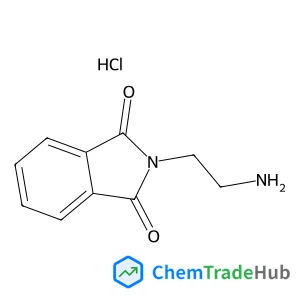
2-(2-Aminoethyl)-1H-isoindole-1,3(2H)-dione hydrochloride (1:1)
CAS Number:
30250-67-0
Molecular Formula:
C10H11ClN2O2
Recommended Suppliers





Disclaimer
This page provides academic journal information for reference and research purposes only. We are not affiliated with any journal publishers and do not handle publication submissions. For publication-related inquiries, please contact the respective journal publishers directly.
If you notice any inaccuracies in the information displayed, please contact us at support@chemtradehub.com. We will promptly review and address your concerns.