


Catalytic conversion of carbon-containing impurity methyldichlorosilane to purify raw material trichlorosilane of polysilicon production
Literature Information
Publication Date
2022-04-07
DOI
10.1039/D1RE00569C
Impact Factor
4.239
Authors
Qiang Geng, Guoqiang Huang
View Original
Abstract
In order to remove the main carbon impurity methyldichlorosilane from the raw material trichlorosilane used in the production of polysilicon, a catalytic reaction was used to convert it into methyltrichlorosilane with higher boiling point. The catalytic conversion of methyldichlorosilane was carried out by using low-cost materials with different structural properties as catalysts. The three most commonly used low-cost commercial catalysts, A100 resin, activated carbon (AC) and AlCl3, were selected. The physicochemical properties of these low-cost catalysts were characterized by SEM, TEM, BET, XRD and TG technology. The catalytic effects of A100 resin, AC and AlCl3 were compared in a fixed-bed reactor with polysilicon manufacture by-product silicon tetrachloride as the chlorine source. The main focus is to investigate the effects of reaction temperature, molar ratio of reactants, liquid hourly space velocity (LHSV), and catalyst stability on the conversion of methyldichlorosilane. The results show that the AC catalyst had better catalytic effect than AlCl3 and A100 resin catalysts. The optimum process conditions were reaction temperature 140 °C, n(methyldichlorosilane) : n(silicon tetrachloride) = 1 : 3, and liquid hourly space velocity of 3.0 h−1. The maximum conversion of methyldichlorosilane is close to 85% under the optimal process conditions. The conversion rate of methyldichlorosilane did not decrease significantly after 120 h, still about 70%, indicating the good catalytic stability of the AC catalyst. Finally, the reaction mechanism of free radical reaction is well explained.
Recommended Journals

Chinese Journal of Chemistry

Critical Reviews in Solid State and Materials Sciences

Bioorganic & Medicinal Chemistry Letters

Atomization and Sprays

Biocatalysis and Biotransformation

Journal of the Indian Institute of Science

Journal of Asian Natural Products Research

Heteroatom Chemistry

Bioorganic & Medicinal Chemistry

Colloid Journal
Related Literature
Strikingly different molecular organization and molecular order of tetracatenar mesogens in columnar mesophases revealed by XRD and 13C NMR
M. Guruprasad Reddy, Nitin P. Lobo, Arun Roy, K. V. Ramanathan, T. Narasimhaswamy
2020-10-13
Paper
DOI: 10.1039/D0CP03933K
Towards developing efficient metalloporphyrin-based hybrid photocatalysts for CO2 reduction; an ab initio study
Azar Ostovan, Nick Papior, Mansour Zahedi
2020-09-16
Paper
DOI: 10.1039/D0CP03279D
Unraveling the regioselectivity of odd electron halogen bond formation using electrophilicity index and chemical hardness parameters
Prasanta Bandyopadhyay, Soumyadip Ray, Md. Motin Seikh
2019-11-15
Paper
DOI: 10.1039/C9CP05374C
Surface functionalization: an efficient alternative for promoting the catalytic activity of closed shell gold clusters‡
Manzoor Ahmad Dar
2020-09-21
Paper
DOI: 10.1039/D0CP01918F
The simultaneous recognition mechanism of cations and anions using macrocyclic–iodine structures: insights from dispersion-corrected DFT calculations
Renato Pereira Orenha, Glaucio Régis Nagurniak, Matheus Cachoeira Colaço, Giovanni Finoto Caramori, Maurício Jeomar Piotrowski, Krys Elly de Araújo Batista, Alvaro Muñoz-Castro, Breno de Almeida Silva, Benjamim José Esteves, Renato Luis Tame Parreira
2020-10-06
Paper
DOI: 10.1039/D0CP04291A
The accuracy challenge of the DFT-based molecular assignment of 13C MAS NMR characterization of surface intermediates in zeolite catalysis‡
Alexander A. Kolganov, Ivan Yu. Chernyshov
2020-09-30
Paper
DOI: 10.1039/D0CP04439C
The unfolding transition state of ubiquitin with charged residues has higher energy than that with hydrophobic residues
Tathagata Nandi, Amogh Desai, Sri Rama Koti Ainavarapu
2020-09-09
Paper
DOI: 10.1039/D0CP03876H
Complex diffusion-based kinetics of photoluminescence in semiconductor nanoplatelets
A. A. Kurilovich, V. N. Mantsevich, K. J. Stevenson, V. V. Palyulin
2020-10-19
Paper
DOI: 10.1039/D0CP03744C
Use of confocal Raman microscopy to characterise ethyl cyanoacrylate adhesive depth curing
Bernard Ryan
2020-10-07
Paper
DOI: 10.1039/D0CP04053C
You might also like
Compound Q&A
How should waste containing 2-Ethyl-4-Methyl-1H-Imidazole-5-Carbaldehyde (CAS: 88634-80-4) be handled?
Waste containing 2-Ethyl-4-Methyl-1H-Imidazole-5-Carbaldehyde (CAS: 88634-80-4) ...
88634-80-42-Ethyl-4-Methyl-1H-...
Compound Q&A
What industries use Triethoxy(octyl)silane (CAS: 1385031-14-0)?
Triethoxy(octyl)silane (CAS: 1385031-14-0) is widely used in the pharmaceuticals...
1385031-14-0Triethoxy(octyl)sila...
Compound Q&A
Are there alternatives to 3-iodo-7-nitro-1H-indazole (CAS: 864724-64-1) in synthesis?
Several alternatives to 3-iodo-7-nitro-1H-indazole (CAS: 864724-64-1) exist in t...
864724-64-13-iodo-7-nitro-1H-in...
Compound Q&A
Are there alternatives to Benzene, bis[(trimethoxysilyl)ethyl] (CAS: 266317-71-9) in synthesis?
Yes, there are alternatives to Benzene, bis[(trimethoxysilyl)ethyl] (CAS: 266317...
266317-71-9Benzene, bis[(trimet...
Compound Q&A
Is Isothiazole-3-carbonitrile (CAS: 1452-17-1) safe?
Isothiazole-3-carbonitrile (CAS: 1452-17-1) is generally considered safe when us...
1452-17-1Isothiazole-3-carbon...
Compound Q&A
Is (3-Chlorophenyl)methanol (CAS: 873-63-2) safe?
(3-Chlorophenyl)methanol (CAS: 873-63-2) is considered low to moderately toxic. ...
873-63-2(3-Chlorophenyl)meth...
Compound Q&A
How is (2S,3S)-2-Hydroxy-3-({[(2-methyl-2-propanyl)oxy]carbonyl}amino)-3-(2-naphthyl)propanoic acid (CAS: 959583-98-3) typically synthesized?
(2S,3S)-2-Hydroxy-3-({[(2-methyl-2-propanyl)oxy]carbonyl}amino)-3-(2-naphthyl)pr...
959583-98-3(2S,3S)-2-Hydroxy-3-...
Compound Q&A
What precautions should be taken when handling Methyl 2-(bromomethyl)-5-methoxybenzoate (CAS: 788081-99-2)?
Proper handling of methyl 2-(bromomethyl)-5-methoxybenzoate requires the use of ...
788081-99-2Methyl 2-(bromomethy...
Compound Q&A
What is 6,8-Dibromoimidazo[1,2-a]pyridine-2-carboxylic acid (CAS: 904805-36-3)?
6,8-Dibromoimidazo[1,2-a]pyridine-2-carboxylic acid (CAS: 904805-36-3) is an aro...
904805-36-36,8-Dibromoimidazo[1...
Compound Q&A
Is 3-Amino-5-bromo-2-pyridinecarbonitrile (CAS: 573675-27-1) safe?
3-Amino-5-bromo-2-pyridinecarbonitrile is considered safe when handled under pro...
573675-27-13-Amino-5-bromo-2-py...
Source Journal
Reaction Chemistry & Engineering

CiteScore:
0
Self-citation Rate:
8.8%
Articles per Year:
284
Reaction Chemistry & Engineering is an interdisciplinary journal reporting cutting-edge research focused on enhancing the understanding and efficiency of reactions. Reaction engineering leverages the interface where fundamental molecular chemistry meets chemical engineering and technology. Challenges in chemistry can be overcome by the application of new technologies, while engineers may find improved solutions for process development from the latest developments in reaction chemistry. Reaction Chemistry & Engineering is a unique forum for researchers whose interests span the broad areas of chemical engineering and chemical sciences to come together in solving problems of importance to wider society. All papers should be written to be approachable by readers across the engineering and chemical sciences. Papers that consider multiple scales, from the laboratory up to and including plant scale, are particularly encouraged.
Recommended Compounds
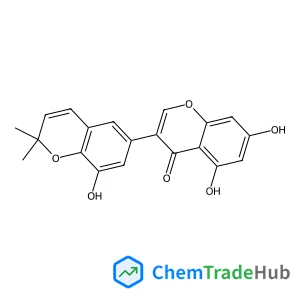
5,7,8'-Trihydroxy-2',2'-dimethyl-2'H,4H-3,6'-bichromen-4-one
CAS Number:
129280-33-7
Molecular Formula:
C20H16O6
Recommended Suppliers







Disclaimer
This page provides academic journal information for reference and research purposes only. We are not affiliated with any journal publishers and do not handle publication submissions. For publication-related inquiries, please contact the respective journal publishers directly.
If you notice any inaccuracies in the information displayed, please contact us at support@chemtradehub.com. We will promptly review and address your concerns.