












Towards developing efficient metalloporphyrin-based hybrid photocatalysts for CO2 reduction; an ab initio study
Literature Information
Publication Date
2020-09-16
DOI
10.1039/D0CP03279D
Impact Factor
3.676
Authors
Azar Ostovan, Nick Papior, Mansour Zahedi
View Original
Abstract
A series of thiophene-based donor–acceptor–donor (D–A–D) oligomer substituted metalloporphyrins (MPors) with different 3d central metal-ions (M = Co, Ni, Cu, and Zn) were systematically investigated to screen efficient hybrid photocatalysts for CO2 reduction based on density functional theory (DFT) and time-dependent DFT simulations. Compared with base MPors, the newly designed hybrid photocatalysts have a lower bandgap energy, stronger and broader absorption spectra, and enhanced intermolecular charge transfer, exciton lifetime, and light-harvesting efficiency. Then, the introduction of D–A–D electron donor (ED) groups into the meso-positions of MPors is a promising method for the construction of efficient photocatalysts. According to the calculated adsorption distance, adsorption energy, Hirshfeld charge and electrostatic potential analysis, it was revealed that CO2 physically adsorbed on the designed photocatalyst surface. In addition, among the studied model systems the ZnPor(ED)4 catalyst with four D–A–D electron donors exhibits the best photocatalytic performance due to its broadest absorption spectra with λmax = 500.12 nm and the highest adsorption energy of about 26 kJ mol−1. Finally, the sensing ability of the ZnPor(ED)4-based multi-terminal molecular junction for CO2 gas detection is determined using Green's functions. The transmission plots of this molecular junction are barely changed due to the physical adsorption of CO2 on the molecular surface, leading to the low sensitivity of the device. We believe that such a theoretical design can provide a general approach for further experimental and computational studies of photocatalysts used in the CO2 reduction process.
Related Literature
Bifunctional polyacrylamide based polymers for the specific binding of hexahistidine tagged proteins on gold surfaces
Lucas B. Thompson, Nathan H. Mack, Ralph G. Nuzzo
2009-12-04
Paper
DOI: 10.1039/B920713A
Polyaniline Langmuir–Blodgett films: formation and properties
Jie Zhang, David P. Burt, Anna L. Whitworth, Daniel Mandler, Patrick R. Unwin
2009-02-26
Paper
DOI: 10.1039/B819809H
Microhydration of guanine⋯cytosine base pairs, a theoretical Study on the role of water in stability, structure and tautomeric equilibrium
Martin Kabeláč
2009-03-05
Paper
DOI: 10.1039/B819350A
Observation of oscillatory behavior during the dissolution of a pharmaceutical compound and evidence for the existence of an inverse Ostwald rule
2010-02-23
Paper
DOI: 10.1039/B917966F
The structure of oxotitanium phthalocyanine: a gas-phase electron diffraction and computational study
Alexander V. Zakharov, Sergei A. Shlykov, Yuriy A. Zhabanov, Georgy V. Girichev
2009-03-06
Paper
DOI: 10.1039/B820914F
Adsorption of xenon on a protein arising from the translational motion of solvent molecules
Ryo Akiyama, Yasuhito Karino, Hokuto Obama, Ayako Yoshifuku
2010-02-24
Communication
DOI: 10.1039/B921314G
ZnO@Co hybrid nanotube arrays growth from electrochemical deposition: structural, optical, photocatalytic and magnetic properties
Li-Yuan Fan, Shu-Hong Yu
2009-03-24
Paper
DOI: 10.1039/B823379A
Surprisingly high, bulk liquid-like mobility of silica-confined ionic liquids
Ronald Göbel, Peter Hesemann, Jens Weber, Eléonore Möller, Alwin Friedrich, Sabine Beuermann
2009-03-17
Paper
DOI: 10.1039/B821833A
The permittivity of thermodynamically ideal liquid mixtures and the excess relative permittivity of binary dielectrics
João Carlos R. Reis, T. P. Iglesias, Gérard Douhéret, Michael I. Davis
2009-03-06
Paper
DOI: 10.1039/B820613A
You might also like
Compound Q&A
How should waste containing 2-Ethyl-4-Methyl-1H-Imidazole-5-Carbaldehyde (CAS: 88634-80-4) be handled?
Waste containing 2-Ethyl-4-Methyl-1H-Imidazole-5-Carbaldehyde (CAS: 88634-80-4) ...
88634-80-42-Ethyl-4-Methyl-1H-...
Compound Q&A
What industries use Triethoxy(octyl)silane (CAS: 1385031-14-0)?
Triethoxy(octyl)silane (CAS: 1385031-14-0) is widely used in the pharmaceuticals...
1385031-14-0Triethoxy(octyl)sila...
Compound Q&A
Are there alternatives to 3-iodo-7-nitro-1H-indazole (CAS: 864724-64-1) in synthesis?
Several alternatives to 3-iodo-7-nitro-1H-indazole (CAS: 864724-64-1) exist in t...
864724-64-13-iodo-7-nitro-1H-in...
Compound Q&A
Are there alternatives to Benzene, bis[(trimethoxysilyl)ethyl] (CAS: 266317-71-9) in synthesis?
Yes, there are alternatives to Benzene, bis[(trimethoxysilyl)ethyl] (CAS: 266317...
266317-71-9Benzene, bis[(trimet...
Compound Q&A
Is Isothiazole-3-carbonitrile (CAS: 1452-17-1) safe?
Isothiazole-3-carbonitrile (CAS: 1452-17-1) is generally considered safe when us...
1452-17-1Isothiazole-3-carbon...
Compound Q&A
Is (3-Chlorophenyl)methanol (CAS: 873-63-2) safe?
(3-Chlorophenyl)methanol (CAS: 873-63-2) is considered low to moderately toxic. ...
873-63-2(3-Chlorophenyl)meth...
Compound Q&A
How is (2S,3S)-2-Hydroxy-3-({[(2-methyl-2-propanyl)oxy]carbonyl}amino)-3-(2-naphthyl)propanoic acid (CAS: 959583-98-3) typically synthesized?
(2S,3S)-2-Hydroxy-3-({[(2-methyl-2-propanyl)oxy]carbonyl}amino)-3-(2-naphthyl)pr...
959583-98-3(2S,3S)-2-Hydroxy-3-...
Compound Q&A
What precautions should be taken when handling Methyl 2-(bromomethyl)-5-methoxybenzoate (CAS: 788081-99-2)?
Proper handling of methyl 2-(bromomethyl)-5-methoxybenzoate requires the use of ...
788081-99-2Methyl 2-(bromomethy...
Compound Q&A
What is 6,8-Dibromoimidazo[1,2-a]pyridine-2-carboxylic acid (CAS: 904805-36-3)?
6,8-Dibromoimidazo[1,2-a]pyridine-2-carboxylic acid (CAS: 904805-36-3) is an aro...
904805-36-36,8-Dibromoimidazo[1...
Compound Q&A
Is 3-Amino-5-bromo-2-pyridinecarbonitrile (CAS: 573675-27-1) safe?
3-Amino-5-bromo-2-pyridinecarbonitrile is considered safe when handled under pro...
573675-27-13-Amino-5-bromo-2-py...
Source Journal
Physical Chemistry Chemical Physics

CiteScore:
5.5
Self-citation Rate:
10.3%
Articles per Year:
3036
Physical Chemistry Chemical Physics (PCCP) is an international journal co-owned by 19 physical chemistry and physics societies from around the world. This journal publishes original, cutting-edge research in physical chemistry, chemical physics and biophysical chemistry. To be suitable for publication in PCCP, articles must include significant innovation and/or insight into physical chemistry; this is the most important criterion that reviewers and Editors will judge against when evaluating submissions. The journal has a broad scope and welcomes contributions spanning experiment, theory, computation and data science. Topical coverage includes spectroscopy, dynamics, kinetics, statistical mechanics, thermodynamics, electrochemistry, catalysis, surface science, quantum mechanics, quantum computing and machine learning. Interdisciplinary research areas such as polymers and soft matter, materials, nanoscience, energy, surfaces/interfaces, and biophysical chemistry are welcomed if they demonstrate significant innovation and/or insight into physical chemistry. Joined experimental/theoretical studies are particularly appreciated when complementary and based on up-to-date approaches.
Recommended Compounds
![N-[(1S,2R,4S)-2-Amino-4-(dimethylcarbamoyl)cyclohexyl]-N'-(5-chloro-2-pyridinyl)ethanediamide structure](https://static.chemtradehub.com/structs/480/480452-37-7-0898.webp "N-[(1S,2R,4S)-2-Amino-4-(dimethylcarbamoyl)cyclohexyl]-N'-(5-chloro-2-pyridinyl)ethanediamide structure")
N-[(1S,2R,4S)-2-Amino-4-(dimethylcarbamoyl)cyclohexyl]-N'-(5-chloro-2-pyridinyl)ethanediamide
CAS Number:
480452-37-7
Molecular Formula:
C16H22ClN5O3
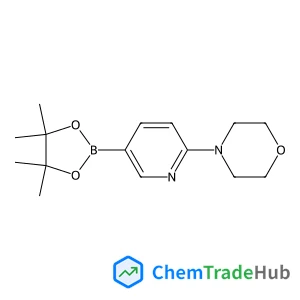
4-(5-(4,4,5,5-tetramethyl-1,3,2-dioxaborolan-2-yl)pyridin-2-yl)morpholine
CAS Number:
485799-04-0
Molecular Formula:
C15H23BN2O3
Recommended Suppliers





Disclaimer
This page provides academic journal information for reference and research purposes only. We are not affiliated with any journal publishers and do not handle publication submissions. For publication-related inquiries, please contact the respective journal publishers directly.
If you notice any inaccuracies in the information displayed, please contact us at support@chemtradehub.com. We will promptly review and address your concerns.