












Use of confocal Raman microscopy to characterise ethyl cyanoacrylate adhesive depth curing
Literature Information
Publication Date
2020-10-07
DOI
10.1039/D0CP04053C
Impact Factor
3.676
Authors
Bernard Ryan
View Original
Abstract
In situ spatial temporal measurement of monomer conversion during adhesive bondline curing remains a challenging area. The aim of this work was to demonstrate the effectiveness of using confocal Raman microscopy in a specially configured experimental set-up, as a versatile tool for measuring monomer concentration changes as a function of both time and adhesive bond depth during ethyl cyanoacrylate polymerisation. This also allowed monitoring of the extent of polymerisation at the adhesive substrate interface independently of the bulk bondline polymerisation region. Key kinetic parameters such as inhibition time tlag, rate of reaction Rmax and extent of reaction [αt]max were obtained by fitting the experimental data to sigmoidal growth curves using simple piecewise regression models. A systematic characterisation of a polymerisation reaction was conducted using different sample substrate types (copper alloy (red brass), aluminium, aluminium alloy, stainless steel and borosilicate glass) and at various reaction temperatures. Reaction rates were found to decrease further away from the substrate interface in the bulk volume region. The fastest kinetics occurred in the vicinity of nucleophilic hydroxyl rich surfaces such as at the copper alloy (red brass). In addition to substrate surface chemistry, surface roughness was also a factor, with the highest reaction rates occurring with a grit blasted (roughened) aluminium alloy (2024 T3) surface. An approximately linear dependence of the ln Rmaxvs. 1/T (Arrhenius) plot was recorded within the temperature range of 291–328 K. A better fit was obtained however through the use of two separate linear slopes, possibly indicative of a change of polymerisation reaction mechanism taking place at elevated temperatures with two distinct activation energies. Further work conducted using a larger number of temperatures would be useful to verify this finding. This work confirmed that differences in the rates of interfacial and bulk polymerisation processes could be readily measured in situ using confocal Raman microscopy which is a powerful technique for investigating such surface-confined and bulk polymerisation reactions.
Related Literature
DFT-MD and vibrational anharmonicities of a phosphorylated amino acid. Success and failure
Alvaro Cimas
2010-02-24
Paper
DOI: 10.1039/B924025J
Elucidation of the role of hexamine and other precursors in the formation of magnetitenanorods and their stoichiometry
Hema Singh, Shrikant Bhagwat, Samuel Jouen, Benoît Lefez, Anjali A. Athawale, Beatrice Hannoyer, Satishchandra Ogale
2010-02-19
Paper
DOI: 10.1039/B917407A
Wettability conversion of colloidal TiO2nanocrystal thin films with UV-switchable hydrophilicity
2009-03-26
Paper
DOI: 10.1039/B823331D
Oriented growth of the functionalized metal–organic framework CAU-1 on –OH- and –COOH-terminated self-assembled monolayers
Florian Hinterholzinger, Camilla Scherb, Tim Ahnfeldt, Norbert Stock, Thomas Bein
2010-04-13
Paper
DOI: 10.1039/B924657F
The photophysics of selectively metallated arrays of quinoxaline-fused tetraarylporphyrins
James A. Hutchison, Paul J. Sintic, Maxwell J. Crossley, Toshihiko Nagamura, Kenneth P. Ghiggino
2009-03-03
Paper
DOI: 10.1039/B820969C
Probing the hydrogen-bond network of watervia time-resolved soft X-ray spectroscopy
Nils Huse, Haidan Wen, Dennis Nordlund
2009-03-10
Paper
DOI: 10.1039/B822210J
The structure of oxotitanium phthalocyanine: a gas-phase electron diffraction and computational study
Alexander V. Zakharov, Sergei A. Shlykov, Yuriy A. Zhabanov, Georgy V. Girichev
2009-03-06
Paper
DOI: 10.1039/B820914F
You might also like
Compound Q&A
How should waste containing 2-Ethyl-4-Methyl-1H-Imidazole-5-Carbaldehyde (CAS: 88634-80-4) be handled?
Waste containing 2-Ethyl-4-Methyl-1H-Imidazole-5-Carbaldehyde (CAS: 88634-80-4) ...
88634-80-42-Ethyl-4-Methyl-1H-...
Compound Q&A
What industries use Triethoxy(octyl)silane (CAS: 1385031-14-0)?
Triethoxy(octyl)silane (CAS: 1385031-14-0) is widely used in the pharmaceuticals...
1385031-14-0Triethoxy(octyl)sila...
Compound Q&A
Are there alternatives to 3-iodo-7-nitro-1H-indazole (CAS: 864724-64-1) in synthesis?
Several alternatives to 3-iodo-7-nitro-1H-indazole (CAS: 864724-64-1) exist in t...
864724-64-13-iodo-7-nitro-1H-in...
Compound Q&A
Are there alternatives to Benzene, bis[(trimethoxysilyl)ethyl] (CAS: 266317-71-9) in synthesis?
Yes, there are alternatives to Benzene, bis[(trimethoxysilyl)ethyl] (CAS: 266317...
266317-71-9Benzene, bis[(trimet...
Compound Q&A
Is Isothiazole-3-carbonitrile (CAS: 1452-17-1) safe?
Isothiazole-3-carbonitrile (CAS: 1452-17-1) is generally considered safe when us...
1452-17-1Isothiazole-3-carbon...
Compound Q&A
Is (3-Chlorophenyl)methanol (CAS: 873-63-2) safe?
(3-Chlorophenyl)methanol (CAS: 873-63-2) is considered low to moderately toxic. ...
873-63-2(3-Chlorophenyl)meth...
Compound Q&A
How is (2S,3S)-2-Hydroxy-3-({[(2-methyl-2-propanyl)oxy]carbonyl}amino)-3-(2-naphthyl)propanoic acid (CAS: 959583-98-3) typically synthesized?
(2S,3S)-2-Hydroxy-3-({[(2-methyl-2-propanyl)oxy]carbonyl}amino)-3-(2-naphthyl)pr...
959583-98-3(2S,3S)-2-Hydroxy-3-...
Compound Q&A
What precautions should be taken when handling Methyl 2-(bromomethyl)-5-methoxybenzoate (CAS: 788081-99-2)?
Proper handling of methyl 2-(bromomethyl)-5-methoxybenzoate requires the use of ...
788081-99-2Methyl 2-(bromomethy...
Compound Q&A
What is 6,8-Dibromoimidazo[1,2-a]pyridine-2-carboxylic acid (CAS: 904805-36-3)?
6,8-Dibromoimidazo[1,2-a]pyridine-2-carboxylic acid (CAS: 904805-36-3) is an aro...
904805-36-36,8-Dibromoimidazo[1...
Compound Q&A
Is 3-Amino-5-bromo-2-pyridinecarbonitrile (CAS: 573675-27-1) safe?
3-Amino-5-bromo-2-pyridinecarbonitrile is considered safe when handled under pro...
573675-27-13-Amino-5-bromo-2-py...
Source Journal
Physical Chemistry Chemical Physics

CiteScore:
5.5
Self-citation Rate:
10.3%
Articles per Year:
3036
Physical Chemistry Chemical Physics (PCCP) is an international journal co-owned by 19 physical chemistry and physics societies from around the world. This journal publishes original, cutting-edge research in physical chemistry, chemical physics and biophysical chemistry. To be suitable for publication in PCCP, articles must include significant innovation and/or insight into physical chemistry; this is the most important criterion that reviewers and Editors will judge against when evaluating submissions. The journal has a broad scope and welcomes contributions spanning experiment, theory, computation and data science. Topical coverage includes spectroscopy, dynamics, kinetics, statistical mechanics, thermodynamics, electrochemistry, catalysis, surface science, quantum mechanics, quantum computing and machine learning. Interdisciplinary research areas such as polymers and soft matter, materials, nanoscience, energy, surfaces/interfaces, and biophysical chemistry are welcomed if they demonstrate significant innovation and/or insight into physical chemistry. Joined experimental/theoretical studies are particularly appreciated when complementary and based on up-to-date approaches.
Recommended Compounds
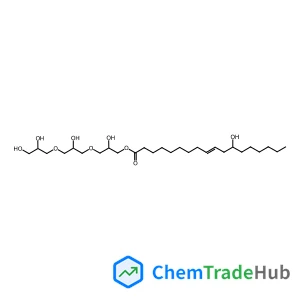
![N-[(1S,2R,4S)-2-Amino-4-(dimethylcarbamoyl)cyclohexyl]-N'-(5-chloro-2-pyridinyl)ethanediamide structure](https://static.chemtradehub.com/structs/480/480452-37-7-0898.webp "N-[(1S,2R,4S)-2-Amino-4-(dimethylcarbamoyl)cyclohexyl]-N'-(5-chloro-2-pyridinyl)ethanediamide structure")
N-[(1S,2R,4S)-2-Amino-4-(dimethylcarbamoyl)cyclohexyl]-N'-(5-chloro-2-pyridinyl)ethanediamide
CAS Number:
480452-37-7
Molecular Formula:
C16H22ClN5O3
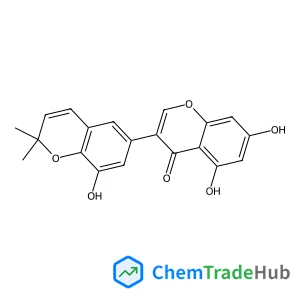
5,7,8'-Trihydroxy-2',2'-dimethyl-2'H,4H-3,6'-bichromen-4-one
CAS Number:
129280-33-7
Molecular Formula:
C20H16O6
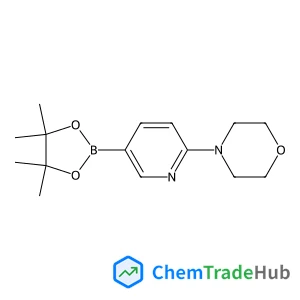
4-(5-(4,4,5,5-tetramethyl-1,3,2-dioxaborolan-2-yl)pyridin-2-yl)morpholine
CAS Number:
485799-04-0
Molecular Formula:
C15H23BN2O3
Recommended Suppliers





Disclaimer
This page provides academic journal information for reference and research purposes only. We are not affiliated with any journal publishers and do not handle publication submissions. For publication-related inquiries, please contact the respective journal publishers directly.
If you notice any inaccuracies in the information displayed, please contact us at support@chemtradehub.com. We will promptly review and address your concerns.