(3alpha,5beta,6alpha,7alpha)-6-Ethylcholane-3,7,24-triol
CAS Number:
1537866-49-1
Molecular Formula:
C26H46O3
Camille Bilodeau, Wengong Jin, Hongyun Xu, Jillian A. Emerson, Sukrit Mukhopadhyay, Thomas H. Kalantar, Tommi Jaakkola, Regina Barzilay, Klavs F. Jensen
While molecular discovery is critical for solving many scientific problems, the time and resource costs of experiments make it intractable to fully explore chemical space. Here, we present a generative modeling framework that proposes novel molecules that are 1) based on starting candidate structures and 2) optimized with respect to one or more objectives or constraints. We explore how this framework performs in an applied setting by focusing on the problem of optimizing molecules for aqueous solubility, using an experimental database containing data curated from the literature. The resulting model was capable of improving molecules with a range of starting solubilities. When synthetic feasibility was applied as a secondary optimization constraint (estimated using a combination of synthetic accessibility and retrosynthetic accessibility scores), the model generated synthetically feasible molecules 83.0% of the time (compared with 59.9% of the time without the constraint). To validate model performance experimentally, a set of candidate molecules was translated using the model and the solubilities of the candidate and generated molecules were verified experimentally. We additionally validated model performance via experimental measurements by holding out the top 100 most soluble molecules during training and showing that the model could rediscover 33 of those molecules. To determine the sensitivity of model performance to dataset size, we trained the model on different subsets of the initial training dataset. We found that model performance did not decrease significantly when the model was trained on a random 50% subset of the training data but did decrease when the model was trained on subsets containing only less soluble molecules (i.e., the bottom 50%). Overall, this framework serves as a tool for generating optimized, synthetically feasible molecules that can be applied to a range of problems in chemistry and chemical engineering.
Derek Johnston, Emmanuel Couché, David J. Edmonds, Kenneth W. Muir, David J. Procter
DOI: 10.1039/B209066J
Aubrey J. Ellison
DOI: 10.1039/C8OB01773E
Leslie J. Oates, Richard F. W. Jackson, Michael H. Block
DOI: 10.1039/B208632H
Jennifer Frommer, Beatrice Karg, Klaus Weisz, Sabine Müller
DOI: 10.1039/C8OB02246A
Gennaro Pescitelli, Nina Berova, Tom L. Xiao, Roman V. Rozhkov, Richard C. Larock, Daniel W. Armstrong
DOI: 10.1039/B207652G
Amarender Manchoju, Ritesh A. Annadate, Lise Desquien, Sunil V. Pansare
DOI: 10.1039/C8OB01511B
Gaia Scalabrino, Xiao-Wen Sun, John Mann, Anne Baron
DOI: 10.1039/B207800G
Mu Chen, Jia-Qing Cao, Song Ang, Ting-Ni Zeng, Ni-Ping Li, Tang-Jia Yang, Jun-Shan Liu, Yan Wu, Wen-Cai Ye, Lei Wang
DOI: 10.1039/D1QO01629F
Lin Su, Zheng Yu, Peiling Ren, Zhi Luo, Wei Hou, Hongtao Xu
DOI: 10.1039/C8OB02071J
Fangyi Li, Changfu Qiu, Guangwei Yin, Chunhua Wang, Zheng Li
DOI: 10.1039/C8OB01941J
N-(4-Methoxybenzyl)-2-pyridinamine (CAS: 52818-63-0) is increasingly being used ...
When handling Ethyl 4-(2-chlorophenyl)-1,3-thiazole-2-carboxylate, appropriate p...
Diethyldiselane (CAS: 628-39-7) is classified under the Globally Harmonized Syst...
The market for oxocopper (CAS: 12053-18-8) is primarily driven by its use in cat...
The market for 5-{[(2-Methyl-2-propanyl)oxy]carbonyl}-5-azaspiro[2.4]heptane-7-c...
2-(1-Pyrrolidinyl)-4-pyridinamine is a chemical compound with the CAS number 359...
2-(3-Pyridinyl)-1-azabicyclo[2.2.2]octane (CAS: 91556-75-1) is a crystalline sol...
(S)-Alpha-allyl-proline hydrochloride is usually synthesized via a Wittig reacti...
3-Methyl-1,2-oxazole-5-carboxylic acid (CAS: 4857-42-5) is an organic compound w...
Lys-SMCC-DM1 is synthesized via a multi-step process involving the coupling of S...

Reaction Chemistry & Engineering is an interdisciplinary journal reporting cutting-edge research focused on enhancing the understanding and efficiency of reactions. Reaction engineering leverages the interface where fundamental molecular chemistry meets chemical engineering and technology. Challenges in chemistry can be overcome by the application of new technologies, while engineers may find improved solutions for process development from the latest developments in reaction chemistry. Reaction Chemistry & Engineering is a unique forum for researchers whose interests span the broad areas of chemical engineering and chemical sciences to come together in solving problems of importance to wider society. All papers should be written to be approachable by readers across the engineering and chemical sciences. Papers that consider multiple scales, from the laboratory up to and including plant scale, are particularly encouraged.

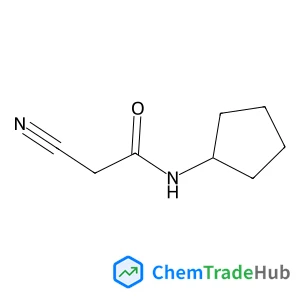
![1-oxaspiro[4.4]nonan-6-one structure](https://static.chemtradehub.com/structs/134/134179-01-4-e051.webp "1-oxaspiro[4.4]nonan-6-one structure")